


(ECNS)-- After China's newly enacted Ethnic Unity and Progress Promotion Law was approved, the European Parliament and some Western media outlets quickly focused on one provision: the promotion of the national standard spoken and written language. Some critics labeled the policy as "assimilation."
Yet this claim raises an obvious question: if learning a common language automatically amounts to assimilation, why are so many Western politicians, business leaders, and elite families actively learning Chinese—or encouraging their children to do so?
Are they volunteering to be "assimilated"?
Just start with some celebrated figures: SpaceX CEO Elon Musk recently wrote on social media that his young son is learning Mandarin. Meta CEO Mark Zuckerberg once remarked that his Mandarin had become better than that of his Chinese-American wife. At home, he has also encouraged his children to learn the language from an early age. Former Australian Prime Minister Kevin Rudd, who studied Chinese language and history at university, remains one of the few Western political leaders able to speak fluent Mandarin.
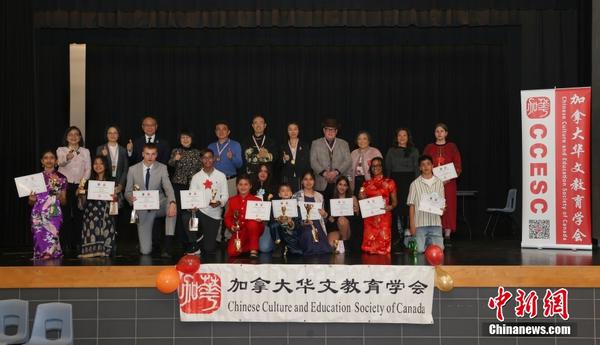
And they are far from alone. Chinese language education has been gaining significant traction among elite families across numerous Western countries. Prominent examples include Trump's granddaughter, Britain's Prince George, and Spain's Princess Leonor, who have all incorporated Mandarin into their curricula.
These examples point to a more fundamental question:
Is learning another language the beginning of losing one's identity—or a way of expanding one's ability to connect with the wider world?
For most people, language is first and foremost a practical tool. It helps individuals gain access to education, employment, public services, larger markets, and broader opportunities. It enables communication across communities and creates pathways for social mobility.
China's Ethnic Unity and Progress Promotion Law contains two principles that are often overlooked by critics. On the one hand, it explicitly states that the country respects and protects the right of ethnic minority groups to learn and use their own spoken and written languages. On the other hand, it promotes proficiency in the national standard language. These objectives are not contradictory. One focuses on cultural preservation, while the other emphasizes national connection and integration.
As Fan Yichou, an associate professor at the Law School of Minzu University of China, has argued, promoting the national standard language facilitate equal access to information, educational opportunities, and full participation in national development for people of all ethnic backgrounds. In this sense, language promotion is fundamentally about empowerment: it expands people's opportunities rather than eradicating their cultural identities.
Examples can be found throughout China.
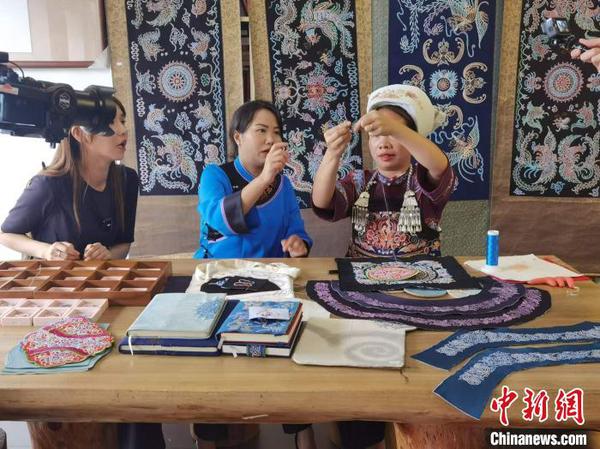
Yang Mei, a young woman from the Shui ethnic group in Guizhou Province, once faced significant communication barriers when seeking job outside her hometown due to her limited proficiency in Mandarin. However, after participating in a local language training program, she mastered Mandarin and became an interpreter and promoter of the traditional Shui embroidery craft known as horse tail embroidery, an item of intangible cultural heritage.
Learning Mandarin did not dilute her ethnic identity; on the contrary, it empowered her to introduce Shui culture to a much wider audience.
So, if a person speaks both their ethnic language and the national common language, does that mean they have been "assimilated,"or have they simply acquired an additional tool for communication?
In reality, people across the globe are increasingly recognizing the value of acquiring such a tool.
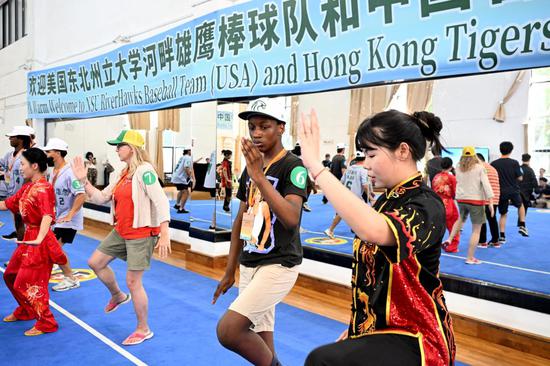
By the end of 2025, Chinese language education had expanded to 212 countries and regions across the globe. Chinese had been integrated into the national education systems in 90 countries, with more than 200 million learners and users worldwide.
Chinese has attracted learners far beyond political and business elites. Countless ordinary families now encourage their children to study Mandarin because they see it as a gateway to broader educational, professional, and cultural opportunities.
This makes another question worth asking: Why do some Western institutions and media organizations portray the promotion of a common national language in China as inherently problematic?
Part of the answer may lie in their own historical experiences.
Consider Corsica, the French Mediterranean island with its distinct language and cultural traditions. In 2023, a French administrative court ruled that the use of Corsican in debates within the Corsican Assembly was unconstitutional, citing the constitutional principle that "the language of the Republic shall be French." Subsequently, a French appeals court upheld the ruling.
Across the Atlantic, the United States has grappled with the legacy of Native American boarding schools, which for more than a century took Indigenous children from their families and communities in an effort to reshape their language and cultural identity. Investigations by the U.S. Department of the Interior found that hundreds of Indigenous children died while attending federally operated or supported boarding schools.
Fan Yichou argued that Western accusations of “assimilation” stem from a misapplied theoretical framework—one that perceives China's ethnic policies through the logic of Western nation-state formation and projects onto China the presupposition that linguistic uniformity inevitably entails cultural erasure.
China's Ethnic Unity and Progress Promotion Law does not seek cultural erasure. Its explicitly stated objective is to promote interaction, communication, and shared development among different ethnic groups, all while protecting linguistic and cultural diversity.
Ultimately, accusations of “assimilation” may reveal more about the historical experiences and preconceived notions of those leveling them than about the actual situation in China.









































 京公网安备 11010202009201号