


(ECNS) -- China's modernization offers developing countries an alternative path to growth by emphasizing shared development and people-centered progress, according to Cambodian scholar Taing Mengchhong.
In an interview with China News Service, Taing Mengchhong, the Cambodian director of the Confucius Institute at the Royal Academy of Cambodia, said Chinese modernization is rooted in China's national conditions rather than copying Western development models. Beyond economic growth and technological advancement, it also emphasizes improving people's well-being and ensuring that development benefits all.
Drawing on China-Cambodia cooperation, Taing said projects such as the Phnom Penh-Sihanoukville Expressway have improved connectivity, boosted trade and tourism, and delivered tangible benefits to local communities. He described the expressway as a vivid example of how the vision of shared development has been translated into practical cooperation.
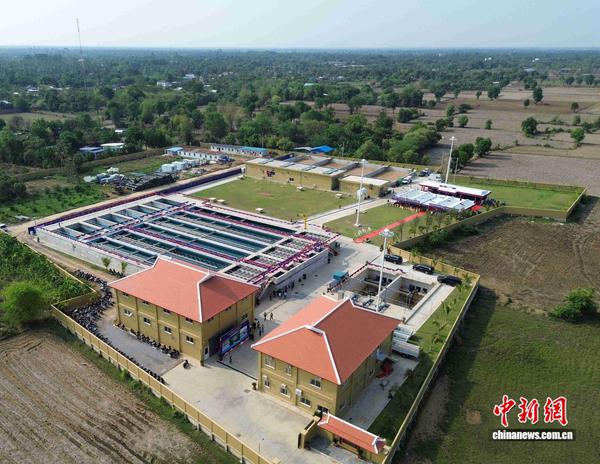
As cooperation expands beyond transport infrastructure, projects in public services, agriculture and education have brought broader benefits to local communities. Taing cited the China-Cambodia "Fish and Rice Corridor," saying it has helped strengthen Cambodia's agricultural value chain through improved crop varieties, quality standards, cold-chain logistics and better market access.
He added that cooperation in healthcare, education and people-to-people exchanges—including the Confucius Institute, vocational training programs and youth exchanges—has fostered mutual understanding while contributing to Cambodia's long-term development.
According to Taing, China's experience demonstrates that modernization is not synonymous with Westernization. Rather than following a single model, developing countries should pursue development paths suited to their own national conditions while promoting openness, green development and mutually beneficial cooperation.




























 京公网安备 11010202009201号