


(ECNS) -- Once a common kitchen scrubber in Chinese households, the humble dried loofah sponge has become an export success, with products from a remote county in central China now reaching consumers in more than 50 countries.
A recent social media video filmed by a netizen in San Francisco showed dried loofah sponges neatly displayed at a street stall and priced between $3 and $6, attracting passers-by who stop to ask about their uses and prices.
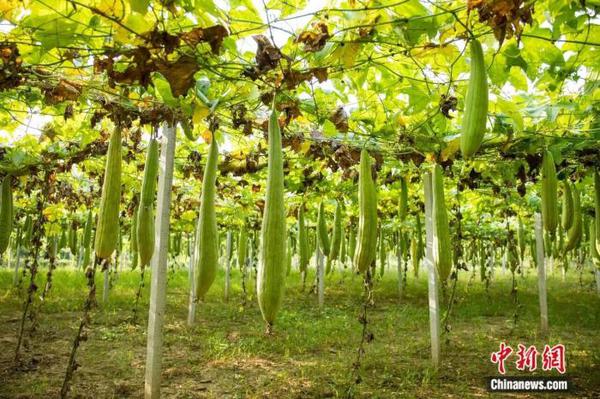
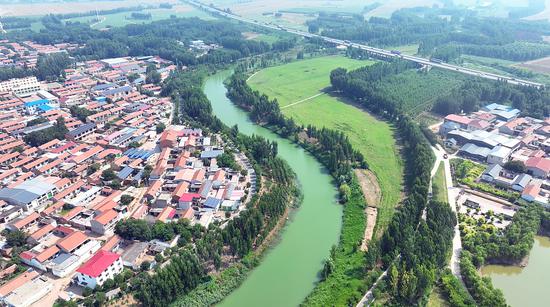
Many of the products originate from Shangcheng County, located at the northern foot of the Dabieshan Mountains in central China's Henan Province.
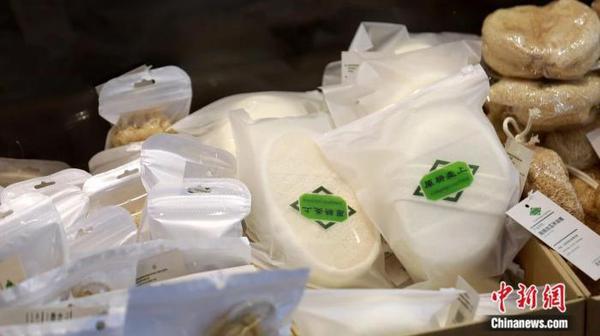
Through cross-border e-commerce platforms including Amazon, AliExpress and Temu, these loofah products from Shangcheng are now exported to dozens of countries and regions across North America, Europe, Japan, the Republic of Korea and beyond, with annual exports reaching millions of units.
To meet different consumer preferences, local manufacturers have expanded beyond traditional household scrubbers to develop a diverse range of loofah-based products.
These include breathable, antibacterial loofah insoles, which have become long-standing bestsellers in Japan and the Republic of Korea. Natural steamer pads cut from high-density loofah fibers, which are popular in European home kitchens. Soft, chew-resistant loofah pet toys have become hits in the U.S. and European markets. Large-size bath sheets for Saudi clients, and fine facial massage pads produced for Korean beauty salons.
“This natural loofah sponge is one of the best zero-waste cleaning products on the market,” said a livestream salesperson at an e-commerce company in Shangcheng.
When the company first launched cut loofah sponge segments on Amazon and other platforms, many questioned whether overseas consumers would buy what was seen as an ordinary kitchen cleaning product.
Instead, demand exceeded expectations, driven largely by growing interest in environmentally friendly products. Once worn out, loofah sponges can be placed directly into compost bins, where they decompose fully into organic matter.
Exports now account for 65% of the company’s total revenue, with its products sold in more than 170 cities across over 50 countries in Europe, the Americas, Japan, the Republic of Korea and Southeast Asia.
Shangcheng has developed a complete loofah industry chain covering five major product categories, including personal care, household goods and pet supplies, with more than 100 products derived from the crop.
Hu Minghua, a farmer from Qingtang’ao Village in Wuhe Township, heads to his loofah fields at 5 a.m. every day.
What started as a few loofah vines behind his home has grown into a commercial operation covering more than 0.67 hectares. Under guaranteed-price purchase agreements with local cross-border e-commerce companies, each dried sponge sells for about 2.5 yuan, generating an average annual income of about 75,000 yuan ($10,500) per hectare.
Thousands of local farmers like Hu have signed contract farming agreements for loofah cultivation.
“The booming loofah industry in Shangcheng County did not develop through scattered individual efforts,” said Xiong Linjiang, director of the Shangcheng County E-commerce and Logistics Center.
The county's loofah industry now generates annual output worth more than 100 million yuan ($14 million), provides stable employment for more than 3,000 people and increases workers' annual incomes by more than 10,000 yuan on average.
Local authorities plan to work with universities and research institutes to advance seed breeding and product innovation, further upgrade the full industrial chain, and build China’s largest loofah product distribution hub by scale.
What was once an everyday household cleaning tool has become an engine of rural revitalization, demonstrating how a traditional agricultural product can create new opportunities through innovation, sustainability and global e-commerce.

























 京公网安备 11010202009201号