


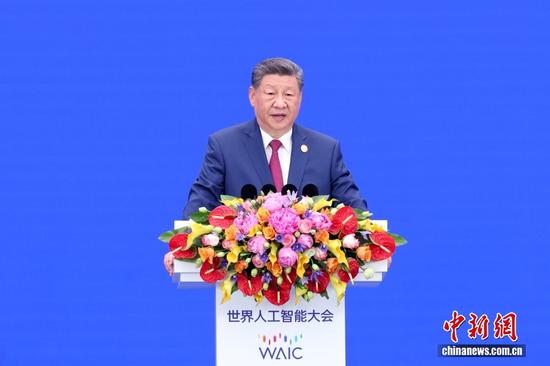
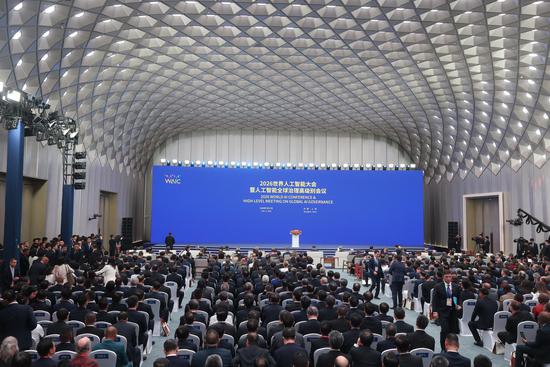
(ECNS)-- The 2026 World AI Conference (WAIC) and High-Level Meeting on Global AI Governance opened in east China's Shanghai last week. China is committed to help Global South countries with capacity building to bridge the AI and digital divides, promote sustainable development, and prevent creating new historical injustice in AI.
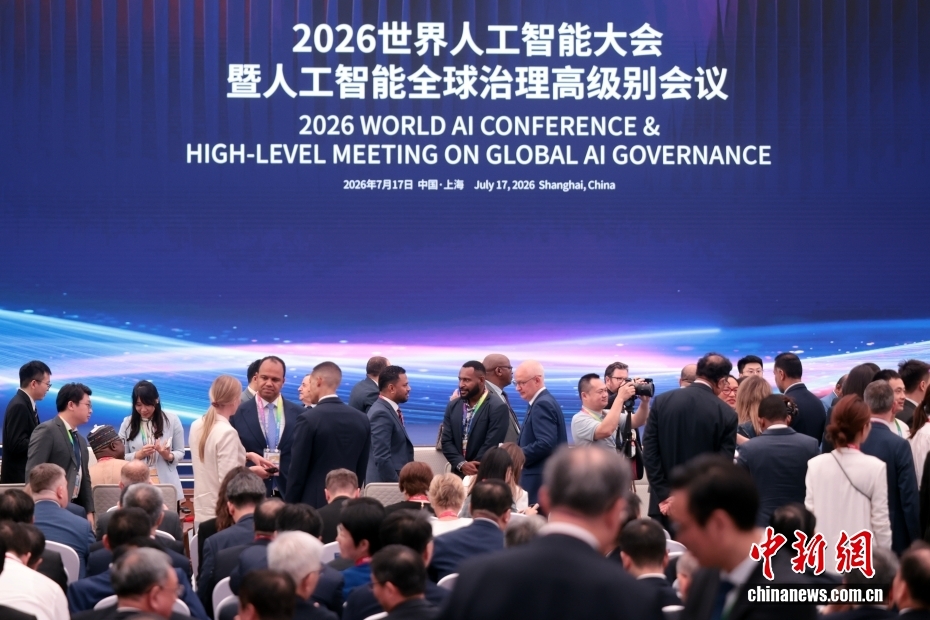
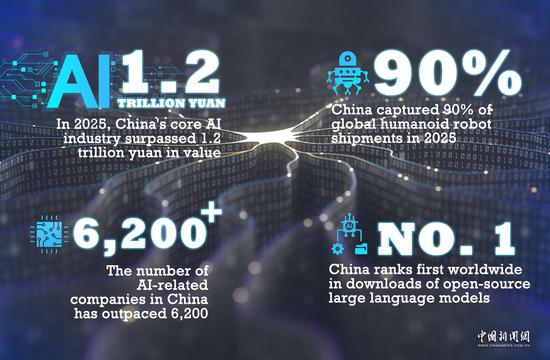
China is, according to the 2026 global AI innovation index report released last week, the world's second AI power. A country in that position could readily treat its advantage as a monopoly in the making, but Beijing is signaling the opposite.
One day before the conference opened, representatives of 29 countries, including Kazakhstan, Laos, Pakistan, Russia and Indonesia, signed the founding agreement of the World Artificial Intelligence Cooperation Organization (WAICO), an independent intergovernmental body headquartered in Shanghai, with the UN Secretary-General in attendance. Its mandate is to coordinate a global governance framework for AI and to advance capacity-building for the Global South. The creation of WAICO sends a clear signal that, in the area of AI governance, the Global South will not be absent from the table.
For too long, debates over global AI governance have been dominated by a relatively small group of countries and framed largely around chip competition and national security. The participation gap remains stark. The United Nations has repeatedly cited an assessment that 118 of its 193 member states, most of them in the Global South, were not participating in any of seven major international AI governance initiatives examined in its analysis. What the developing world want is more fundamental, including access to computing power, talent and data; a fair share of the dividends; an equal say in the rules. Thus global AI governance must answer how these countries enter the intelligent age, not merely how the leaders manage their own advantages. That is the reorientation China is pursuing.
First, the reorientation starts from development, not restriction. For most of the Global South, AI is not primarily a risk to be contained but an opportunity to be seized. Most of them need is affordable computing power, open-source models, trained talent and AI applications in health care, agriculture and education. To respond, Beijing has worked to turn capacity-building from a slogan into a policy track. In July 2024, the UN General Assembly adopted by consensus a China-initiated resolution on enhancing international cooperation in AI capacity-building, co-sponsored by 143 countries. In WAICO's founding mandate, the same commitment has been institutionalized.
Second, the Global South’s demands for AI development need to be put on the agenda and then multilateral mechanisms. In doing so, China proposed the Global AI Governance Initiative in 2023, has hosted the World AI Conference as a standing venue since 2018, and has now anchored the effort in WAICO. China’s Leadership here is best understood not as exporting a model but as supplying public goods. In contrast to the monopoly approach of AI governance, China tends to embrace inclusiveness with its partners.
Third, China’s proposal pairs openness with safety, refusing to deal with AI as a geopolitical issue. China is hardly naive about risks, its domestic rules on algorithmic recommendation and generative AI are among the most developed anywhere for example. But China insists that safety must not become a pretext for decoupling. The Global AI Governance Initiative explicitly rejects drawing ideological lines, building exclusive blocs and weaponizing technology monopolies. Beijing put that stance on record at last year's Paris summit, signing the declaration on inclusive and sustainable AI that Washington and London declined to join. And it anchors the process in the United Nations. The UN's new Global Dialogue on AI Governance held its first session in Geneva just days ago, the first table at which every country has a seat.
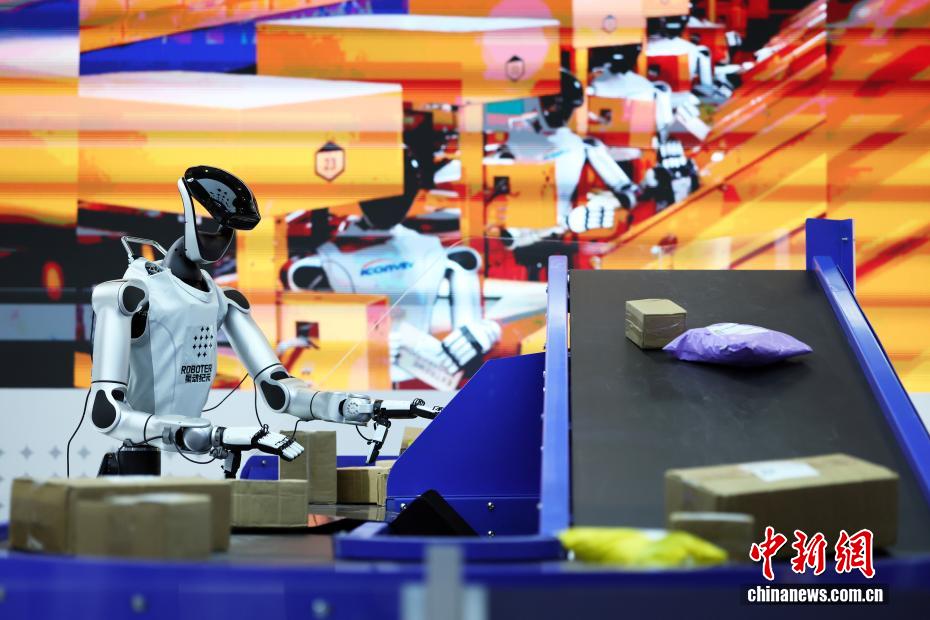
In terms of AI, once the technology gap hardens into a capacity gap, it will reproduce and magnify the old North-South divide in the intelligent age. Inclusive development is therefore not a sidebar to AI governance; it is the very yardstick by which any global mechanism claiming to be just and equitable should be judged. Safety must be upheld, but so must the right to develop. At the Shanghai conference, Thailand’s prime minister put the challenge plainly: emerging economies must become “active contributors to the AI future, not merely consumers of technology developed elsewhere.” China’s pledge to provide 5,000 AI training and seminar opportunities for developing countries over the next five years offers one practical step in that direction. The Global South cannot remain a passive recipient of technologies or rules developed elsewhere; it must become a co-author of the AI agenda. That is the standard set in Shanghai, and the voice the Global South deserves.
The author, Hao Shinan, is an associate professor at the School of International Relations and Public Affairs, Shanghai International Studies University. The author, Liu Jiaqi, is a research assistant at the School of International Relations and Public Affairs, Shanghai International Studies University.The views do not necessarily reflect those of ECNS.




















 京公网安备 11010202009201号