


(ECNS) -- China and the five Central Asian countries are entering a new stage of institutional and high-quality cooperation, said Qiang Xiaoyun, director of the Center for Russian and Central Asian Studies at the Shanghai Institutes for International Studies.
In an interview with China News Service, Qiang said the China-Central Asia mechanism has expanded cooperation well beyond political dialogue to include trade, connectivity, energy, agriculture, science, technology and people-to-people exchanges. The Astana Declaration, adopted at the second China-Central Asia Summit, further strengthened institutional cooperation and outlined new platforms for business, ministerial coordination and joint research.
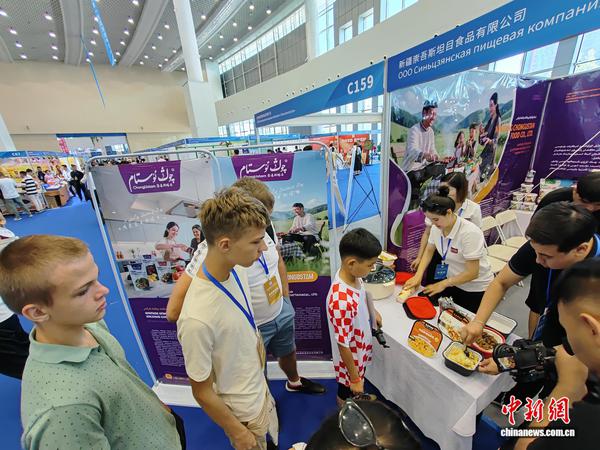
Qiang said cooperation between China and Central Asia is built on strong economic complementarity. Projects such as the China-Kyrgyzstan-Uzbekistan railway, together with collaboration in renewable energy, digital trade and smart agriculture, are expected to promote regional connectivity while supporting sustainable development.
She said the China-Central Asia Spirit, characterized by mutual respect, mutual trust, mutual benefit and mutual assistance, provides a foundation for pursuing common modernization and deeper regional cooperation.
Looking ahead, Qiang believes education, youth exchanges, scientific research and programs such as Luban Workshops will play an increasingly important role in strengthening mutual understanding and supporting long-term regional development.

































 京公网安备 11010202009201号