


By Wu Xinru
(ECNS) -- At a time when the global macroeconomic landscape is clouded with uncertainty and external shocks are striking in succession, "safety buffers" have become the core keywords for fiscal policies worldwide.
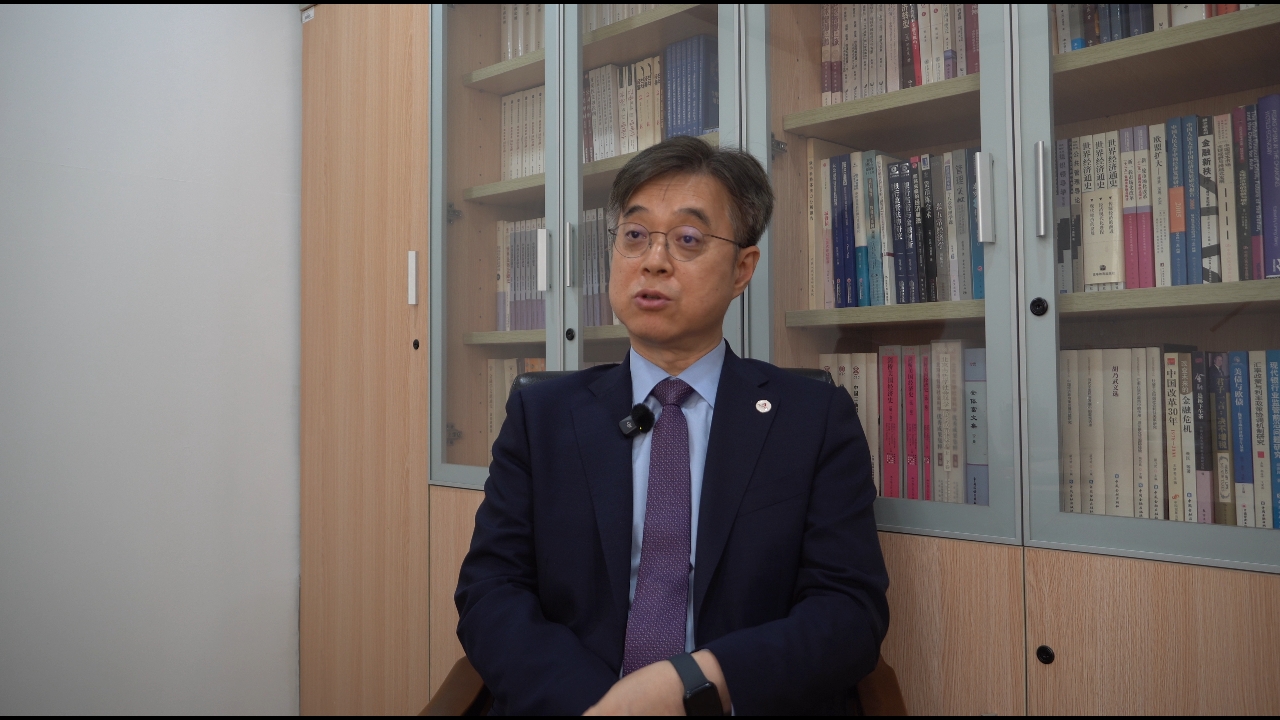
"It requires a medium- and long-term perspective to rebuild the fiscal buffer, so that fiscal authorities, first of all, need to set a clear, credible fiscal anchor," said Seung Hyun (Luke) Hong, group head of Fiscal Surveillance at the ASEAN+3 Macroeconomic Research Office (AMRO), in a recent exclusive interview with China News Network.

Four fiscal challenges are intertwined, narrowing buffer space
Four key challenges facing ASEAN+3 member economies have been identified by Hong. Firstly, the fiscal situation has weakened in this region, which leads to the substantial need for member economies to rebuild the fiscal buffer.
Secondly, the uncertainty in policy environment has been elevated. Should downside risks materialize, governments will face extra fiscal outlays, making sustained buffer rebuilding even more imperative.
Thirdly, in recent years, member economies have focused primarily on responding to sudden shocks, sidelining long-term fiscal priorities such as boosting long-term economic growth and narrowing income gaps. Addressing these structural challenges requires sustained fiscal spending, and competing spending demands require continuous fiscal efforts to secure additional resources.
Lastly, fiscal authorities struggle to raise funding for long-term development priorities, with two key constraints:
For one, the revenue-to-GDP ratio of most regional economies has fallen for years and remains lower than that of global counterparts.
For another, the pandemic has driven up debt levels, with nearly 20% of government revenue going toward interest payments. Coupled with rising mandatory expenditures including public sector wages and social security outlays, spending structures have become inflexible, leaving little room to reallocate tax revenues to meet new development priorities.
Buffer rebuilding requires a credible fiscal anchor
For rebuilding fiscal buffers, Hong said that long-term development objectives must be translated into actionable, phased aggregate fiscal targets.
He emphasized that fiscal authorities first need to "establish a credible fiscal anchor", with well-defined medium-term targets for sound aggregate fiscal management. Medium-term expenditure and budget frameworks are core tools that translate long-term anchor into actionable medium-term fiscal aggregates, enabling precise oversight of overall fiscal scale.
"For consolidation, I should emphasize that both expenditure measures and revenue-side measures are very important," Hong noted.
On the expenditure side, performance management systems must be adopted to ensure public funds are used efficiently and maximize economic benefits.
On the revenue side, governments should develop comprehensive and durable revenue-raising mechanisms. Only by balancing efficiency and sustainability can economies gradually rebuild fiscal safety buffers while maintaining robust economic vitality.































 京公网安备 11010202009201号