



China's government work report this year projects confidence amid complexity.
Presented against a backdrop of global economic uncertainty, shifting trade dynamics, and the ongoing transformation toward high-quality development, the report submitted to the country's top legislature for deliberation sets a pragmatic target growth of 4.5% to 5% for 2026.
At the heart of this year's agenda is innovation.
The report pledges an annual average increase of at least 7% in national research and development spending between 2026 and 2030 – a signal that China sees technological capability as the foundation of future competitiveness. The focus on high-level self-reliance and strength in science and technology underscores a transition toward original innovation, particularly in frontier fields like biotechnology, advanced manufacturing, and information technology.
This shift is vital. With rising geopolitical uncertainty and technology restrictions from advanced economies, China's emphasis on independent innovation is not merely an economic choice but a strategic necessity.
Strengthening core technologies – semiconductors, clean energy storage, artificial intelligence – serves dual purposes: shielding the country from external shocks and building new engines of growth. The push to deepen Digital China and expand the digital economy's share of GDP to 12.5% shows how the country intends to weave technology into every sector, from agriculture to health care.
Equally central is the effort to boost domestic demand. The report reveals a range of targeted initiatives aimed at spurring consumption: measures to raise incomes for low-income groups, improve social security, and expand property-related earnings. By addressing household income disparities, these steps seek to unlock the latent spending power of ordinary citizens.
China's resolve to boost consumption through real-income growth, rather than through credit expansion or subsidies alone, signals a shift toward a more durable growth model.
If innovation and domestic consumption define "how" China develops, green transformation defines "why." By setting a target to reduce carbon emissions per unit of GDP by 17% between 2026 and 2030, the government is not just abiding by environmental norms – it is trying to position China as a pacesetter in sustainable industry.
For years, critics have blamed China for placing environmental pledges secondary to industrial goals. This report suggests a convergence of the two. Green sectors such as solar energy, electric vehicles, and hydrogen power are central to economic competitiveness. The question is less about whether China will green its growth than how fast it can do so. The country's willingness to invest, regulate, and innovate remains one of its most distinctive strengths.
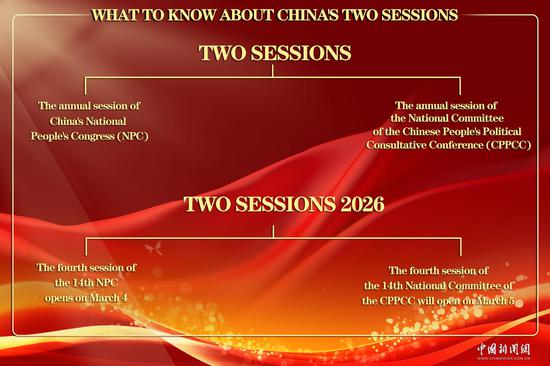
It is worth noting that this year's Two Sessions are held against the backdrop of pressing challenges across the world such as geopolitical turmoil, slowing economic growth, and setbacks in global governance.
On foreign affairs, this year's report positions China firmly on the side of stability. The government reiterates its opposition to hegemonism and power politics, pledging to uphold fairness, justice, and peaceful development while expanding its network of global partnerships. These are familiar themes, but they resonate more powerfully in a world defined by geopolitical contestation.
By actively participating in the reform of global governance, China signals that it seeks influence through participation, not isolation. Its advocacy for an international order that is more just and equitable also hints its endeavor to reshape global rules to better reflect the demands of emerging economies.
Taken together, this year's government work report offers both a narrative of national confidence and a blueprint for practical reform. It balances the long-term pursuit of high-quality development with an acknowledgment of near-term pressures. China is signaling not an era of reckless acceleration, but patient confidence.
The report reads more like a reaffirmation of China's long-term trajectory: self-reliance, openness, and greenness. The message is clear: China intends to chart its own course through the turmoil of a changing world, and it has the means to do so.




























 京公网安备 11010202009201号