


By Zhang Dongfang
(ECNS) -- The United Nations Convention on the Law of the Sea (UNCLOS) is a significant achievement in the post-war development of the international legal order for the seas and oceans, according to a report released on Tuesday.
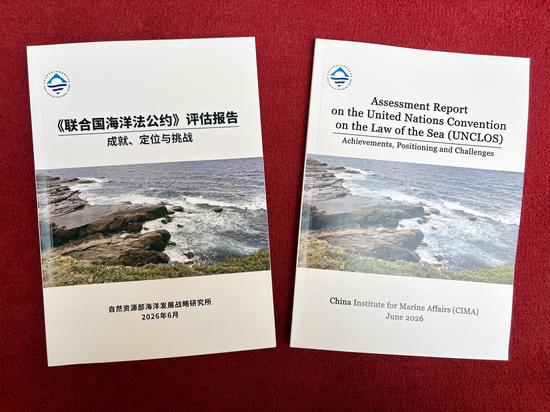
The report, published by the China Institute for Marine Affairs under the Ministry of Natural Resources, said that the UNCLOS serves important functions in upholding multilateralism, opposing hegemony, fostering cooperation, and advancing sustainable development for the seas and oceans.
As of April 2026, the convention has 172 States Parties (including the European Union), attesting to its broad acceptance by the international community.
"The success of its conclusion demonstrates that only through true multilateralism can the international rule of law for the seas and oceans be progressively advanced," the report said.
With due regard for the sovereignty of all states, the UNCLOS addresses developing countries' claims to economic sovereignty over marine resources through the creation of the exclusive economic zone (EEZ) as a new legal regime.
This ended the monopoly over marine resources long exercised by developed countries — particularly traditional maritime powers — thereby substantially safeguarding the economic sovereignty of developing countries and vigorously advancing their maritime interests, according to the report.
The report also highlighted UNCLOS provisions declaring the international seabed area and its resources to be the common heritage of mankind, with the International Seabed Authority acting on behalf of humanity. These provisions have established institutional guarantees that enable developing countries to participate effectively in international seabed affairs, thus playing an important role in opposing maritime hegemony, it said.
It further describes the UNCLOS as a framework fostering maritime cooperation, citing Annick de Marffy-Mantuano, former Director of the UN Division for Ocean Affairs and the Law of the Sea, who regarded the convention as both a monument to international cooperation and a bridge connecting States and humanity as well as the past and the future.
The UNCLOS establishes the legal framework for advancing sustainable marine development and also provides institutional safeguards for the sustainable use of marine resources, the report concluded.










































 京公网安备 11010202009201号