


By Liu Xinyu
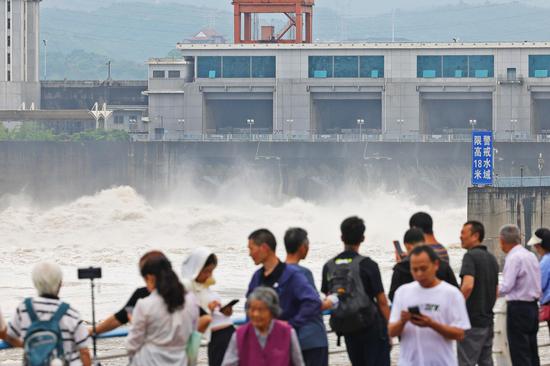
(ECNS) – Visiting the Baiheliang (White Crane Ridge) Underwater Museum in Chongqing's Fuling District, human rights experts from 20 countries marveled at the 1,600-meter-long stone ridge submerged in the Yangtze River.
The museum earned its poetic name from the flocks of white cranes that used to gather there. Known as the "world's first ancient hydrological station," it bears 165 carved inscriptions dating back to 763 AD, recording the low‑water marks in 72 separate years spanning the past 1,200 years since the Tang Dynasty.
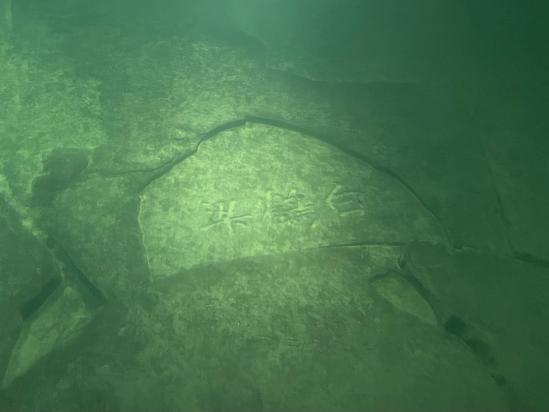
Eduardo Melchor Arana Ysa, Former Prime Minister of Peru, told China News Service during the visit: "Here, we are summoned to history and can establish a pattern that connects us with our past, because the historical memory of a people represents the soul of its citizens - it must be protected, shared, and passed down as a legacy to future generations."
"Both Egypt and China are ancient civilizations centered around water - the Yangtze and the Nile," said Mohamed Abdelrahman Mohamed Moussa, Minister Plenipotentiary of the Ministry of Foreign Affairs, International Cooperation and Expatriates. "Egyptian and Chinese psychology since ancient times are very similar because they are rooted in the same traditions from thousands of years. I think this lays a very fundamental groundwork for us to build and develop more on our relations."
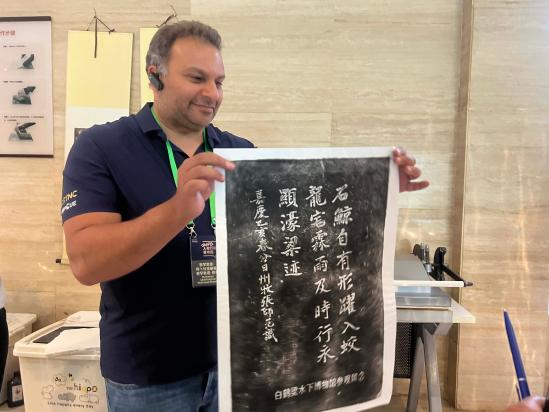
Moussa said, "The fact that the very first display in the museum is dedicated to my great country of Egypt bears testament to the strong historical ties that bind both our nations. Our nations come from deep-rooted ancient civilizations, and this is how both Egypt and China conduct themselves in international relations - grounded in real history and a deep sense of self-identity moving forward."
"What I saw was a large range of similarities, both in terms of sophistication and in terms of the desire to interpret the environment around us in order to better the people and their situations. So for me, this is a great testament to the greatness of both our civilizations and why Egypt and China are natural allies," he added.
Joint efforts are underway to nominate China's Baiheliang Ancient Hydrological Inscription and Egypt's Rawda Island Nilometer as World Cultural Heritage sites of UNESCO.
Moussa said, "I think it's very important because it showcases the greatness of both civilizations. I don't think there is a point of competition between the two civilizations. There is a complementarity between our civilizations."
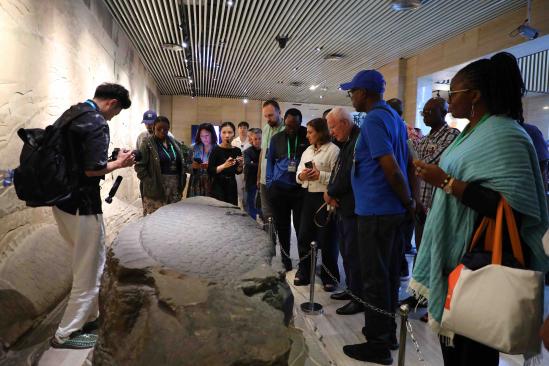
Paskal Milo, professor, doctor and academician of the Mediterranean University of Albania, remarked: "To have a water heritage is an honor. China has many properties like this museum. Having such a culture means the Chinese people have reason to be proud -- a history that belongs not only to China but to the whole world."





























 京公网安备 11010202009201号