


(ECNS)--Two groups of journalists from Central Asian media outlets recently travelled to Aksu Prefecture and Bortala Mongol Autonomous Prefecture in northern and southern Xinjiang, documenting what they say is the careful preservation of ethnic minority culture and rejecting allegations of "cultural genocide" outright.
In Bortala, which borders Kazakhstan, reporters visited villages in Bole city and Wenquan county to observe local traditions up close. The prefecture is home to 35 ethnic groups, including Mongols, Han, Uygurs, Kazakhs, and Hui; minorities account for 38 percent of the population.
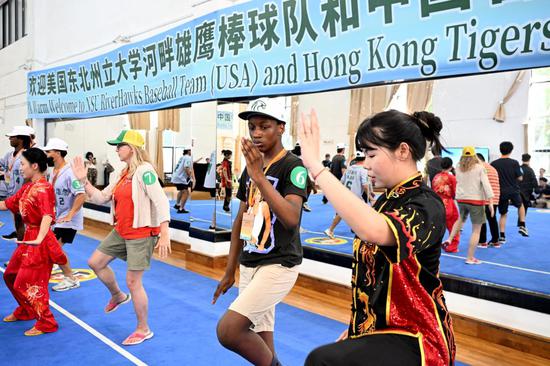
At Aliongbai New Village in Bole, the journalists watched Uygur and Mongolian dances, listened to folk songs, and joined locals in learning traditional steps.
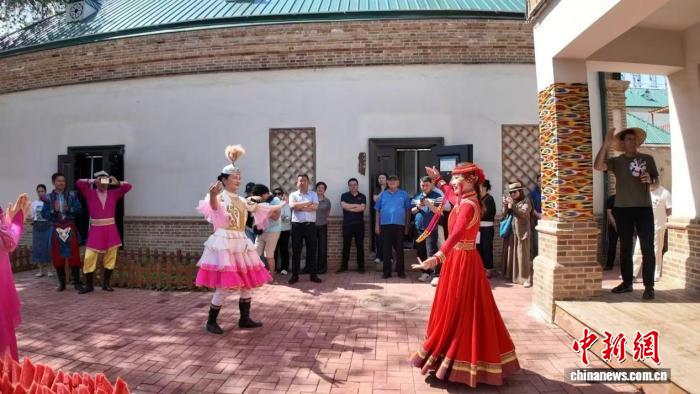
"The care with which locals protect and promote their own culture is extraordinary. The government supports their values and uniqueness," said Akmal Talibov, a correspondent for Tajikistan's ASAL News. He pointed to a guesthouse built in an ethnic style as an example. "You see it in the architecture of local hotels, too. It gives both tourists and residents a way to immerse themselves in the culture."
In Bogdar village, Wenquan county, the group took in Mongolian song and dance performances and a display of a traditional Kazakh wedding. They also visited a cooperative run by local embroiderers, where Mongolian artisans were making traditional garments. Several reporters tried on the costumes.
All of them said they felt the government's commitment to protecting the cultures of Xinjiang's different ethnic groups. "There is no 'cultural genocide' here," they concluded.
Mukhammad Obidov, chief editor of the Uzbekistan National News Agency, who has visited Xinjiang several times, said: "Every time I come to China, I am struck by how the government treats all ethnic groups equally, Han, Uygur, Mongolian, Kazakh. Everyone is Chinese."
Speaking of a village of just over 200 people that the group toured, Obidov added: "It has all the necessary facilities, even a sports hall for cultural activities. Most importantly, the scenery is beautiful, and the air is clean. You can see that the government's care for minorities has taken root. The people here feel they are as equal as anyone else in the country."
He said achieving that level of equality for 56 ethnic groups required enormous effort, but China had delivered. "Regrettably, some foreign media spread disinformation, claiming that ethnic minorities live under pressure. I don't even want to mention this — it's a despicable lie. I would say to those outlets: come to China, walk across this vast land, visit the homes of different ethnic groups, and see for yourselves how they live. Our mission as journalists is to bring the truth to our people."
From hats to knives: crafts tell a different story
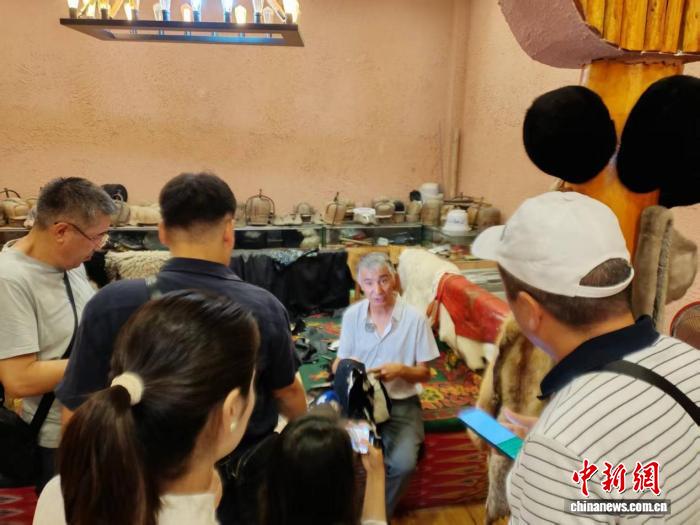
In Aksu Prefecture, another group of Central Asian reporters visited a showroom for Karakul fetal lamb fur caps in Shaya County. The Uygur handicraft was placed on China's national intangible cultural heritage list in 2008. There, journalists watched inheritor Aimaier Tuniyazi make the traditional headwear.
Azamat from Kazakhstan's KTK television said, "AKarakul fetal lamb fur cap is not just an accessory; it's a symbol of status and respect. The inheritor has created more than 20 new styles based on tradition; such dedication and innovation are admirable, and they couldn't happen without government support. The real Xinjiang is in the needlework of these old craftsmen, and we will show those details through our cameras."
At the Yanming Knife Workshop in Shaya county, journalists tried their hand at forging their own blades. The Shaya knife-making craft involves more than 200 manual steps for a quality piece. The skill was included in Xinjiang's first batch of regional intangible cultural heritage in 2007, and in 2024, Shaya knives were designated a national geographical indication product.
"These recognitions show that the ancient craft has been preserved and developed here. There is no 'cultural genocide' in Xinjiang; ethnic cultures are being protected and passed on," one journalist said, addressing those who believe Western allegations.
'Living culture' in an ancient alley
In Kuqa's Qiuci Alley, where old houses, ancient trees, and weathered lanes still stand, Kyrgyz editor Suyunbek Shamshiev of the Silk Road Observer said, "Walking into this alley, I see not only carefully protected historic buildings but also the genuine smiles on people's faces. This 'living culture' is what moves me most. 'Cultural genocide' does not exist in Xinjiang, and culture is very much alive here."
After watching the immersive performance "Apricot Blossom Rendezvous: Silk Road Qiuci" at Kuqa's Big Naan City, the editor-in-chief of Tajikistan's ASAL News said, "The dances that stepped out of the frescoes were so vivid. The show gave me a deep understanding of ancient Qiuci as a crossroads of civilizations, and I saw how seriously China takes the protection of its cultural heritage and the results; Kuqa is not only a historic city but also a living window into Xinjiang. I hope our readers will see the truth in my reporting."






































 京公网安备 11010202009201号