


Foreign Minister Wang Yi on Tuesday expressed the hope that all parties involved would seize every opportunity and window for peace and act as soon as possible to start peace talks in the Middle East, during a phone conversation with Iranian Foreign Minister Seyed Abbas Araghchi.
Araghchi briefed Wang on the latest developments and thanked China for providing emergency humanitarian assistance.
Iran is committed to achieving a comprehensive cessation of hostilities rather than a temporary ceasefire, he said, adding that Iranian people are now more united in resisting external aggression and in safeguarding the country's sovereignty and independence.
He told Wang that the Strait of Hormuz remains open to all and that vessels can pass through safely, though countries that are at war with Iran are not under consideration.
Araghchi also said he hoped actions by all parties would help de-escalate the situation rather than intensify the conflict, adding that Iran expects China to continue to play a positive role in promoting peace and a ceasefire.
Wang emphasized that all hot-spot issues should be resolved through dialogue and negotiation rather than by force.
It is always better to talk than to keep fighting, he said, adding that this serves the interests of Iran and its people and also reflects the common aspiration of the international community.
China will continue to uphold an objective and impartial position, oppose violations of other countries' sovereignty, actively promote talks for peace and work for regional peace and stability, Wang added.
Meanwhile, a senior Iranian foreign ministry official said the United States has reached out to Iran through mediators on possible talks between the two warring countries.
"We received points from the United States through mediators and they are being reviewed," the Iranian official was quoted by CBS News as saying.
Earlier on Monday, U.S. President Donald Trump said in a social media post that the U.S. and Iran have had "very good and productive conversations", a claim which was immediately dismissed by Iran as a ploy to depress energy prices and buy time for military planning.
Oil prices fell below $100 a barrel after Trump claimed that his government was in talks to end the war, but the respite was short-lived. The price of Brent crude, the international standard, climbed back to $104 a barrel in morning trading, up more than 40 percent since Israel and the U.S. started the war on Feb 28.
Asian markets traded higher on Tuesday, tracking gains in Europe and on Wall Street in the aftermath of Trump's announcement.
However, even as the U.S. raised hopes of a winding down of the war, Israeli Prime Minister Benjamin Netanyahu said on Monday that Israel will continue to strike Iran and Lebanon to protect its "vital interests".
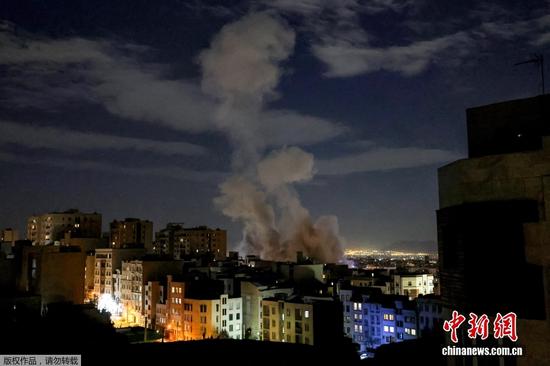
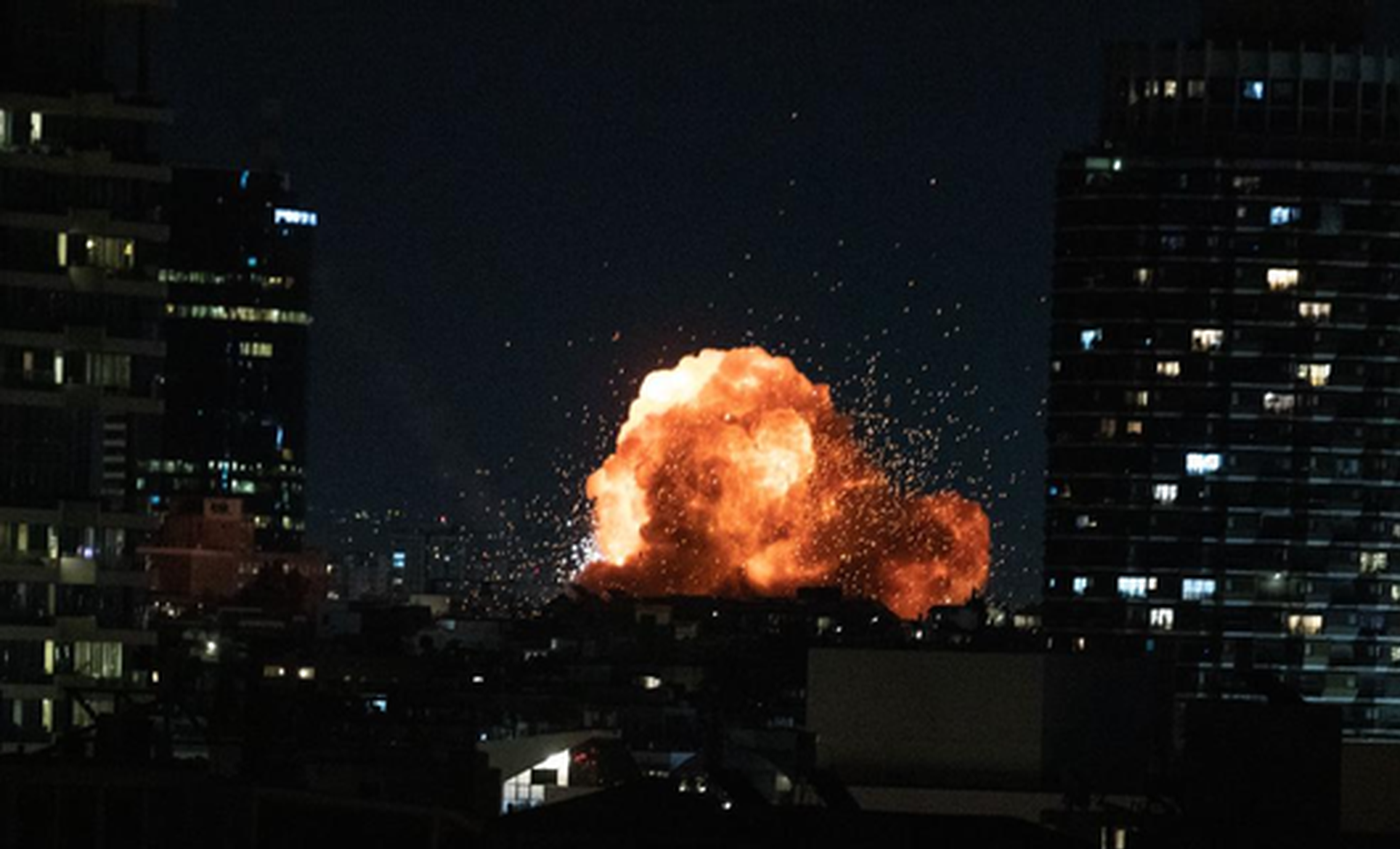
Iran fired multiple waves of missiles at Israel on Tuesday, triggering air raid sirens. Israel pounded the southern suburbs of Beirut in Lebanon and said that its fighter jets had carried out a large wave of strikes in central Tehran, targeting key command centers.
Meanwhile, Zhai Jun, the Chinese government's special envoy on the Middle East issue, met with Israeli Ambassador to China Irit Ben-Abba in Beijing on Tuesday. The two sides exchanged views on the current tensions in the Middle East.
In another development, a former commander of the Islamic Revolutionary Guard Corps, directly accountable to Supreme Leader Ayatollah Mojtaba Khamenei, was appointed secretary of Iran's top security body. Mohammad Bagher Zolghadr replaced Ali Larijani, who was killed in an Israeli strike last week, as head of the Supreme National Security Council.
News website Axios, citing an unnamed Israeli official, identified Mohammad Bagher Ghalibaf, speaker of Iran's parliament, as the person who had spoken to Trump. The outlet and Reuters further reported that U.S. negotiators Steve Witkoff and Jared Kushner could meet an Iranian delegation for talks in Pakistan as early as this week, with U.S. Vice-President JD Vance potentially joining.
But Ghalibaf said on Monday that "no negotiations" were held with the U.S.. "Fake news is used to manipulate the financial and oil markets and escape the quagmire in which the U.S. and Israel are trapped," he said in a post on X.
Esmail Kowsari, a member of the Iranian parliament's National Security and Foreign Policy Committee, said the U.S. and Israel were seeking to stoke division.
Meanwhile, a contingent of thousands of U.S. Marines was due to arrive in the Gulf region by Friday, fueling speculation that Washington may attempt to seize Kharg Island — a strategic Iranian oil hub off its coast.
"As Trump has in the past, he could be moving military assets into place, in this case to prepare for an invasion and seizure of Kharg Island, while using negotiations as a cover until those assets are fully combat-ready," wrote the New York-based think tank the Soufan Center in an analysis.




























 京公网安备 11010202009201号