


China's natural and mixed natural-cultural UNESCO World Heritage sites are outperforming their global peers in conservation, with roughly 90 percent receiving a "good" or higher rating from the International Union for Conservation of Nature, according to Chinese authorities.
The figure is well above the global average of 61 percent and the Asian average of 68 percent, the National Forestry and Grassland Administration said in a media release on Saturday, which coincided with the country's 10th Cultural and Natural Heritage Day.
China is home to 15 of the world's 235 natural world heritage sites and four of the world's 25 mixed cultural and natural heritage sites, leading the world in both categories.
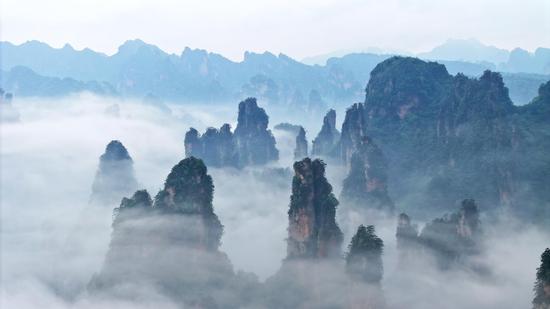
The sites cover about 80,000 square kilometers across 20 provincial-level regions and encompass a wide range of ecosystems, including mountains, forests, grasslands, lakes, wetlands, deserts and coastal zones.
The administration highlighted a series of measures to strengthen heritage protection, including the development of a comprehensive legal framework centered on the national park system.
In addition to enacting the National Park Law, China has revised regulations governing nature reserves and scenic areas and issued management rules for national-level nature parks and natural world heritage sites.
According to the administration, near-natural restoration projects have been carried out at more than 80 percent of heritage sites, improving the integrity of local ecosystems.
More than 90 percent of the sites prioritize hiring local residents, while heritage-based cultural tourism has become a pillar industry in many regions, it said.
Liu Baodang, deputy secretary-general of the World Heritage Expert Committee of the National Forestry and Grassland Administration, said the development of China's natural world heritage sites has progressed through several stages.
The earliest phase focused heavily on ticket revenue with limited conservation efforts, followed by a period in which surrounding communities began sharing tourism benefits, Liu said.
Later, heritage sites started leveraging their brand influence to develop new eco-industries, such as wellness industry businesses and specialty agriculture, he said.
"This stage is characterized by leveraging the brand influence of natural heritage sites to expand their economic reach, extending benefits from surrounding communities to towns and even entire counties," Liu said.
He said the sector is now exploring a new stage of development centered on systematic conservation which aims to establish globally leading heritage management practices.
The administration pledged to further strengthen systematic conservation at the sites, incorporate natural heritage areas into the monitoring system for protected areas and promote coordinated management.






































 京公网安备 11010202009201号