


(ECNS) -- As Chinese companies gain ground in artificial intelligence (AI), robotics and clean energy technologies, the United States is expanding restrictions on Chinese high-tech products, a move analysts say reflects growing strategic anxiety over China's technological advances.
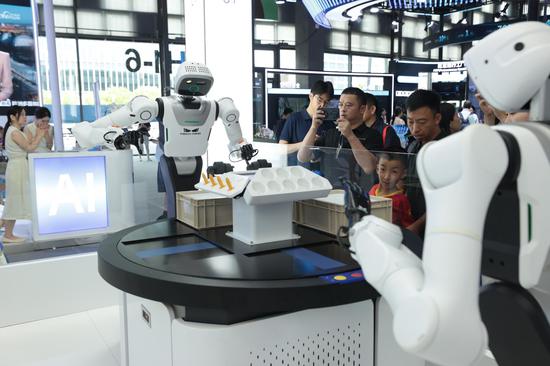
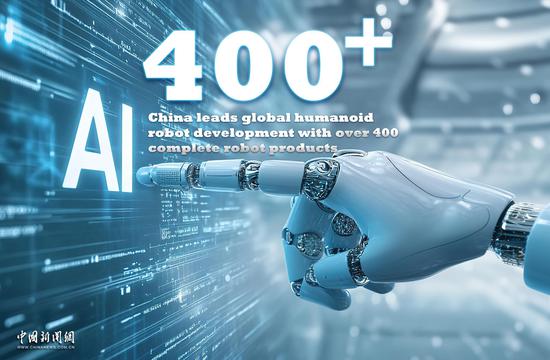
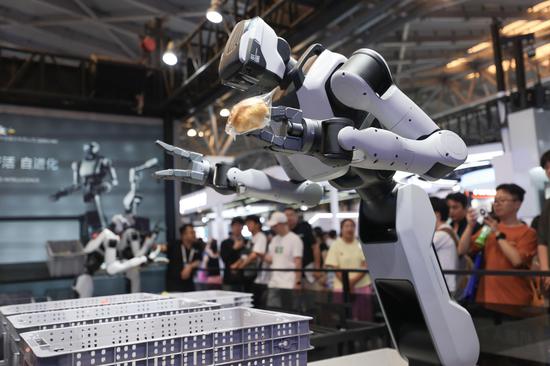
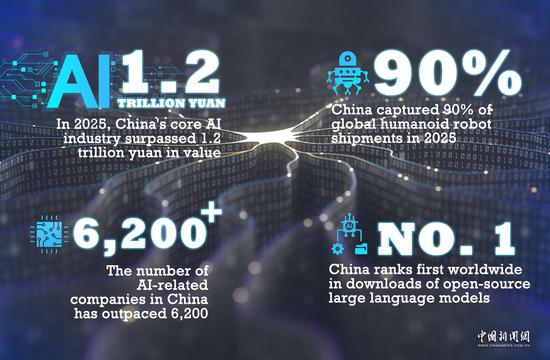
According to market research firm Omdia, about 15,000 humanoid robots were shipped worldwide in 2025. Chinese companies Unitree Robotics and AgiBot together accounted for more than 10,000 units, far outpacing U.S. rivals such as Tesla and Figure AI, whose combined shipments numbered only in the hundreds.

Leading energy consultancy Wood Mackenzie recently published its 2026 Global Solar Inverter Manufacturer Rankings. Seven of the world's top 10 power inverter manufacturers are Chinese companies, underscoring the country's dominance in a sector critical to renewable energy systems and AI data centers.
The latest restrictions were announced last Tuesday, when the U.S. Federal Communications Commission (FCC) said foreign-made power inverters and advanced robotic equipment would be added to its covered list, preventing newly authorized products from entering the U.S. market.
The FCC argued that foreign-made inverters could potentially allow overseas companies to remotely disable equipment, steal data and facilitate unauthorized access.
Zhang Monan, deputy director of the Department of U.S. and European Studies at the China Center for International Economic Exchanges, told China News Network that the security rationale was largely intended to justify targeted restrictions on specific competitors.
The so-called security risks are being used to suppress particular rivals through selective technical standards and risk classifications, amounting to strategic protectionism, Zhang said.
European media outlet Politico noted that the FCC's latest action aligns with two priorities of U.S. President Donald Trump's second term: countering Chinese competition in artificial intelligence and curbing the rise of clean energy, a sector in which China holds a dominant global position.
Analysts say competition between China and the U.S. has expanded beyond AI models into a broader contest over industrial ecosystems and technological capabilities.
China has built strong advantages across the AI supply chain, including data transmission and storage, hardware manufacturing and intelligent terminals — areas that have become increasingly important as AI applications move from cloud-based systems into real-world deployment.
Much like its tariff policies, the U.S. has once again resorted to protectionist measures in the AI sector. The latest actions suggest that Washington's strategy to contain China has expanded from trade in goods to frontier technologies such as AI, escalating from a trade war into a technology war, Zhang said.
Some analysts argue that the restrictions may have only a limited impact on China's long-term development.
Kangyuxiao Li, an equity analyst at Morningstar, said China's extensive manufacturing base and growing export opportunities in other markets mean the restrictions are unlikely to significantly slow the development of the country's humanoid robotics industry.
At the same time, many U.S. companies and research institutions continue to rely on Chinese technology.
ABC News reported that a humanoid robot unveiled by Nvidia in June uses a robotic platform developed by Unitree Robotics. Chinese robotics companies, including Unitree, also supply products to several U.S. universities, while China's leading inverter manufacturers remain important suppliers for the rapid expansion of AI data centers worldwide.
Analysts caution that if unilateral restrictions fail to slow China's technological progress, Washington may seek broader coordination with its allies to impose further controls on Chinese AI technologies.
Zhang warned that an escalating technological cold war could fragment the global AI industry, raise innovation costs, widen the digital divide and undermine international cooperation on AI governance.
As AI becomes an increasingly global technology, observers say erecting "small yard, high fence" barriers around innovation risks harming not only competitors, but also the countries imposing the restrictions.
(By Gong Weiwei)


















 京公网安备 11010202009201号