


(ECNS) — A traditional snack from Guangdong's Chaoshan region, known as rice-free kueh, has surged in popularity after appearing in the hit film Dear You, drawing food lovers from across China and overseas.
“After frying, the rice-free kueh has a generous chive filling that is delicious and vibrant green in color. It’s very popular,” said vendor Wang Guodan, who sells 300 to 400 pieces daily.
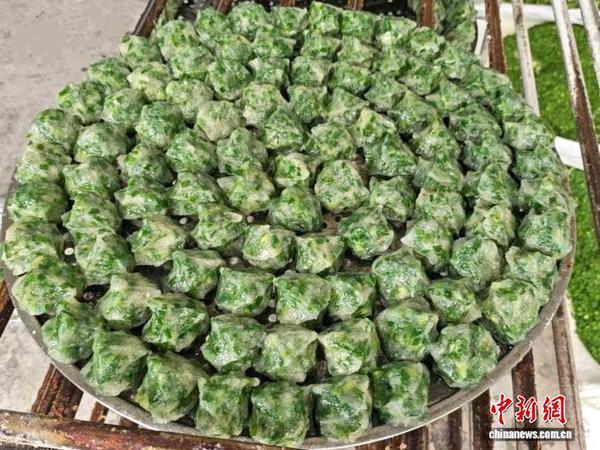
Food delivery platforms report searches for the snack have jumped tenfold compared with previous years.
Made with a wrapper of sweet potato starch and a filling of vegetables and grains and gets its name from the fact that no rice is used in its preparation.
Traditional fillings come in both savory and sweet varieties: savory options include chive, potato, and taro, while sweet ones are typically filled with taro paste or red bean paste.
Among these, the classic chive-filled version remains a firm favorite among diners.
“Mix sweet potato starch with water, pour in boiling water while kneading repeatedly – the chewiness of the wrapper depends entirely on the kneading technique.
After wrapping the chive filling, steam the kueh, let it cool, and then deep-fry until the surface turns golden and crispy,” said Li Yebin, another rice-free kueh vendor in Shantou.
He told reporters that he learned the craft from his father and has been making it since the age of 16: the ratio of flour to water is now second nature to him.
Li also recounted the origin legend: a woman once had no rice at home but wanted to entertain guests, so she used sweet potatoes for the wrapper and chives for the filling, creating a dish that became beloved for its taste.
On one social media platform, tutorial videos on making rice-less kueh have garnered over 1.33 million views, sparking lively discussions about sweet versus savory flavors and different ways to enjoy the snack.
The snack has also traveled abroad with the Chaoshan diaspora, taking root in Malaysia, Singapore and Thailand. Overseas Chinese have adapted it with local ingredients such as jicama and pumpkin, turning it into a distinctive delicacy and a nostalgic tie to their homeland.
(By Helen Mo, intern Wu Jingjing)
































 京公网安备 11010202009201号