


(ECNS) -- "As long as you work hard, you can live a good life." For generations, this belief drove Americans to work, save and strive. Yet as the United States prepares to mark the 250th anniversary of its independence, that national promise is facing a severe test.
A new poll by the Associated Press-NORC Center for Public Affairs Research suggests that about two-thirds of Americans believe the American Dream either no longer holds true or never did.
So what is driving Americans to abandon the belief that hard work guarantees success? In this article, let us explore how the American Dream —once a cornerstone of national aspiration — is breaking apart.

When hope splits, two-thirds of Americans say no to the American Dream
The nationwide poll was conducted in April, gathering responses from 2,596 adults of different ages and backgrounds about their views on the American Dream.
The results were striking. Overall, only about one-third of respondents said the American Dream still exists. Meanwhile, 51% said it once held true but no longer does, while another 15% said it never existed at all.
The picture is even more bleak among younger Americans. Only 22% of Americans under 30 say the American Dream still holds true, compared with 46% of Americans ages 60 and older. This means 78% of youth under 30 have lost faith in the idea that individual effort can reliably lead to upward mobility.
Older Americans retain confidence in traditional narratives of upward mobility while younger generations no longer share that optimism. The intergenerational divide has hardened into an irreconcilable split, where the older generation's nostalgic lens can no longer heal the deep, lived frustrations of younger Americans.
Real-life "Hunger Games": Education, healthcare, housing as three crushing pressures
Young Americans are not inherently unwilling to work hard. The problem is that the rules of the game have changed.
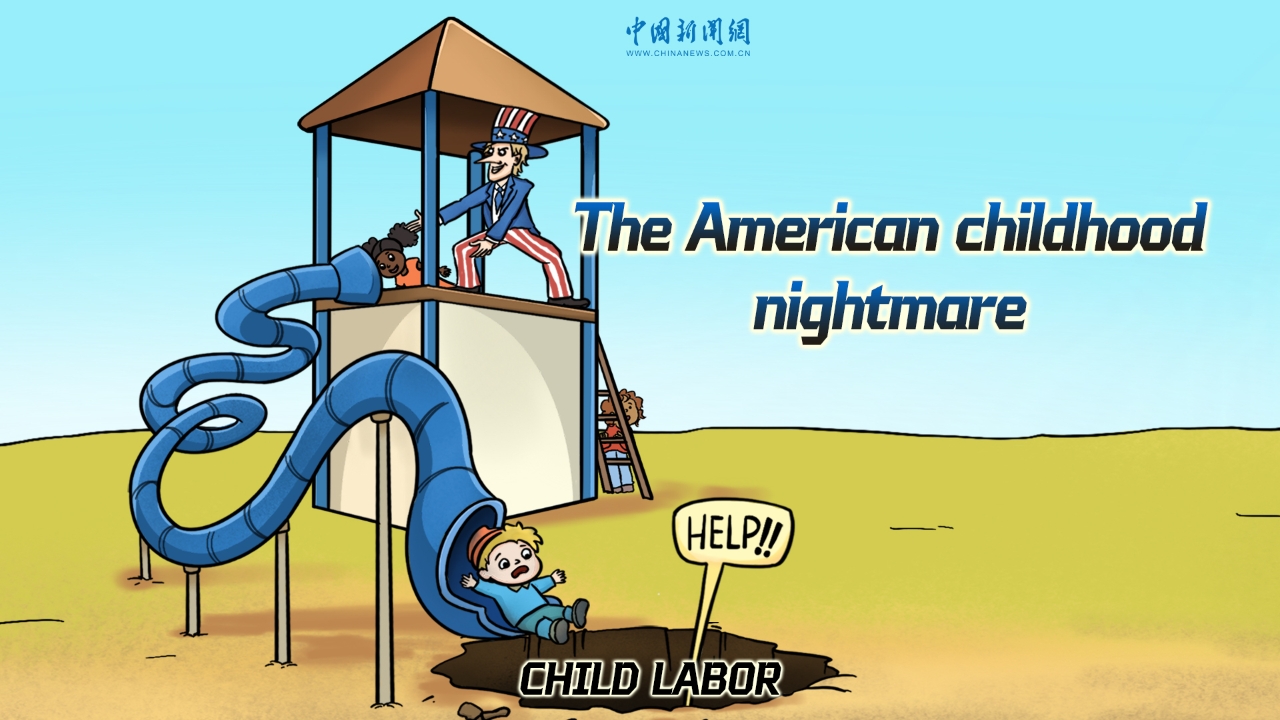
The first pressure arises from unaffordable education. According to data released by the Education Data Initiative, as of November, 2025, the average annual cost of tuition at a public college is 40 times what it was in 1963. As of February 2026, total student loan debt in the U.S. reached $1.833 trillion and 42.8 million student borrowers have federal loan debt. In contrast, in July 2025, 53.1% of young people (those ages 16 to 24) were employed, the U.S. Bureau of Labor Statistics reported.
For Generation Z, the issue is not a lack of effort, but the reality that a massive student loan mountain awaits them even before they enter the workforce. For many, graduation marks the beginning of a lifelong debt trap.
The second pressure comes from unaffordable housing. According U.S. housing data, the median age of a first-time homebuyer was 29 back in 1981. Today it's 40, and people in their 30s have a homeownership rate of only 42 percent.
The thirds pressure is healthcare. In the U.S., even the freedom to see a doctor can come at a devastating price tag.
As reported by Global People, a programmer named Jack earned an annual salary of $450,000, placing him firmly in the high-income middle class. After being laid off, he was left with an incredible $60,000 emergency medical bill, of which insurance covered only one-fifth. The overwhelming debt, combined with high mortgage payments, quickly exhausted his cash flow. He eventually lost his home to foreclosure, declared bankruptcy, and was forced into homelessness, living under a bridge.
Society consumed by "kill threshold": One misstep away from the abyss
The term "kill threshold" originally comes from video games, referring to the point at which a character's health drops below a critical level and can be eliminated with a single strike. Today, it has become a fitting metaphor for the fragility of America's middle class.
Many U.S. households no longer have the financial buffer to withstand unexpected shocks. A new MoneyLion report says rising housing costs, groceries, bills, and inflation have completely changed what a six-figure salary actually looks like in America. In states like New Jersey, California, Hawaii, and Massachusetts, even earning over $100K may still put households in the lower-middle class category.
When decades of hard work results in endless debt, unaffordable healthcare and the prospect of renting forever rather than owning a home, the American Dream begins to look less like a promise and more like a punchline. The United States can build aircraft carriers powerful enough to dominate the world's oceans, yet many families fear that a single medical emergency could push them into financial ruin.
When a system shifts so much risk onto individuals, what erodes is not only the confidence of younger generations, but also one of the foundational ideals that has defined the United States for nearly 250 years.
(By Gong Weiwei)










































 京公网安备 11010202009201号