


(ECNS) -- A small lamb doll dressed in colorful Xinjiang-style attire has become one of China's hottest cultural products this summer, winning over social media users nationwide with its distinctive look and handcrafted charm.
With its feathered headpiece, glittering ornaments, curly fleece, bright eyes and embroidered clothing made from traditional Atlas silk, the "Xinjiang Lamb" has quickly become a viral sensation. Some online users have even jokingly called it "China's version of Mario" because of its instantly recognizable appearance.
"Xinjiang Lamb" steps out of Silk Road to win nationwide fans
Infused with elements of Silk Road culture, the handcrafted Xinjiang lamb has spread rapidly across Chinese social media platforms, where users from across China are asking where they can buy one.
Many have turned to personal shoppers, while others have posted online offering to purchase the dolls on behalf of interested buyers. The craze has transformed Jinquan Mall at Urumqi, capital of northwest China's Xinjiang Uygur Autonomous Region, where the lamb first gained widespread attention, into a must-visit destination for tourists.
"RedNote kept recommending the lamb to me for days. As soon as I arrived in Urumqi, I rushed to buy it," a user named "Coffee Cat" wrote online, sharing photos of two customized lamb dolls.
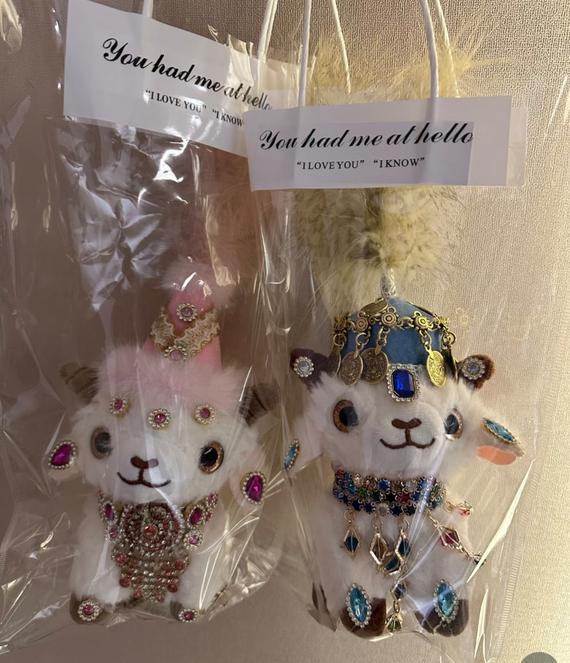
Another RedNote user said long queues had formed at the mall, joking that many customers seemed drawn not only by the dolls but also by the handsome shop owners who created them.
Even during the recent five-day Eid al-Adha holiday, orders for "Xinjiang Lamb" continued to grow.
Chen Qian, head of a handicraft company in Hangzhou that supplies the decorative hats used on the lamb dolls, said pre-orders have already been scheduled through mid-July, despite daily production reaching 13,000 pieces.
No two "Xinjiang Lamb" are alike
Unlike mass-produced souvenirs, each "Xinjiang Lamb" is customized through a process involving both the customer and the shopkeeper.
Customers first choose a traditional ethnic-style hat, followed by choosing decorative gemstones and other accessories. They can decide on the colors of the ornaments themselves, while shopkeepers offers suggestions on combinations that best capture the spirit of Xinjiang culture. Some customers even bring photos for reference, while others create entirely original designs. The result is a one-of-a-kind collectible.
The lambs are made on-site, according to "Coffee Cat". "The blue lamb I chose had a rare hat design, beautiful metal decorations and excellent craftsmanship," the online user said.
"You first choose a hat — there are Kazakh and Uygur styles, all very cuten", "Niniwen" RedNote user wrote online, sharing her experience of making the dolls. "Then you select the decorations. The shop owner is great at matching colors and designs, and he's very funny too."
For many buyers, the appeal goes beyond aesthetics.
One customer said the lambs feel like little treasures that have walked out of the ancient Silk Road. "Holding one in your hand feels like carrying a piece of the warmth and romance of the ancient city."
More than a viral sensation
Industry observers say the success of the "Xinjiang Lamb" reflects a broader transformation in China's cultural and creative industries. Younger consumers are increasingly looking for souvenirs to offer interaction, personalization and emotional value rather than simply serving as proof of a visit.
What appears to be a social media sensation is also the result of years of development in Xinjiang's cultural and creative sector, which has increasingly focused on combining local ethnic traditions, craftsmanship and modern design.
Experts say maintaining product quality and developing a sustainable intellectual property brand will be crucial if the Xinjiang Lamb is to grow from a short-lived internet trend into a lasting cultural icon. Potential future developments include expanded collectible series, new customization options and a wider range of related merchandise.
Consumers have already spent lots and shown their enthusiasm online. The next challenge however for Xinjiang's creative entrepreneurs is turning one viral lamb into a thriving cultural brand that represents the region's rich heritage and creativity.
What began as a single handcrafted souvenir may prove to be the start of something much bigger.
(By Gong Weiwei)




































 京公网安备 11010202009201号