



By Liu Xinyu
(ECNS) – “Excuse me, two liang (100 grams) of noodles, please! Extra veggies, less noodles!” For locals in Chongqing, a day often begins with a bowl of fiery, mouth-numbing xiaomian (spicy noodles).
This everyday ritual is more than just a local custom — it’s a scene that plays out across the southwestern metropolis and, increasingly, in restaurants abroad, offering a taste of home for expats and a culinary adventure for foreign diners.
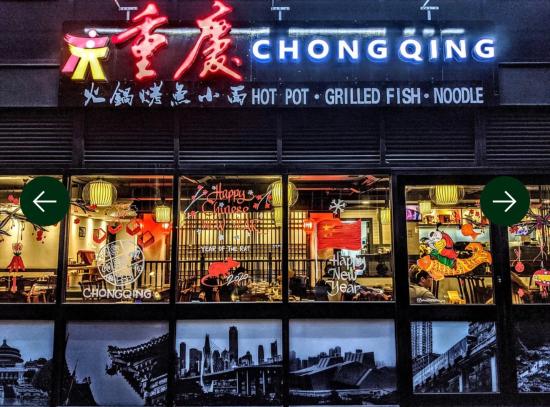
For Chongqing natives Yang Sichun and Hu Min, that taste of home comes to life in London. The duo co-founded "Taste of Chongqing", a restaurant where a bowl of authentic Chongqing xiaomian is priced at £10.8 (about $12.68 ), and the dry-stirred noodles with minced pork and slow-roasted yellow beans — listed on the menu as "Dry Noodle with Spicy Cooked Pork Mince and Slow Roasted Yellow Beans" — go for £12.8.
“Most of our customers are Chinese, but quite a few international diners come in to explore something new,” Yang said during a visit back to Chongqing. Since opening in2019, the 450-square-meter eatery has offered more than just noodles. Its menu spans a range of Sichuan and Chongqing classics, including dry pot dishes, Sichuan-style specialties, and Maocai (a spicy poached vegetable and meat dish).
Hu Min, a native of Wanzhou District in Chongqing, makes sure the restaurant stays true to its roots with signature Wanzhou grilled fish. “Daily turnover is around £8,000, and xiaomian alone contributes about one-third of that,” Yang added.
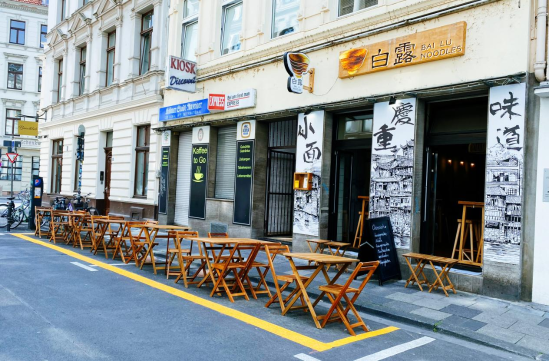
In Cologne, Germany, Bai Xue’s noodle restaurant“Bai Lu” serves as a vibrant gateway to Chongqing’s culinary culture, drawing a predominantly international crowd. After studying in Germany and settling there, Bai wanted to ensure she could enjoy authentic flavors from home anytime. In 2018, she opened the intimate 25-seat eatery, specializing in Chongqing xiaomian and hot-and-sour rice noodles, with prices ranging from €5 to €16.
“Our foods, such as noodles and wontons, are staying true to the authentic Chongqing taste,” Bai explained during an online interview. “I want customers to experience the same flavors they would if they visited Chongqing.”
For most dishes, diners can choose their preferred spice level or opt for non-spicy versions—except for signature items where the heat is integral, such as Steamed Chicken in Chili Sauce and Wontons in Spicy Chili Oil.
“Many foreigners actually love spicy food,” Bai noted, “Our Chongqing-style noodles with minced pork and slow-roasted yellow beans are especially popular among them.”
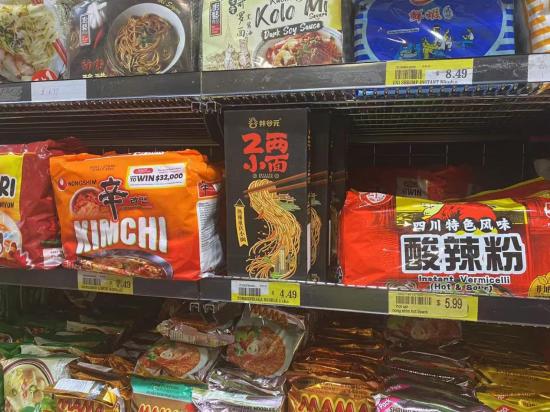
Beyond the restaurant experience, pre-packaged xiaomian that cooks in just three minutes is bringing the flavors of Chongqing to tables around the world. According to data released by the Chongqing Municipal Commission of Commerce in November 2025, the annual output value of the city’s entire xiaomian industry chain has surpassed 56 billion yuan (approximately $7.88 billion), supporting nearly 500,000 jobs. At the heart of this growing industry, Dadukou District established the Chongqing Xiaomian Industrial Park in2021, marking the sector’s evolution from a bowl served in local eateries to a product packaged for global markets.
A shipment of over 10,000 boxes of KINGS NOODLE branded pre-packaged xiaomian cleared customs just before the Spring Festival and is now en route to European destinations, including the United Kingdom, the Netherlands, Poland, France, and Germany.
“Previously, our overseas sales were mainly through cross-border e-commerce. This first customs-cleared export shipment represents a new phase of standardized, large-scale, and regularized overseas trade for our brand,” said Mei Hao, general manager of KINGS NOODLE.
Chongqing Jingguyuan Food Technology Co., Ltd. was the first enterprise in the city to obtain a food production license for xiaomian. During a visit to its production facility, a90-meter-long intelligent production line had just completed a shift and was being cleaned. The line operates three shifts daily, starting at 6 a.m., producing up to 15 tons of noodles per day — equivalent to 150,000 to 200,000 servings of pre-packaged xiaomian. Through precise control, the production line maintains noodle moisture content at 22-23 percent, preserving the texture of semi-dried noodles while extending shelf life to up to eight months.
Fu Yong, chairman of the company and president of the Chongqing Xiaomian Industrialization Promotion Association, said that of the company’s total production—which includes xiaomian, beverages, and congee—about 5 percent is exported. The company’s products are now available in physical supermarkets in Southeast Asia and Australia, as well as to global consumers through online trade platforms. Fu is currently exploring cooperation with a partner in France, with plans to potentially open shops and establish production facilities across France, Spain, and Portugal.
A working group official from the Food and Agricultural Product Processing Industry Chain Development Task Force (also known as the Chongqing Xiaomian Industry Office) in Dadukou District reported that cumulative overseas sales of Chongqing xiaomian have surpassed 50 million yuan, with products now reaching more than 30 countries and regions. This growth has driven coordinated development across upstream and downstream industries, including hotpot base production, packaging materials, and logistics. In 2025, the district’s total industry revenue exceeded10 billion yuan.
To support the global expansion of the xiaomian industry, Dadukou District has established a dedicated cross-departmental task force involving customs, commerce, and other government bodies. The team has helped resolve over 30 export-related challenges, including issues related to export qualifications and adaptation to international standards. The 200-mu (approximately 33 acres) industrial park now features 90,000 square meters of production and testing facilities, helping to reduce export costs by more than 50 percent while improving efficiency by over 20 percent. Local enterprises have also participated in more than 80 events, including the China-Singapore Connectivity Project10th Anniversary Special Products Exhibition and various import expos.
Looking ahead, Dadukou District plans to deepen trade cooperation with ASEAN nations, focus on expanding into European and American markets, regularly organize enterprise participation in international exhibitions, strengthen collaboration with renowned overseas brands, and upgrade its one-stop foreign trade service platform and overseas warehouse network.
From satisfying the nostalgic cravings of overseas Chinese to capturing the curious palates of global food lovers, Chongqing xiaomian is transcending borders. Through the fusion of culinary appeal and industrial development, this iconic street food is making a successful transition from simply "going out" to truly "settling in" on the world stage.


























 京公网安备 11010202009201号