



Recently, Francesca Bria, advisor to the European Commission and President of the Italian National Innovation Fund, was invited to participate in the Mingde Strategic Dialogue, where she engaged in in-depth exchanges with Wang Wen, Dean of Chongyang Institute for Financial Studies at Renmin University of China and Dean of School of Global Leadership. The transcript of the dialogue is released as follows.
Opening up while inheriting heritages, developing while improving people’s life
Wang Wen: Welcome to Mingde Strategic Dialogue. As we all know, Mingde Strategic Dialogue is a very important platform across universities in China. It acted as a bridge between academia in China and the rest of the world. Over the past two years or so, we have invited over thirty to forty experts from various countries and regions in the world including Europe, Russia, the United States. They're here to share with us their insights. It is my great pleasure to have professor Francesca Bria here with us who is not just a professor herself but also takes on a lot of responsibilities. For instance, she is the President of the Italian National Innovation Fund, and also an advisor to the European Commission.
A question that I am interested in is that your last trip to China was in 2012, so it's been thirteen years and since you were here in China. We spent a lot of time together over the past several days. We went to Shanghai, Zhejiang, and now we're back in Beijing. And we have talked a lot with each other. So professor, my first question to you is that compared to your experience in China twelve years ago, what do you think is the biggest change here in the country that you have seen and in your five-day trip to China? What impressed you the most?
Francesca Bria: Thank you. It's great to have this dialogue. 12 years ago when I came to China, I was doing my PhD, studying in the Imperial College London in the UK. And then we had some research relationship with Tsinghua University. And I also came to the Expo in Shanghai. So of course there was a moment where I was very interested in the urban development of China, but also in the collaboration between universities and exchange in science and technology. I think this time I really value the possibility to have a dialogue on issues of the future. Our conversations focus very much on the technological innovation, the diffusion of artificial intelligence and what this means for the big challenges that we're facing, whether this is the green transition, climate change, or inequality. The widespread inequalities continue to grow, so we can really collaborate more with China and globally on making sure that the development of those technologies will be serving people.
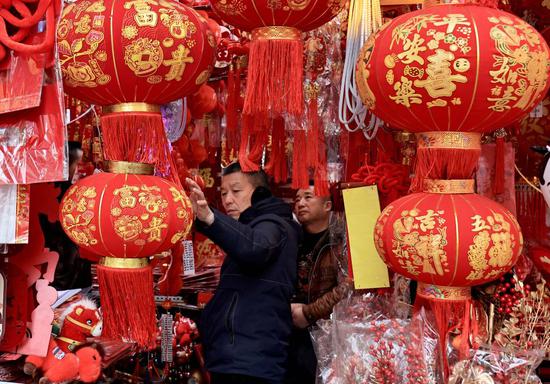
So I was impressed to see how China keeps combining the very much value of its past and its cultural heritage, but also has a very proactive and open view to the future. China has maintained continuous development and focused on improving the life of the people and looking at the future. Until now we visited many enterprises, companies, and universities. It has been an interesting and positive experience for me.
Fragmentation is a key challenge in EU-China relations
Wang Wen: You just spoke of the changes that you have seen in China. In fact, over the past twelve years, one of the greatest changes in China and its relationship to the world is that it is taking a more proactive role in global governance and innovation, which for me is very important. Twelve years ago, you studied here in China, and now you have become a very important European scholar as well as a social activist with a significant influence. But through it all, when looking at this process by which China rises and China is all becoming willing to engage with the rest of the world, I still notice that there's a lot of misunderstandings. What do you think is the biggest misunderstanding?
Francesca Bria: This is a moment of dramatic change in global governance. I think we are seeing a rapid transformation from a system of globalization, and a system where we had a world order based on multilateral institutions, free trade, and accepted governance and rules into a moment where we are seeing what it didn't work of this system. In Europe, we had to go through a process of understanding the benefit and backlash of globalization. I think there’s an idea that the progress will just trickle down. So the more you expand, the more you produce, the more you accelerate innovation and globalization, and the more you manage to achieve growth and distribute this growth throughout the population. We understood this is not the case. We understood that workers were left out. We have a very strong gap in industrial competitiveness at the moment that we are trying to tackle in Europe, and we have increasing inequalities. So the polarization of wealth inequalities, worker struggles, and climate change, have brought very negative impacts on previous consensus.
Now we are in a moment where we need to find a new way of approaching big global issues but also thinking to balance the economic development with the development of communities and people’s living standards. I think that at the moment, the difficulties in the relationship in particular between China and the EU is because of the fragmentation. The U.S. approach to the global economy is very confrontational and is leading to a change which for example in Europe, we also see the rise of populism, the rise of political polarization, and some confusion about what should be the governance model for the future.
In this respect, in my viewpoint where I am engaged in studying technological digital capitalism and how it is developing worldwide, I think we also have never seen such a concentration of power from very few companies which are controlling relevant infrastructures and new digital technologies. I think it is posing a threat to democracy, to sovereignty, and to different kinds of balances. Now, we must think of a better way of governance of this technological revolution.
The dependency that Europe has with the U.S. in particular when it comes to trade issues or when it comes to security and technological innovation is deep. But also we have vulnerabilities because we have been developing an economy that's very export-oriented and has a lot of dependencies when it comes to energy for example from Russia. And other type of dependencies vis-a-vis China, rare earth and critical minerals for critical sectors of the European economy. We have seen the acceleration of the problems in a global stage including the geopolitical situation with the Ukraine crisis and the situation in Palestine. And that's where the preconception comes in having a less tense and more cooperative relationship to China.
I don't think there is a very much clarity about the rules for global cooperation in the future, and I think that's where we hope that China can exercise a stronger role in that sense. The technological trajectory of China, including the decarbonization, energy, renewable energy, and clean energy, is very important for Europe. And I think China’s industrial policy and long-term planning is also important for Europe. So we can find a way to benefit from each other’s models. I'm not going to hide the problems at the moment because I think there are certainly some questions that we need to work out together, so that we can be confident and have more trust in the way we relate to each other. So there is a big space for improvement.
Diversification is value, not threat
Wang Wen: There are a lot of differences in terms of the way of production and way of living, which triggers misunderstanding that is hard for us to understand each other. I can understand that. And there is one saying, and I don't know your view on that, Chinese scholars believes that the fundamental reason of the containment of the U.S. on China and the de-risk worries from the EU on China is that Western countries don't accept the rising of China in their own way. And also, more importantly, they do not accept the rising of a country with a totally different system than their own. So that is why the conflicts are triggered. So what’s your view on that?
Francesca Bria: I think that one of the important things is to have a more multi-polar and diverse view of the future. The majority of European citizens see diversity as a value. And in fact, you can see how diverse our society is at the moment in education and in the economy. Of course, there are different approaches. In some countries, there is a rise of populism and of economic nationalism that could potentially hinder the understanding of the importance of diversity.
I certainly see diversity as an added value. And I also think that the divide should not be between the West and the East. On the contrary, I think that the effort should be to make sure that the progress that China is doing in the energy transition and in the technological revolution will be helping more people to get out of poverty for example in the Global South, and will be helping to elevate the living standards for the majority of the population. So I see China play a very important historical role. We are also in Europe very focused on working with Latin America, with Africa, and with the Global South to better understand Asia.
Such cooperation is not only between the U.S. and China, but also with smaller countries. We have been learning in particular in my field from Singapore, South Korea, Malaysia, Brazil, African nations and a lot of other different countries which are providing different models, which I think are very important to understand how things work differently.
But ultimately, I think the goal should be to really advance our culture, not in contrast to each other. We also need to preserve the autonomy, the culture, and the institution. In Europe, we have a long historical trajectory. I'm an Italian, and we are very much used to think in the long term. I think that is very important. We also played a very important civilizational role, but this doesn't have to become a supremacy towards other cultures. I think this is one of the most important points.
Shape national innovation system with an active government and long-term vision
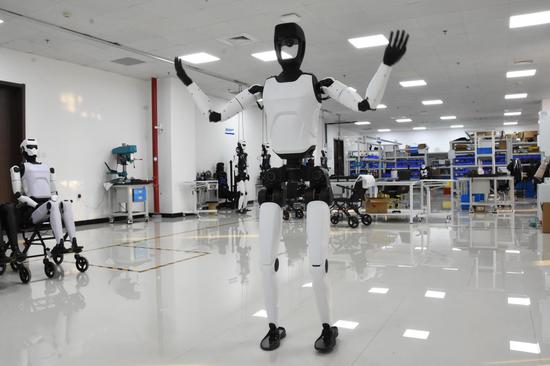
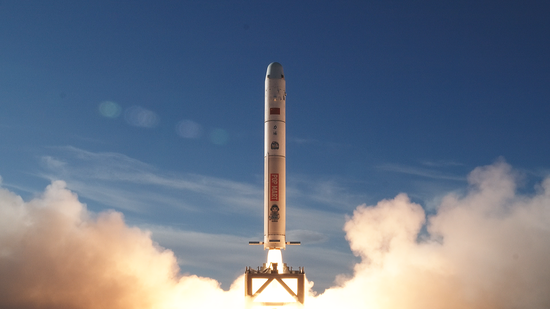
Wang Wen: China's development and pathway is based on a lot of innovation. Recently, in the area of AI, aviation and space technologies, and infrastructure. And the economic operation and management model are also innovative. We have a very huge market, and we also need a huge government, not just fully laissez faire for the free economy existing in the textbooks. We also have the policy innovation. We didn't follow the election system neither from the U.S. nor from Europe. We are using our own pathway, suitable to our own condition. So that is why in the political areas, we can make the very effective decisions and we have the clean government, and the development pathway is suitable to Chinese conditions. We are also continuously improving our own system. So in this process, I want to learn from you who is a professor doing the study of innovation, how do you view China's innovation system?
Francesca Bria: It is certainly that China has a successful innovation system, in particular the trajectory which we call technological transfer. This is very impressive. How do you manage to transfer the technologies or science that you develop in university and academia across all sectors of the economy? Ultimately, these technologies can be developed in the market in a dynamic way. I think it is because of this system of innovation and diffusion of innovation across the economy, and the way that the public sector and the private sector can collaborate. The public sector sets the direction and the goals, and the private sector executes and shapes markets. I think this is very interesting. On the industrial level, we are seeing different types of innovation, such as electric vehicles, biotechnology, ICT, AI, and energy transition. The interesting thing is how the companies are able to integrate these technologies to solve the problems that matters for them. I think it's similar to Europe because Europe has a very competitive sector in particular niches, and the ability to integrate specific technology vertically in their supply chain. What China is doing on diffusion of this technology at scale could be very interesting to replicate technology transfer and diffusion. And China is having a more synergetic approach between the government setting directions and companies scaling innovation into the economy.
There’s another success story that's coming out of China, which is the long-term vision. Because we know from the trajectory of China’s innovation that some innovation need a long time and a risk-taking view in order to succeed and to ultimately provide new products and new services. It is important to be able to take a risk in the economic development throughout the innovation cycles. So it’s important how the state invest in innovation. Sometimes companies cannot take a risk, because otherwise they will go bankrupt. This is another interesting point how to make sure that states can have some more entrepreneurial role in the economy. And this is another success that we can see from China. I also think that at the moment, there is a big challenge. When we look at the diffusion of artificial intelligence, quantum computing and new investment in AI infrastructure, we need to deal with the consumption of energy, of water, and the continuous extraction of data from the machine.
I think the important thing is to consume less energy or to move towards renewable energy, which ultimately can bring an advantage of clean and available energy that can power the new infrastructure of the economy. Meanwhile, we need to have a strategy about data, because data is the raw material of the digital economy. It’s not only an important economic asset, but is powering the AI economy. In addition, data is a collective good which is produced by the population. So data is also about our culture, our institutions, and the rules that we give to the artificial intelligence systems. So what I think there is that we need to find a way globally to cooperate across innovation systems. And the sovereignty over the data and the technology can be maintained. For example in Europe, we have a different way to regulate artificial intelligence and data, and we care very much about the information, self-determination of people, privacy of people, and the culture that we have. I think it will be win-win if we can cooperate and collaborate in new markets that are created by artificial intelligence and by the data economy. Not through dominance, but through real cooperation, which means preserving each other’s national sovereignty and differences.
Defend sovereignty and reject hegemony in the age of AI and data
Wang Wen: In this process of technological or social innovation, we're inclined to look ahead into the future. As you know, Renmin University of China is initiating the “2050 Research Plan”. Looking ahead into 2050, how do you envision the international landscape and innovation system?
Francesca Bria: I think at the moment we are having a technological supremacy war happening in the world with very important challenges for a system that's more balanced and democratic. We are seeing the attempt to control the digital economy by very few companies that are becoming more and more powerful and are concentrating a lot of infrastructural power, economic power, social power, and political power. Those companies are what we call “big tech companies” which are based in the U.S. mainly. We also see some of those companies rising in China. And I think if we do not regulate this type of economy, we risk to have certain companies having access to a lot of political power as we see now happening in the U.S., controlling social media, controlling data of people, and even interfering in election process. We have seen that in Europe happening during the elections.
So instead of starting from a technological race to decide who is going to develop this technology faster, I think the approach that can work starts from the real problems of humanity. How do we get people out of poverty? How do we solve climate change? how do we improve the health care? How do we develop cities that are more livable and greener? How do we enable and empower people to live in the planet?
We start from big challenges that humanity is facing. And after that, we see how science and technology can help us to address these big challenges, and that is where cooperation should and can happen and we should understand what new rules for trade are, what new rules for data, governance and intellectual property rights are, and what rules for the financial services are. I'm also a believer in having the possibility to tax big wealth to redistribute the gains that are produced from the technological revolution into the economy and big tech companies.
Also there are issues related to cyber-security and climate, and climate change is one big priority. And affordable housing for the people is where international collaboration should happen and not where economic growth is prevented. Economic nationalism measures such as export control, bans, and blacklisting, are not ultimately the way where we can take advantage of this technological revolution for the future. So really I think we are at a very important time where we have seen many things that are developing in a great way and we need to know that this is going to serve humanity and prosperity, not create more divides and new form of colonialism which are not what the world needs at the moment.
Wang Wen: Over the past thirty minutes, I have enjoyed my conversation with the top-tier professor from Italy. And I can feel that 2050 is not only an opportunity that opens up a lot of opportunities for cooperation, but also presents us with a lot of challenges. Over the past five days, we have talked a lot and learned a lot from each other, which is all very inspiring. And I think that is precisely why we have Mingde Strategic Dialogues. I have definitely enjoyed this conversation with you, professor Bria. Thank you very much. Hopefully, we will see you next time at the Mingde Strategic Dialogue.
Francesca Bria: Thank you, too.
























 京公网安备 11010202009201号