


By Chen Su, Wei Yuan, Xing Yi
(ECNS) -- Climate change poses the biggest threat to the vision of ecological civilization, and no country can tackle the global challenge alone, said Süleyman Coşar, president of Türkiye's ÇEKUD environmental organization, on Thursday.
Süleyman Coşar, president of Türkiye's ÇEKUD environmental organization, made the remarks at the China-Türkiye Dialogue on Ecological Civilization and Green Transition held in Istanbul during the 31st United Nations Climate Change Conference (COP31), which kicked off on Monday in the Turkish coastal city of Antalya.
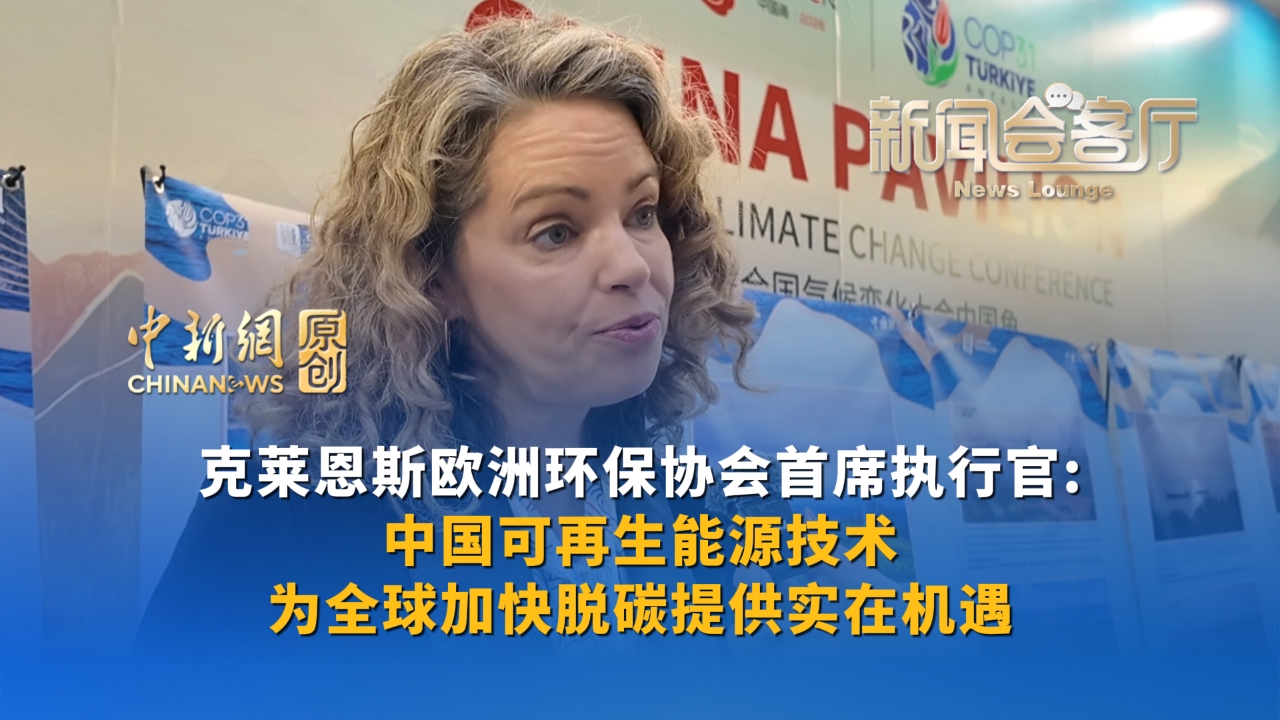
The dialogue was hosted by China News Service and the Research Center for Xi Jinping Thought on Ecological Civilization, with China News Network and the Policy Research Center for Environment and Economy of the Ministry of Ecology and Environment (PRCEE) as co-organizers. It's also the second multilateral event of China News Service’s flagship program "News Lounge" held in Türkiye.
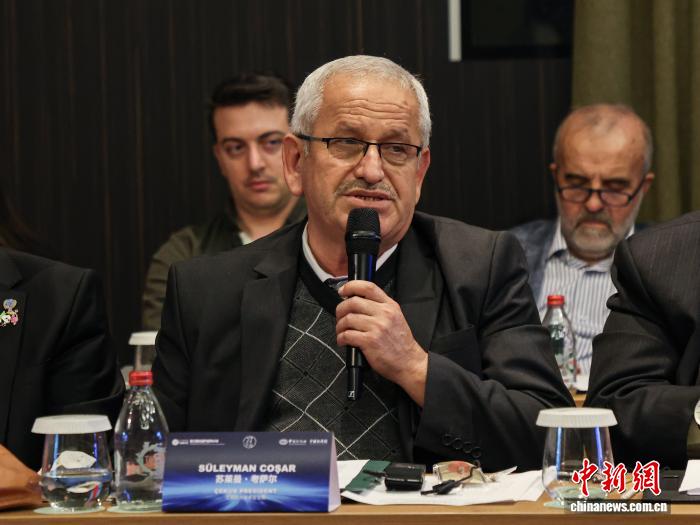
Coşar said ecological civilization is, in its broadest sense, a philosophical and political concept aimed at rebuilding the relationship between humanity and nature on the basis of balance and sustainability, in response to the global climate crisis and ecological degradation.
He noted that discussions on ecological civilization, known in Chinese as "shengtai wenming," began in China in the 1980s. In 2018, the concept was incorporated into China's Constitution as a national goal.
Coşar outlined three key features of ecological civilization. First, it rejects a development model that treats humanity as the master of nature and seeks to protect life and biodiversity. Second, it places natural ecological assets and sustainability at the center of economic structures, moving beyond growth models focused primarily on GDP. Third, it represents political and social transformation that integrates socialism with ecological principles, as reflected in China's national strategy.
Addressing the challenges posed by climate change, Coşar said humanity's continued pursuit of a more comfortable lifestyle, along with industrial production, technological development, and warfare, has placed growing pressure on the environment and contributed to greenhouse gas emissions. He noted that while industrialization and technological progress have driven social development, they have also brought significant ecological challenges that should not be overlooked.
The impact of warfare is particularly concerning. Beyond the direct destruction of natural environments and ecosystems, war-related activities also generate substantial emissions, with environmental consequences that may persist for a long time and affect future generations. Climate change, he stressed, is therefore not only a challenge facing today's societies but also a global issue with long-term implications.
Coşar stressed that climate change is a global phenomenon that cannot be addressed by any country acting alone. He also expressed concern that some of the countries contributing most to global pollution are taking the fewest measures to combat climate change.
Coşar concluded by emphasizing that climate change is a long-term and complex global challenge with far-reaching consequences. Given the evolving climate situation, no country can achieve its vision of ecological civilization on its own, making stronger international cooperation essential to advancing ecological civilization worldwide.































 京公网安备 11010202009201号