


(ECNS) - Over the past few years, a subtle yet profound shift has been taking place in U.S.-China relations. This change goes beyond trade or technology, reaching into one of a nation's most important resources — talent.
According to a recent report by a working group under the U.S.-China Education Trust, the United States is facing a "China talent challenge." Put simply, it is losing the pipeline that cultivates people with a deep understanding of China.
Much of this decline stems from changes within the U.S. itself.
Since the start of Donald Trump's second term as president, federal funding for related programs has dropped sharply, and many exchange programs remain suspended. At the same time, universities are facing growing restrictions, making sustained academic engagement with China increasingly difficult.
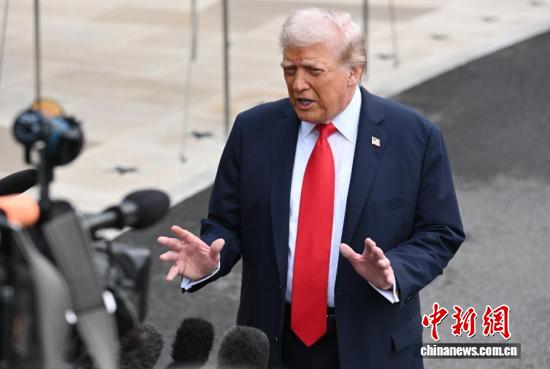
Some American students also worry that time spent in China could affect their chances of entering government service in the future, adding to their hesitation.
The result is a shrinking, and increasingly narrow, talent pipeline at a time when understanding China is more important than ever.
This creates a deeper risk.
Without people who have lived and worked in China over extended periods, U.S. understanding of the country becomes more abstract, with analysis increasingly dependent on secondhand information.
Over time, this gap in understanding can distort decision-making. Misreading economic trends may affect U.S. business strategies and supply chains; misjudging political or social dynamics could lead to flawed government policies; and the lack of nuanced understanding increases the risk of overreaction or strategic miscalculation in American society.
The report also stresses that without on-the-ground experience, it "cannot provide the whole picture."
To address the problem, the report calls for restoring funding, rebuilding exchange programs, and sending a clear signal that deep understanding of China should be treated as a national priority.
Without a new generation of China experts, the United States risks managing one of the world's most important bilateral relationships with an incomplete and potentially distorted picture of reality.
Former U.S. Ambassador to China Nicholas Burns said that learning Mandarin and living in China are essential to building relevant expertise, calling it "an urgent priority for U.S. national security."




































 京公网安备 11010202009201号