


At a time of persistent global uncertainty, the business communities of China and the United States have continued to navigate economic headwinds through pragmatic cooperation, delivering a strong vote of confidence on their mutually beneficial economic ties.
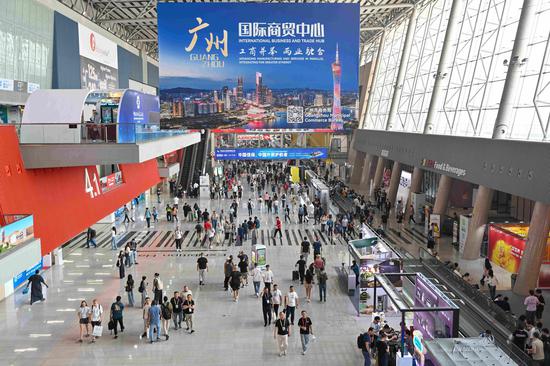
The upcoming China International Supply Chain Expo offers a prime example. Participation by U.S. firms at the event is expected to expand further, with a particular focus on artificial intelligence (AI), semiconductors, medical technology and high-end manufacturing, fields in which both countries possess distinct competitive strengths, according to the China Council for the Promotion of International Trade.
The trade promotion body said U.S. companies have ranked first among foreign exhibitors at all three previous editions, with industry giants including Apple and Tesla returning year after year.
Broader efforts to foster commercial engagement have also continued. A China-U.S. commercial matchmaking program has been operating for 21 consecutive years. A rail transportation industry exchange meeting was held under the framework in March, while another event is scheduled for June to explore cooperation in the emerging low-altitude economy.
These developments underscore a fundamental reality: the world's two largest economies remain intertwined, with their supply chains tightly integrated.
Together, China and the United States account for more than one-third of global economic output and approximately one-fifth of global trade of goods. Currently, about 80,000 U.S. companies invest in China. Around 80 percent of Apple's core suppliers have plants in China, while Tesla's Shanghai Gigafactory accounts for about half of the company's global electric vehicle deliveries.
The profound commercial bonds are being continuously reinforced by fresh, long-term commitments, as a growing number of U.S. companies view the Chinese market as a strategic anchor for future growth.
The U.S. pharmaceutical giant Eli Lilly, for instance, announced a plan in March to invest 3 billion U.S. dollars in China over the coming decade to expand supply chain production capacity, marking another significant move by the company to deepen its roots in China and support the development of China's healthcare industry.
In March, U.S.-based health and wellness company Amway announced the launch of an organic farm in Chengdu, capital of southwest China's Sichuan Province. It will be the company's first self-owned organic farm outside the Americas.
Michael Nelson, president and CEO of Amway, said that China has remained the company's largest market for 23 consecutive years, serving not only as a global supply chain hub, but also as a source of innovation and a strategic engine of growth for the company.
"Investing in China means investing in future growth, and being in China means being where opportunities are," he said, citing sustained demand from Chinese consumers for higher-quality products and services.
A survey conducted by the American Chamber of Commerce in China (AmCham China) showed that 52 percent of U.S. companies operating in China expected to be profitable in 2025, while more than half of the surveyed companies continued to rank China among their top three global investment destinations.
Forward-looking indicators reinforce U.S. companies' confidence in the Chinese market. According to the AmCham China survey, roughly 72 percent of responding U.S. companies anticipate industry growth in 2026, while nearly 60 percent plan to increase investment in China.
"There are a lot of ways we can collaborate in ways that can mutually benefit people from both countries," AmCham China Chairman James Zimmerman said, highlighting significant untapped potential in areas such as healthcare, consumer goods, and green technology, as well as fast-emerging fields like AI.
Analysts say the deeply intertwined commercial ties between the two countries have become the ballast that steadies the broader relationship.
Dun Zhigang, a researcher at the Chongyang Institute for Financial Studies at Renmin University of China, said the sustained economic and trade interaction underscores the fact that the two economies retain vast room for strategic complementarity, and the dividends of cooperation deliver tangible benefits to the people of both countries.
The China-U.S. economic and trade relations are mutually beneficial in nature, Chinese foreign ministry spokesperson Guo Jiakun said at a daily press conference on Tuesday.
The two sides need to work together to deliver on the important common understandings between the two presidents, and provide greater stability for China-U.S. economic and trade cooperation and the global economy, Guo added.






























 京公网安备 11010202009201号