



1. China approves 2026-2030 blueprint, maps out high-quality path toward modernization
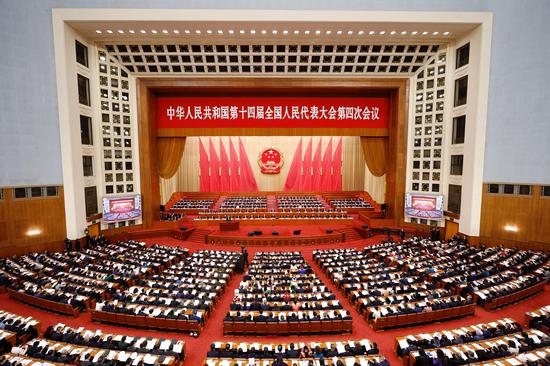
China's national lawmakers on Thursday approved a development blueprint for the 2026-2030 period, marking a pivotal step in the modernization drive of nearly one-fifth of the world's population.
As the world's second-largest economy, China charts its course through medium- and long-term plans that clarify policy direction, development goals, and reform pathways, offering a degree of predictability that contrasts with governments fixated on short electoral cycles.
"For us, the five-year plan is more than a macro blueprint," said Ginger Cheng, CEO of DBS China. "It serves as a 'metronome' for calibrating our strategic rhythm, ensuring our investment pulse remains synchronized with the key cycles of national development."

2. China remains among world's safest countries as public security continues to improve: work report
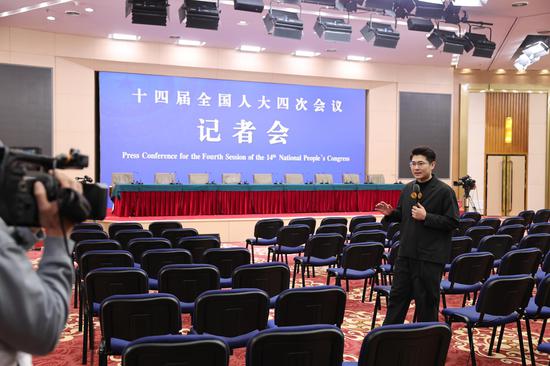
China's public security situation continued to improve in 2025, with the country remaining one of the safest in the world, according to a work report from the Supreme People's Procuratorate (SPP) delivered in Beijing on Monday.
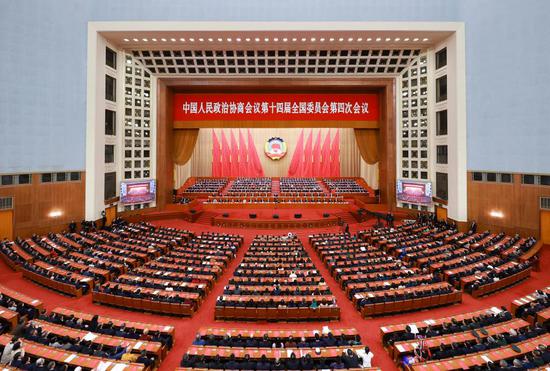
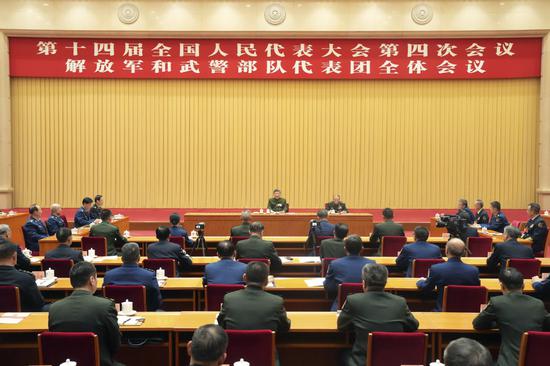
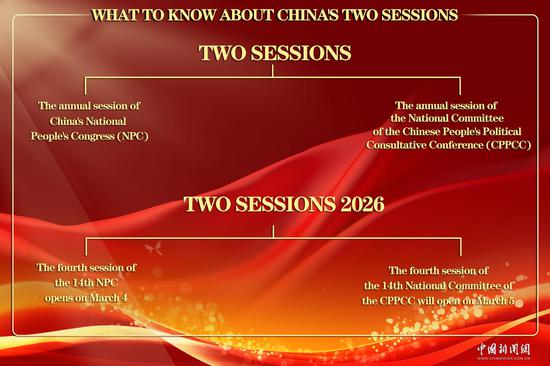
Ying Yong, prosecutor general of the SPP, delivered the report to the fourth session of the 14th National People's Congress, China's top legislature, for deliberation.
According to the report, procuratorial authorities nationwide handled 3.467 million cases of various types in 2025, including 8,151 cases handled by the Supreme People's Procuratorate.
Throughout 2025, prosecutors approved the arrest of 664,000 criminal suspects and filed public prosecutions against 1.404 million people, down 11.7% and 13.9% year on year, respectively.

3. China to advance formulation of law on combating cross-border corruption
China will draft a law to combat cross-border corruption to advance its national anti-corruption legislation, according to a work report.
The work report of the National People's Congress (NPC) Standing Committee was submitted to the ongoing fourth session of the 14th NPC for deliberation.
The NPC Standing Committee will also revise the laws governing the central bank and banking regulation, and advance legislation on artificial intelligence.

4. China, DPRK resume passenger train service
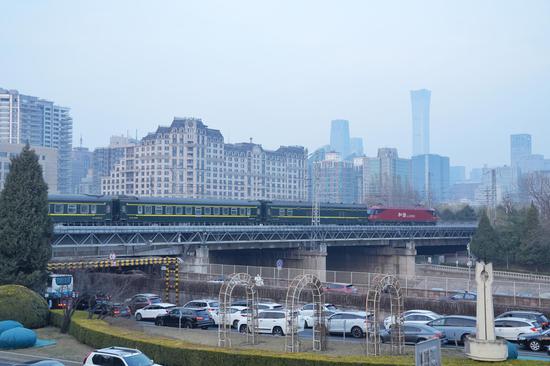
A passenger train K27 with cross-border service to Pyongyang, the Democratic People's Republic of Korea (DPRK) leaves Beijing, China, March 12, 2026. (Photo: China News Service/Zhang Xiangyi)
Since Thursday, international passenger train services have resumed in both directions between Beijing and Dandong in China and Pyongyang in the DPRK.
China and the Democratic People's Republic of Korea (DPRK) will resume two-way international passenger train services on Wednesday.
The reopening of the Beijing-Pyongyang and Dandong-Pyongyang routes marks a significant step in strengthening economic cooperation and cultural interactions between the two neighboring countries.
According to China State Railway Group Co. Ltd, the Beijing-Pyongyang train will run four times a week on Mondays, Wednesdays, Thursdays, and Saturdays, while the Dandong-Pyongyang route will operate daily.
Tickets cannot be purchased online and are only available at designated ticket offices in China, including locations in Beijing, Tianjin, Shanhaiguan, Shenyang, and Dandong.
Tickets for journeys coming from Pyongyang can be purchased at the Pyongyang Railway Station ticket office.

5. Apple to cut App Store commissions in China
Apple will reduce the commission rates it charges developers on its App Store in the Chinese mainland after communicating with local regulators, with the changes taking effect on March 15.
The American company announced on Friday that it will reduce the standard commission rate on paid apps and in-app purchases distributed through the App Store in China to 25% from 30%. The rate will apply only to developers earning more than $1 million annually or to those who offer in-app purchases for their app.
For participants in Apple's Small Business Program and mini-app partners, the commission rate will drop from 15% to 12%, including the fee charged on auto-renewing subscriptions after the first year.
The move would make China the only market where Apple has directly reduced its standard App Store commission rate from the long-standing 30%, rather than modifying the fee through alternative payment policies or regulatory settlements.

6. China's forest, grassland coverage reaches 56% after large-scale afforestation
China's combined forest and grassland coverage has reached more than 56% of the country's land area after 3.56 million hectares of afforestation were completed over the past year, an official report released Thursday showed.
The report, published by China's National Greening Committee on the country's annual Tree Planting Day, said 4.93 million hectares of degraded grasslands were restored in 2025.
China's forest coverage reached 25.1% in 2025, while the country's forest stock volume reached 20.988 billion cubic meters.
Over the past few decades, China has carried out large-scale afforestation and ecological restoration programs to improve environmental conditions and expand forest resources.

7. China's prosecutions for crimes both against and by minors decline for first time in five years
A work report released by the Supreme People's Procuratorate (SPP) in Beijing on Monday shows that the number of prosecutions for crimes against minors and the acceptance and review of prosecutions for crimes committed by minors decreased by 2.2% and 9.8% year-on-year, respectively, marking the first "both decline" in the past five years.
According to the report, the procuratorial organs prosecuted 73,000 individuals for committing crimes against minors in 2025. For minors involved in crimes, 56,000 were prosecuted. The SPP also approved the prosecution of 24 minors involved in serious violent crimes, emphasizing that these crimes must be punished.

8. China sees biggest fuel price hike in four years
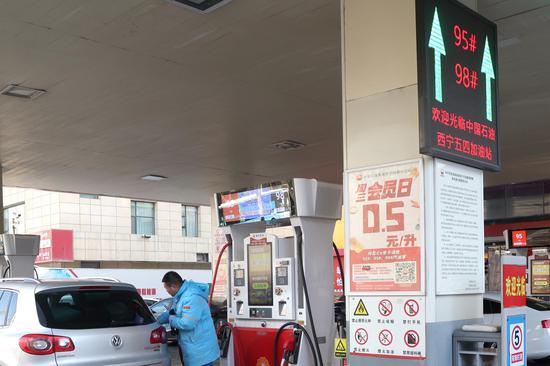
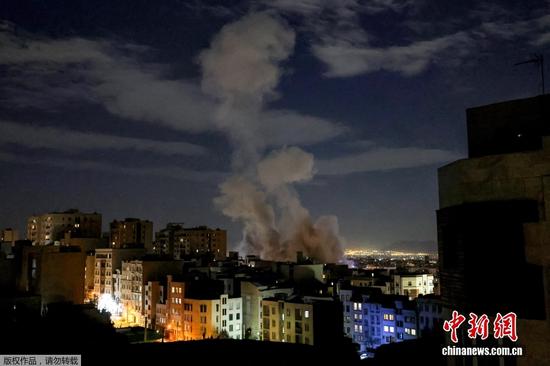
China's refined oil prices have recorded their largest increase in four years as tensions in the Middle East persist and international crude oil prices climb.
China increased domestic gasoline and diesel prices by RMB 695 ($100.56) and RMB 670 ($96.95) per metric ton, respectively, effective from midnight Monday, based on the average price changes during the latest 10-working-day pricing cycle under the current pricing mechanism.

9. Local governments in China adopt OpenClaw-based AI 'agent' for administrative work
Several Chinese local governments are deploying artificial intelligence "agent" systems based on the OpenClaw framework to help manage administrative work and public services.
In the eastern Chinese city of Yixing, Jiangsu Province, authorities recently launched a government AI assistant system based on the OpenClaw AI agent framework and have deployed it locally to support government operations.
However, the deployment of such technologies has also raised security concerns. China's Ministry of Industry and Information Technology and some regional authorities have recently issued warnings about potential risks associated with these applications, including data leakage, unauthorized system access and supply-chain vulnerabilities.

10. Zhang Yiming remains China's richest person on Forbes 2026 billionaires list
Zhang Yiming, founder of Chinese tech giant ByteDance, remains China's richest person with a net worth of $69.3 billion, according to the latest World's Billionaires List released Wednesday by Forbes.
Zhang, who ranks 26th globally, was followed by beverage tycoon Zhong Shanshan, founder of Nongfu Spring, with a fortune of $68.1 billion, placing him at 27th worldwide, according to the list.
Tencent chairman Pony Ma ranked third among Chinese billionaires with a net worth of $53.8 billion, securing the 33rd spot globally.
Mainland China's wealthiest individuals have seen their fortunes grow over the past year. The combined net worth of the country's top 10 billionaires reached $414.5 billion in 2026, up from $400.5 billion last year and significantly higher than the $304 billion recorded in 2024.
Globally, Elon Musk was named the world's richest person for the second consecutive year, according to Forbes.
The United States continues to lead the world with 989 billionaires, holding a combined wealth of $8.4 trillion. Mainland China ranks second with 539 billionaires, followed by India in third place with 229 billionaires.


























 京公网安备 11010202009201号