


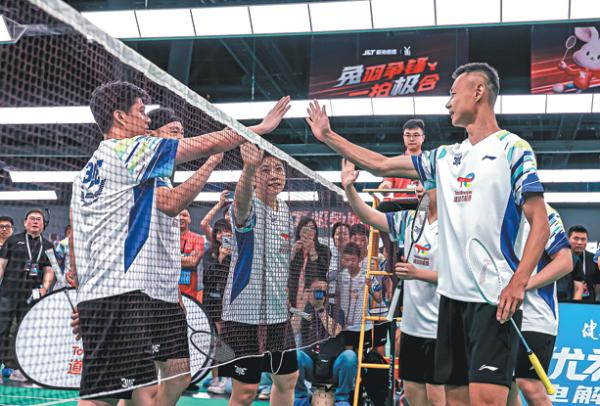
 The 3v3 badminton tournament, now in its 17th year, has evolved from a training format developed within China's national badminton team into a nationwide competition spanning 21 cities. (Photo/China Daily)
On a court where Olympic champions once trained, the familiar sound of shuttlecocks flying through the air mixed with something new this year: a conversation about artificial intelligence, robotics and the future of sport.
The 2026 TotalEnergies Li-Ning Li Yongbo Cup 3v3 Badminton Tournament officially launched its new season in Shenyang, Liaoning province, bringing together world champions, amateur players and technology innovators for the opening stop of one of China's longest-running grassroots badminton events.
Now in its 17th year, the tournament has evolved from a training format developed within China's national badminton team into a nationwide competition spanning 21 cities and attracting players from all walks of life.
In a video message, Li Ning, founder and chairman of the eponymous sportswear brand, said the tournament has become more than a competition.
"Over the years, we have seen more and more people fall in love with sports through badminton," he said.
"The 3v3 tournament has become a platform that connects cities, players and communities through a shared passion for the sport."
For former national team head coach Li Yongbo, who launched the event in 2010, its value lies less in scale than in the personal transformation it provides.
"What makes me happiest is seeing generations of badminton enthusiasts move from the stands onto the court," Li Yongbo said.
"Students who once watched matches are now leading teams of their own. Young fans who grew up cheering from the sidelines have become competitors themselves. Their identities have changed, but their love for badminton remains the same."
The 3v3 format originated from national team training practice. With three players on each side, it demands not only individual ability but also constant communication, trust and tactical coordination.
Two-time Olympic champion Fu Haifeng, one of the event's longtime participants, said the format has helped broaden the sport's reach.
"When I was young, there were far fewer opportunities for amateur players to compete," Fu said. "Today, 3v3 has become a benchmark event for grassroots badminton in China. Families, students and office workers can all take part and enjoy the sport."
Unlike singles or doubles, he added, the format requires players to constantly balance personal performance with team awareness.
"It challenges communication and cooperation in a unique way," he said.
Returning to the court for an exhibition match alongside former teammates also stirred memories of his competitive days.
"I retired nearly eight years ago, but hearing fans cheering from the stands immediately brought back the feeling of competing for the national team," he said.
He noted that more parent-child teams are now joining the competition. "This is one of the best forms of badminton inheritance," he said.
"Children learn resilience and confidence through competition, while families create memories together."
Olympic champion Zhang Nan believes teamwork is the format's defining feature.
"The pace is faster and rotations happen more quickly," Zhang said."The biggest attraction is the trust and understanding built among three teammates."
His advice for newcomers is straightforward: "Communicate constantly. When everyone understands their role, the game becomes much more enjoyable."
This year's tournament is also embracing technology in new ways.
Under the theme of "technology empowering sport", organizers have partnered with the Li-Ning sports science laboratory to provide free movement assessments for young participants, helping them improve technique and reduce injury risks through scientific analysis.
An AI-powered event assistant has also been introduced to offer technical guidance and competition information.
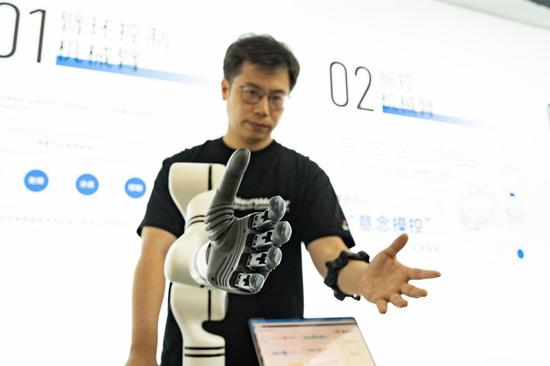
Technology took center stage at the Champion Forum, where six world champions were joined by representatives from Beijing Innovation Center of Humanoid Robotics and Embodied Tien Kung 3.0, a humanoid robot that recently won a robot half-marathon in Beijing.
The discussion centered on a question increasingly relevant across sports: how far can technology go without replacing the human element?
For Zhang, the answer is clear."Technology can help athletes train smarter, reduce injuries and improve performance," he said.
"But competition is still about people. Creativity, judgment and emotion can never be replaced."
The launch ceremony concluded with Li Yongbo and other guests ceremonially sending shuttlecocks into play before six world champions — Fu Haifeng, Zhang Nan, Xu Chen, Zhou Haodong, Du Yue and Du Jing — delighted spectators in a star-studded exhibition match.
From Shenyang, the 2026 season will travel to 21 cities across China, continuing a journey that began as a national team training method and has grown into an annual celebration of badminton culture.
Seventeen years on, the tournament remains rooted in the same idea: that the greatest appeal of sport lies not only in competition, but in the connections it creates.
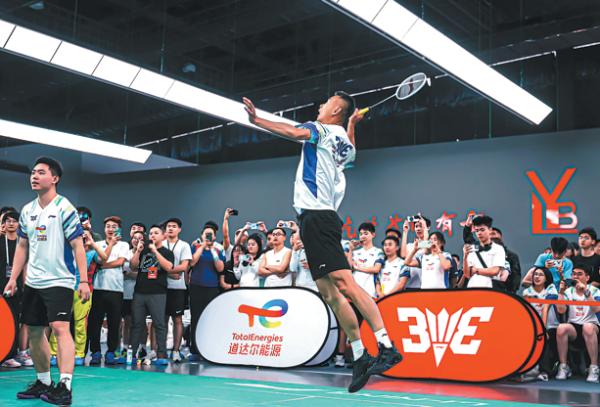 The 3v3 badminton tournament, now in its 17th year, has evolved from a training format developed within China's national badminton team into a nationwide competition spanning 21 cities. (Photo/China Daily)


































 京公网安备 11010202009201号