



By Mo Honge
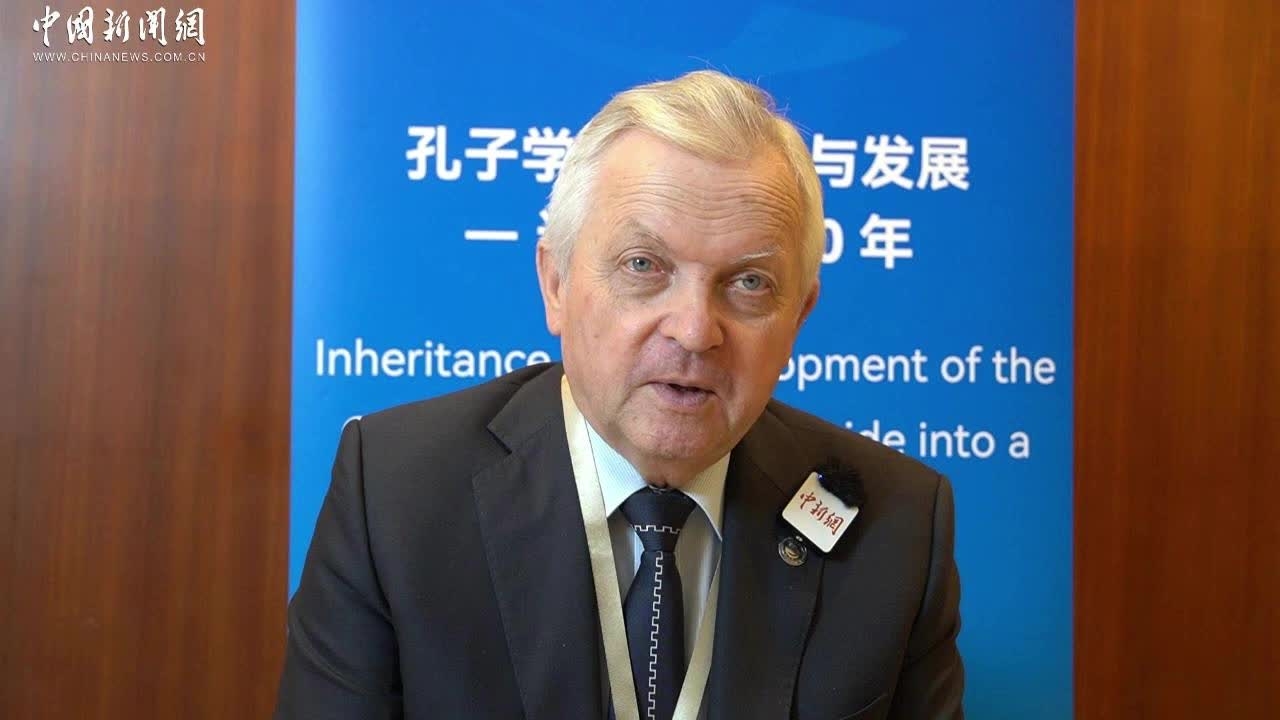
(ECNS) -- Chinese modernization, which puts people's wellbeing at its center, has achieved what other major powers have not – the eradication of absolute poverty, Anatoly Tozik, former Deputy Prime Minister of Belarus, in a recent interview with China News Network.
Tozik, who now heads the Confucius Institute of Sinology at Belarusian State University and serves as Chairman of the Belarus–China Friendship Association, shared his profound insights on Chinese modernization, Belarus-China relations, and the wisdom of Chinese civilization.
Drawing on his many years of working and living in China, Tozik spoke highly of the country's development achievements and expressed strong confidence in the future of Belarus-China relations.
People-centered modernization
Asked how he understands Chinese modernization, Tozik pointed out that its core lies in serving the interests of the people. He emphasized that China's development path ensures that "capital serves the people, the ordinary individuals, not the other way around."
In his view, one of the most remarkable outcomes of Chinese modernization is the historic eradication of absolute poverty in such a vast country. No other major country of comparable size has managed to accomplish this. No country in the world today, particularly no major power, has been able to solve this problem," he stated.
He said he is following closely the 15th Five-Year Plan, which was reviewed at the Fourth Plenary Session of the 20th Central Committee of the Communist Party of China. "I wish China the successful completion of this plan and the achievement of the Second Centenary Goal. Because the stronger China becomes, the more it can help the world overcome current difficulties."
Visa-free policy fuels exchange
Commenting on the 30-day mutual visa exemption policy between Belarus and China, Tozik said it significantly increases opportunities for mutual understanding.
Taking himself as an example, he said that he can now stay in China for a month without a visa and visit anywhere he wants, which is crucial for short-term internships or language study.
The benefits are also evident in aviation links. Before the visa-waiver policy, there was only one direct flight between Belarus and China; now there are four, he pointed out.
With such favorable policies, Tozik is highly optimistic about the prospects for bilateral trade. "I believe it will be mutually beneficial for both China and Belarus," he said. "We are now carefully studying China's experience with reform, opening-up, and modernization policies. I am absolutely confident the results will be positive."
Soaring demand for Chinese language learning
As China continues to open up, more Belarusians wish to understand China and its culture, Tozik noted.
He outlined the remarkable growth of Chinese language education in Belarus. Before 1993, there was virtually no Chinese teaching in the country's schools or universities. That year, Minsk State Linguistic University enrolled its first cohort of students majoring in translation.
In 2006, pupils from three elementary schools began learning Chinese as a formal subject. "Just 20 years later, Chinese is now taught in 12 universities and 170 secondary and elementary schools across Belarus."
He revealed plans to expand this to no fewer than 500 schools by 2030.
"The number of people wishing to learn Chinese increases dramatically each year," Tozik said, attributing this to excellent bilateral relations.
He gave a vivid example where at his institute, spots in beginner-level Chinese classes are filled within 6 to 8 minutes of enrollment opening. Young people are aware that "proficiency in Chinese today presents an excellent opportunity to secure interesting jobs."
He expressed profound gratitude to China's Ministry of Education, the Center for Language Education and Cooperation, and partner universities like Dalian University of Technology for their immense support, without which "we could never have achieved such results."
Chinese wisdom for global peace
Tozik also emphasized that the wisdom inherent in Chinese civilization is crucial for maintaining world peace. He highlighted Confucian thought, which advocates virtue, peace, and respect for the elderly and young. "Today's world needs to progress according to the principles advocated by this great Chinese philosopher," he stated.
Having lived and worked in China for five years, Tozik said he has personally experienced these values in daily life."I want to emphasize something: Chinese people love life. I greatly admire it. Their love for life persists regardless of circumstance."
Walking the streets of Beijing, he sees vibrant faces, and even strangers exchange smiles with him. He considers his years in China "the most interesting period of my life and highly productive years in my professional career."
Today, the former deputy prime minister still maintains a habit of visiting China at least twice a year to revisit familiar places and soak up the atmosphere. "I have great affection for China," he said.






































 京公网安备 11010202009201号