



By Guan Na, Zhang Jiahao
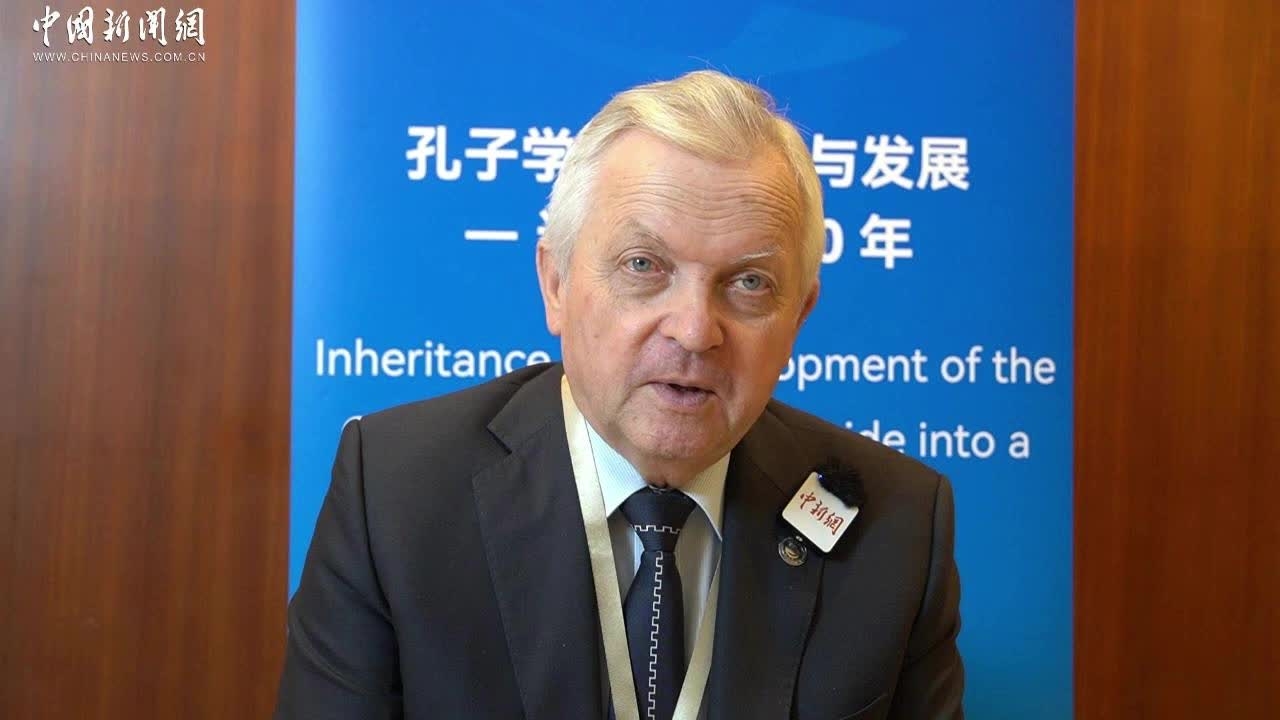
(ECNS) -- "The 21st century will not, cannot be and should not be a repetition of the 20th century. Certainly, the 1.4 billion Chinese people will never accept it," said David Gosset, specialist in global affairs and sinology, and founder of the China-Europe-America Global Initiative, in an interview with China News Network's West-East Talk, commenting on Japanese Prime Minister Sanae Takaichi's recent erroneous remarks on the Taiwan question.
Gosset stressed that Takaichi's remarks were highly inappropriate and completely wrong.
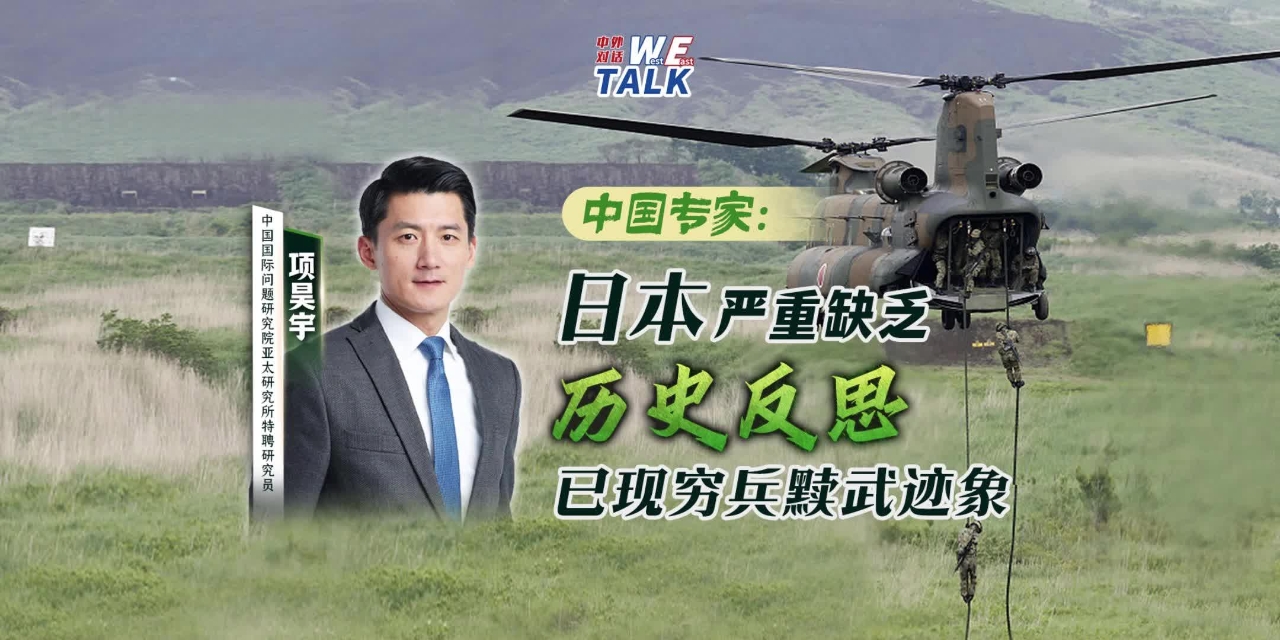
Xiang Haoyu, a research fellow at the China Institute of International Studies, agreed. He argued that the remarks were not accidental. Since taking office, Takaichi has pushed to strengthen and expand Japan's military. These moves are seen as dangerous signs of a resurging militarism that warrant heightened vigilance from the international community.
The controversy raises the questions: What deeper motives lie behind Takaichi's absurd remarks? What signals are being sent by her recent words and actions, and what harmful consequences would they bring?
Three underlying motives
Takaichi openly made provocative remarks on the Taiwan question, hinting at the use of force in the Taiwan Strait. Her comments have triggered sustained questioning and criticism. Gosset described her remarks as "highly inappropriate", "simply wrong," and "divisive."
He further stressed that the Taiwan question is China's internal affair and should be resolved by the Chinese people themselves, adding that Japan has no right to interfere.
Xiang said Takaichi's erroneous remarks were neither accidental nor impulsive, but an inevitable outcome of Japan's long-term political shift to the right, driven by conservative forces pushing for constitutional revision and military expansion, underpinned by deeper political motives and strategic calculations.
According to Xiang, Takaichi's core motive is to break free from post-war constraints and pave the way for loosening restrictions on Japan's military role.
He said Takaichi is attempting to use the so-called "Taiwan contingency" as a pretext to shift Japan from an "exclusively defensive posture" to "active intervention," which, in essence, seeks to turn Japan into a country with offensive military capabilities. This, he added, reflects Japan's proactive adjustment of its long-standing strategy on the Taiwan question.
A second motive, Xiang noted, is that this serves as a means for Takaichi to consolidate her political standing.
"On the one hand, Takaichi seeks to distance herself from the moderate and pragmatic faction within the Liberal Democratic Party to project the image of a strong political figure. On the other hand, she aims to secure support from conservative voters and military-industrial interest groups in Japan," Xiang said.
Two damaging consequences
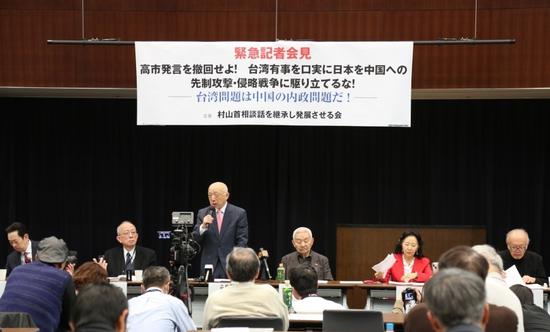
Takaichi's remarks have triggered a series of negative repercussions. Public protests continue in Japan, multiple industries report impacts, and criticism from the international community, including China, has mounted.
"When you look at tourism in Japan, which has been booming, it was because so many Chinese tourists were willing to go to Japan. So many flights have been cancelled, and many Chinese people are telling me there is no way they would go to Japan in these circumstances," Gosset said, adding that many sectors, including hotels and brands, have already been affected.
In Xiang's view, Takaichi's remarks have triggered a chain of negative effects, with many Japanese industries highly dependent on cooperation with China paying a heavy price.
He said Japan's tourism, catering and retail sectors have been hit first. With Chinese tourists' willingness to visit Japan dropping sharply, popular destinations and core commercial districts have lost key consumer support, leaving some businesses facing shrinking revenues or even closure.
Secondly, Xiang noted that China is Japan's largest trading partner, and Takaichi's remarks have increased uncertainty in China–Japan economic and trade cooperation, potentially hurting Japanese corporate performance and undermining the country's broader economic recovery.
Experts also agreed that Takaichi's words and actions have fundamentally damaged the political foundation of China–Japan relations and seriously affected regional peace and stability.
Trust is "very important" in China–Japan relations, Gosset said, adding that Takaichi's dangerous remarks have severely undermined the already "fragile" trust between the two countries.
Xiang said Takaichi's remarks openly violated core principles of international law and the consensus between China and Japan, "causing China to completely lose trust in Japan's diplomatic commitments and credibility, and undermining the long-term, stable and healthy development of bilateral relations."
One dangerous signal
Takaichi's broader agenda has raised further alarm, too. Since taking office, she has frequently made moves to strengthen and expand Japan's military, including advancing the goal of defense spending reaching 2% of GDP, planning missile deployments on Yonaguni Island, and attempting to revise the "Three Non-Nuclear Principles." None of these dangerous actions aligns with Japan's post-war "peace constitution."
Xiang noted that this pattern sends a clear signal: Japan is accelerating its departure from the post-war path of peaceful development and breaking long-standing military taboos. At the core is a complete overturning of the "exclusively defensive" principle, pushing Japan toward becoming a military power with active strike capabilities.
He also warned that, judging from the sharp rightward shift in Japan's domestic political landscape and evolving public discourse in recent years, militarist thinking has shown signs of resurfacing.
Gosset said with Takaichi's advocacy of constitutional revision and military strengthening, "there is the risk of falling into the pitfalls of militarism."
He added that the future will largely depend on Takaichi's actions. "The world is very fragile, full of uncertainties," he said, adding that the world does not need people to create problems, but people who are able to solve the current problems.
Gosset said he hopes Takaichi will recognize that true leaders do not divide but unite people and countries, stressing that Japan should learn from history and avoid repeating past mistakes.

































 京公网安备 11010202009201号