


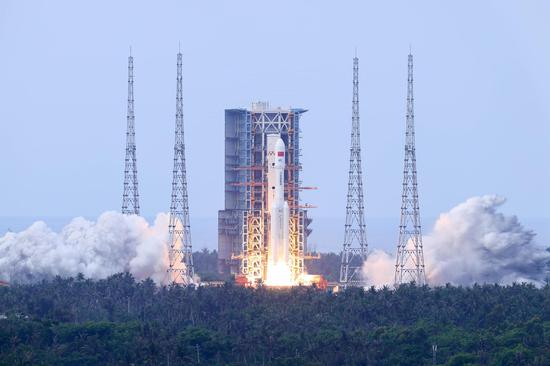
(ECNS) -- China has launched what it described as the world's first space-based experiment on artificial embryos, sending the project aboard the Tianzhou-10 cargo spacecraft on Sunday.
The experiment is one of five key space life science experiments aboard the mission and marks the world's first study on the development of artificial embryos in space.

According to Yu Leqian, head of the project, artificial embryos are stem cell-based structures that resemble early-stage human embryos but cannot develop into living individuals. They are used in research due to the limited availability of human embryos.
Yu said the study focuses on a critical developmental stage equivalent to 14 to 21 days after fertilization, when the foundations of major organs are formed.
During the mission, the samples will undergo a five-day development process aboard China's space station, with automated systems maintaining growth conditions. The samples will later be frozen and returned to Earth for analysis.
Scientists hope the research will provide insight into how microgravity influences early development and help assess potential risks for long-term human activity in space.
"This is our first attempt to understand whether microgravity affects early development," Yu said.
(By Gong Weiwei)
























 京公网安备 11010202009201号