


A powerful Monday morning earthquake has killed at least 111 and injured 87 in the west part of Colombia.
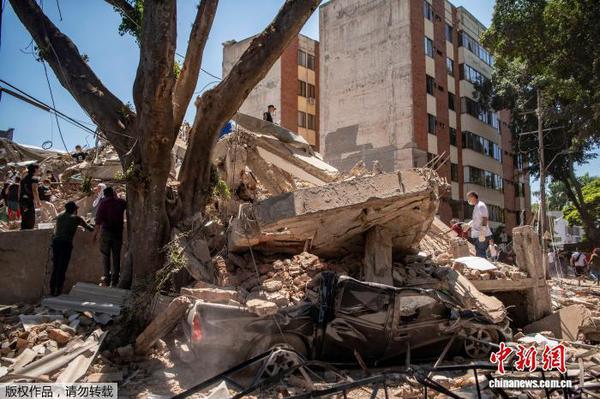
Colombia's President Abelardo de la Espriella, who came to office just three days before the earthquake, declared a state of emergency to expedite funding for the quake recovery with a plan to visit the disaster zone.
"I am at the forefront of the situation. It pains me deeply what the families and affected regions are going through," he posted on X.
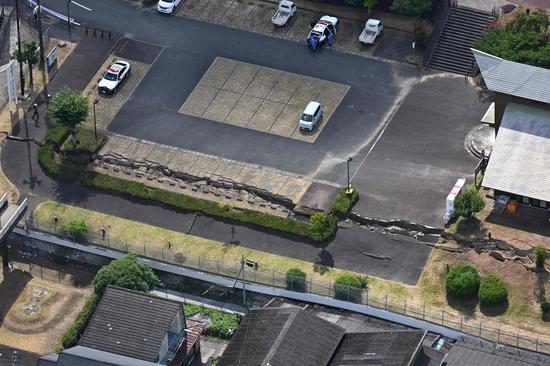
According to information provided by Colombian officials by mid-afternoon, the destruction included 1,575 damaged homes, 37 homes completely destroyed, 61 collapsed buildings, scores of damaged centers of health, education and community, as well as 18 damaged roads and six airports.
Airports in Pereira, Manizales, Quibdo, Armenia, Cartago and Buenaventura suffered structural damage, and their flight operations were suspended, according to Colombia's Civil Aviation Authority.
The tremor was felt in Colombia's capital Bogota, which is about 400 kilometers from the epicenter, setting off alarms that prompted people to evacuate many buildings as a precaution.
"At this time there are no reports of injuries or structural damage, only some cracks in buildings," Bogota Mayor Carlos Galan posted on X.
The earthquake damaged the region's major cities including Pereira, Quibdo, Manizales and Cali.
Nubia Carolina Cordoba-Curi, governor of the Choco region, posted on X on Monday morning that "in the capital Quibdo there are injuries and severe damage to buildings".
She posted an update at 2 pm that 12 people were confirmed dead and 84 injured in Choco.
Other local authorities reported at least 40 deaths in the Risaralda region and 27 deaths in the Valle del Cauca region.
Rescue efforts to save people buried under the debris is ongoing.
According to the Colombia Geological Service, the earthquake epicenter was in San Jose del Palmar, Choco. It had a magnitude of 7.4 and a depth of approximately 103 km, making it the strongest earthquake recorded in Colombia in the last decade.
The earthquake was felt by neighboring countries Venezuela, Ecuador and Panama. It was followed by several aftershocks with magnitudes between 2.8 and 4.8, according to the agency.
The agency said that it's common for this region to experience earthquakes of considerable magnitudes due to activities associated with the subduction of the Nazca Plate beneath the South American Plate.
Near the end of June, Venezuela was struck by two earthquakes — with magnitudes of 7.2 and 7.5 — that were only 39 seconds apart. More than 6,000 people were killed, and tens of thousands of people remain missing under the debris.






































 京公网安备 11010202009201号