



With no grand historical landmarks or scenic wonders, Anji County, nestled in a mountainous northern region of Zhejiang province, has transformed itself into one of China's most sought-after rural getaways.
Today, it is a sanctuary for urbanites seeking relaxation and a taste of slower, nature-centered living.
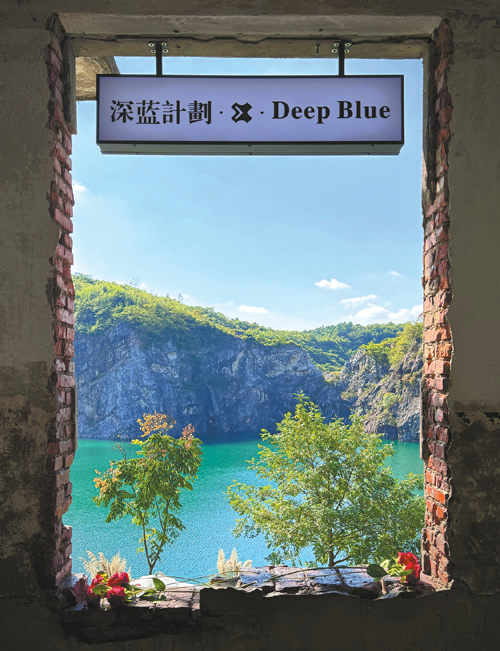
The most popular window with social media influencers at Deep Blue offers a beautiful lake view in Anji, Zhejiang province. (Photo provided to CHINA DAILY)
A vibrant community of creative entrepreneurs is redefining rural lifestyles to align with modern sensibilities in the county, which is able to preserve the rustic charm of the countryside while seamlessly catering to city residents' growing appetite for authenticity and tranquility.
Yucun village in Anji is the birthplace of the "Lucid waters and lush mountains are invaluable assets "theory, also known as the Two Mountains theory, which was put forward by President Xi Jinping.
On Aug 15, 2005, Xi, who was then Party chief of Zhejiang, made an inspection tour to Yucun. "We should not pursue economic growth at the cost of environment", for such growth is not true development, he said during the inspection.
In the two decades since, it has expanded from a 4.86-square-kilometer hamlet to a 245-square-kilometer cluster called "Greater Yucun", integrating 24 villages into a unified region featuring high-quality, modern, internationally oriented development.
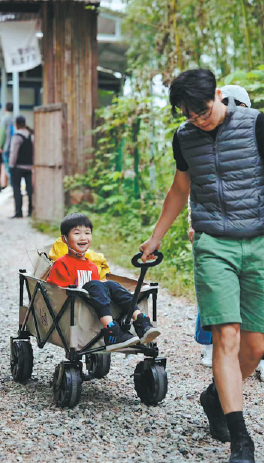
A father and son enjoy a camping trip at Xiaohangkeng campsite in Anji. (Photo provided to CHINA DAILY)
Mindful development
Deep Blue, a transformed quarry in Hongmiao village, Meixi town, has become a popular tourist spot known as "Mini Iceland."
In 2022, a team of more than 20 university students revitalized the area, creating a scenic 12.1-hectare leisure space with a cafe, observation deck, and more. Each visitor pays 68 yuan ($9.5) for entry, which includes a coffee or tea voucher.
"Our real service is to provide emotional value," said Yin Xiangxin, a core team member of Deep Blue, adding that the appeal of natural beauty and authentic beverages spans all ages, with many repeat visitors seeking the peaceful ambiance. The innovative approach has been a success, with the cafe generating over 10 million yuan in revenue within a year and achieving a daily sales record of 8,818 cups.
Yu Jiahui, a Yucun native born in 1997, returned from college in 2020 to start a business. In 2023, she renovated her father's vineyard to grow Anji white tea and created Yuyu Farm FUN Cafe, an immersive family-friendly ecological destination. Petting animals, tea picking and farming — are favorite activities of visitors.
"My family had been operating a bed-and-breakfast at the farm since 2020, but in 2023 we shifted our focus to the farm cafe," Yu said. "It's more of a space for guests to create their own experiences. In autumn, kids dig sweet potatoes; in other seasons they plant sunflowers or something else. Every crop offers a different hands-on activity."
At the end of 2024, Yu started a new project — an ecotourism site under the cover of 100 acres of bamboo forest, with flowers planted to develop an "under-forest economy" and enhance tourism. Opened in June 2025, the site features over 10,000 hydrangeas, with wooden cabins and bamboo pavilions offering fairy-tale-like photo ops of one hillside, roses, carnations, and redbuds blossom.
"We're also building a small bamboo house for tea drinking and scenic views," she added.
The He family from Qingdao, Shandong province, visited Anji for a three-day trip. They were drawn by Anji's beautiful scenery and cool mountain streams. Compared with urban life, they preferred the rural tranquility and immersive natural experiences.
"There's a lot for kids to enjoy, and the forest air is great," said the father, He Min. "We're from Laoshan in Qingdao and have our own rural tourism. But what's happening here is a return to true nature."
Wang Yucheng, Party secretary of Yucun village, has witnessed the transformation firsthand.
"The Two Mountains theory gave us direction. We started building a beautiful countryside in 2008, but tourism really exploded after 2013. Now 60 percent of our villagers work in tourism. In 2024, the collective income of our village reached 22.05 million yuan, with 11.31 million from business revenue. Per capita income hit 74,000 yuan," he added.

























 京公网安备 11010202009201号