



By Xue Lingqiao and Chen Tianhao
(ECNS) -- China's 15th Five-Year Plan includes a dedicated section on promoting the long-term prosperity and stability of Hong Kong and Macao Special Administrative Regions (SARs), proposing to strengthen cooperation between the Hong Kong Special Administrative Region (HKSAR) and the Chinese mainland in multiple areas and integrating the development of the SARs into the country's overall planning.
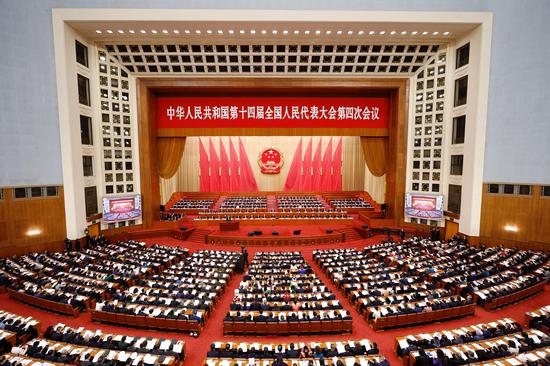
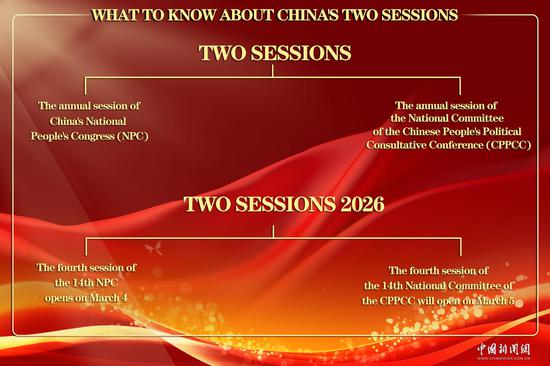
During this year's national "two sessions", deputies to the 14th National People's Congress (NPC) and members of the 14th National Committee of the Chinese People's Political Consultative Conference (CPPCC) from the HKSAR have actively offered suggestion regarding the development of the SARs. The development of the SARs have also drawn much attention from the international community.
Enjoying the firm support of the motherland and multiple connections to the world, Hong Kong plays a vital role as a "super-connector" and "super-value adder". Meanwhile, its prosperity and stability have always been closely tied to the broader national development.
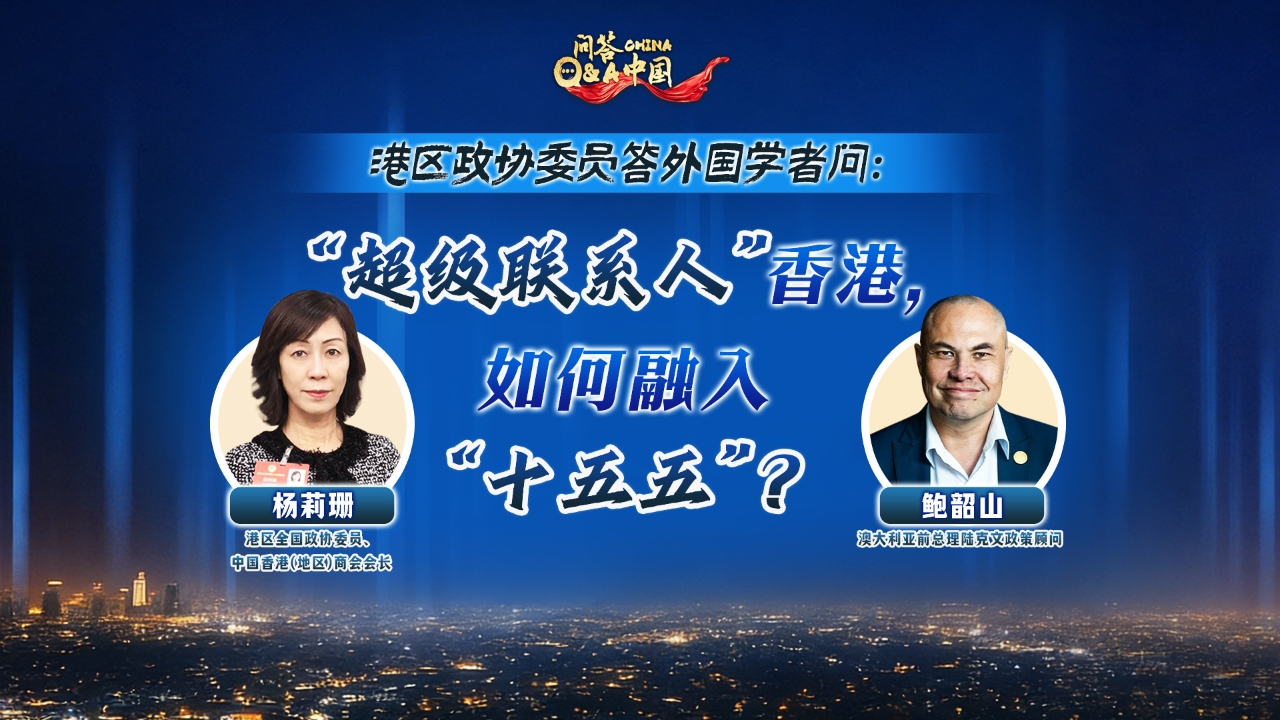
In the latest episode of China Q&A with China News Network, Warwick Powell, former policy advisor to Australian Prime Minister Kevin Rudd, joined the discussion on the HKSAR's development.
Powell noted that Hong Kong has always been a bridge connecting the Chinese mainland with the international community, where enterprises have established roots here. Moreover, the HKSAR plays a role in mediating the flow of products, services, and capital.
"I think that will continue to be Hong Kong's most important role, connecting the Chinese mainland and the international community. And as new technologies play an increasingly important role in future development, Hong Kong's multi-node supply chains will be able to continue integrating and collaborating with each other within a stable environment," Powell analyzed.
He further pointed out that, from a macro-strategic perspective, Hong Kong and its neighboring Guangdong-Hong Kong-Macao Greater Bay Area will continue to act as vanguards of economic reform, serving as a platform for intensive economic interaction between the Chinese mainland and the globe.
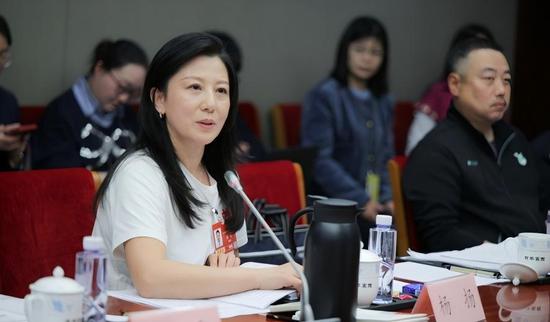
However, amid a complex and volatile international situation, how can Hong Kong, better leverage its status as an international financial center and further attract global capital inflow? What role can Hong Kong play in financial technology innovation and service provision? Powell raised his questions to Judith Yu, a CPPCC member from the HKSAR, who is also the chairman of the Hong Kong Chamber of Commerce in China.
In late February, prior to the opening of the "two sessions", the HKSAR government released its budget for the 2026-2027 fiscal year, which placed the focus on themes of "innovation and technology" as well as "financial empowerment," and resonates with the national 15th Five-Year Plan. From these two perspectives, Judith answered Powell's questions.
Taking the emphasis on technology and innovation development as an example, Judith said that this year's Hong Kong budget proposes investing significant resources and funds to support the development of the tech and innovation sector. In her view, the progress of Hong Kong's technology and innovation sector is inseparable from deep integration with the Chinese mainland, particularly the Guangdong-Hong Kong-Macao Greater Bay Area.
Moreover, Hong Kong's accelerated development of the Northern Metropolis will effectively combine together Hong Kong's scientific research achievements and the industries on the Chinese mainland.
She further noted that the development of the Northern Metropolis is designed to support the growth of Hong Kong's tech and innovation industry. Combined with the Hong Kong's financial strengths, the area is expected to become a financing hub for the tech and innovation sectors of both Hong Kong and the mainland.
Mentioning that currently, as some of Hong Kong's universities have achieved mature conditions for technological innovation, with many local universities ranking among the world's top institutions, she said that considering the advantages of possessing relevant research talent and outcomes, further transforming these technological achievements into the related industries relies on the vast market of the Chinese mainland, especially the Guangdong-Hong Kong-Macao Greater Bay Area.
This will better serve Hong Kong's integration into the Greater Bay Area development and the national "15th Five-Year Plan" for technological innovation, Judith added.
"Under the integration, Hong Kong will provide substantial supporting policies to attract global enterprises. It will also leverage its role as a 'super connector' to attract global companies to enter the Chinese mainland market or establish the headquarters in Hong Kong," emphasized Judith.
Regarding the attraction of tech talents, Judith pointed out that Hong Kong is rolling out more preferential policies to bring in technological professionals from around the world. After their arrival, the HKSAR government will assist them in connecting with resources on the mainland, leveraging synergies.
From another perspective, to further leverage Hong Kong's financial advantages, Judith explained that as a center for the offshore RMB market, Hong Kong will further facilitate participation in relevant investments for the Chinese mainland and global tech and innovation projects, achieving industrial value addition through Hong Kong's financial platform.
"The outside world highly values Hong Kong's tax policies and free flow of capital. Therefore, on the financial front, Hong Kong will actively develop more policies to support technology companies in listing and going global through relevant platforms in Hong Kong," she said.
In 2025, Hong Kong regained its position as the world's third-largest financial center, demonstrating strong international competitiveness. According to Judith, this aligns perfectly with Hong Kong's role as a "super connector" and "super value-adder."
Amid a complex international environment, Hong Kong will continue to support mainland enterprises in raising funds through its local financial platforms while helping global companies list on the HKEX. This serves as a key demonstration of how Hong Kong's financial sector is actively aligning with the national 15th Five-Year Plan, she said.
"Hong Kong will continue to explore new markets and help enterprises from the Chinese mainland go global through the country's Belt and Road Initiative," she added.
In recent years, China has continuously improved its green finance standards and systems, injecting financial momentum into green and low-carbon development. To this end, Judith said that while consolidating its traditional financial businesses, Hong Kong is also vigorously promoting green finance. Through measures such as issuing green bonds and establishing special funds, Hong Kong is attracting global capital to participate in green projects on the Chinese mainland.
"Moreover, Hong Kong possesses a well-established legal system, which is recognized internationally. We need to let the world know China's development story and attract enterprises from all countries to invest in the Chinese mainland through the platforms in Hong Kong," Judith concluded.























 京公网安备 11010202009201号