


On the vibrant Taste of Origins snack street in Yubang village, Shaxian district in the city of Sanming, Fujian province, 60-something Zhang Xiuji plunges wontons into boiling water and deftly tosses noodles.
After a lifetime of running mom-and-pop eateries across the country, Zhang has swapped her nomadic life for a steady local job. She is now witnessing a rural transformation driven by the very industry that turned the peanut-sauce noodles she learned from her mother into a regional staple.
The culinary tradition of Shaxian snacks is a sophisticated system of over 200 varieties, headlined by several famous signature dishes: bianrou, or wontons with a springy meat filling; banmian, or noodles served with a savory peanut sauce; and potstickers.
"The genesis of Shaxian snacks is right here in our village," said Zhang Changsong, the village Party chief. "In the 1980s and 90s, this was an industry our villagers literally carried out on their shoulders."
Of the village's 1,200 residents, nearly 700 make a living from running snack shops. "They earned their living in far-off cities, only to return and rebuild their ancestral homes into these residences," he added.
Zhang Xiuji's personal journey mirrors the brand's rapid ascent. In the late 1990s, burdened by 200,000 yuan ($29,000) in debt, she and her husband set out with nothing but wooden mallets and shoulder poles to make a living in Fuzhou, the provincial capital.
Over the years, their footprint expanded to cities like Shanghai and across Jiangsu province. At their peak, they operated a large-scale eatery in Jiangsu's Kunshan industrial zone that required several employees to manage.
Runners like Zhang from Shaxian popularized the brand's legendary value proposition: A square meal for just a few yuan. Success was built on working from dawn until midnight, often catching a few hours of sleep on makeshift beds made of stacked chairs.
"Every brick from the house in our village was paid for by snacks," Zhang said. In Shaxian, a local adage captures how villagers built their prosperity: Wontons are the "bricks" and noodles are the "steel" that built the region's modern skyline.
Today, Shaxian Delicacies has matured into a national brand. According to Zhang Xin, director of the Shaxian Delicacies administrative committee, the number of outlets has increased from 88,000 in 2020 to 100,000 today.
With over 60,000 Shaxian natives operating stores nationwide, the industry's annual turnover reached a staggering 55 billion yuan in 2025.
The brand's footprint now spans 81 countries and includes 241 overseas branches. Crucially, these stores are adapting to local palates through creative culinary fusion.
In Saudi Arabia, the classic pork-filled wontons have been reimagined to meet local dietary customs. In Japan, chefs use a heavier hand with peanut sauce to cater to local preferences, Zhang said.
Meanwhile, in France, an extra step of drizzling the dish with salad oil before serving adds a touch of local culinary flair. "This localization is underpinned by deep cultural heritage and a spirit of constant innovation," he said.
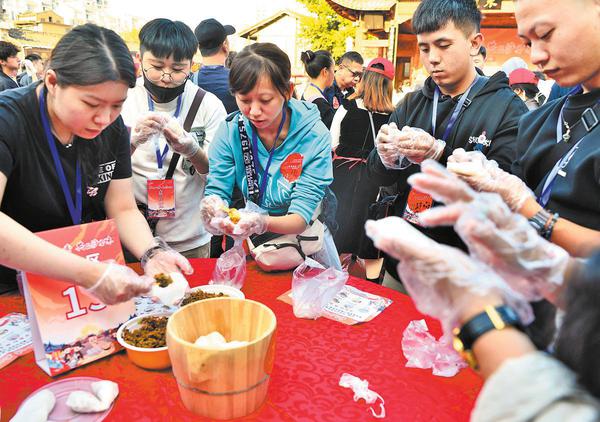
On the doorstep of Yubang, the origin of the snacks, the rise of foodie tourism is sparking a homecoming trend.
"The authentic flavors draw crowds from across the country, encouraging many to trade their nomadic lives for stable jobs back home," said Party chief Zhang.
Zhang Xiuji and her husband now enjoy the security of a steady income and a much slower pace of life.
"The village is thriving. We don't have to wander anymore," she said.
While her children still operate snack shops in Hubei province, their experience is largely apart from the days of itinerant vendors carrying their wares on shoulder poles.
Today, with a quick tap on a smartphone, all the standardized ingredients can be delivered directly to the shop door.
"The hardships we once endured are now a thing of the past," Zhang Xiuji said.











































 京公网安备 11010202009201号