


A National Day and a remarkable journey
Every October 1, China celebrates its National Day. On that day in 1949, the People’s Republic of China was founded. In 2026, China will celebrate its 77th National Day—an occasion not only to remember the country's extraordinary journey, but also to consider what its next chapter may mean for its friends and partners.
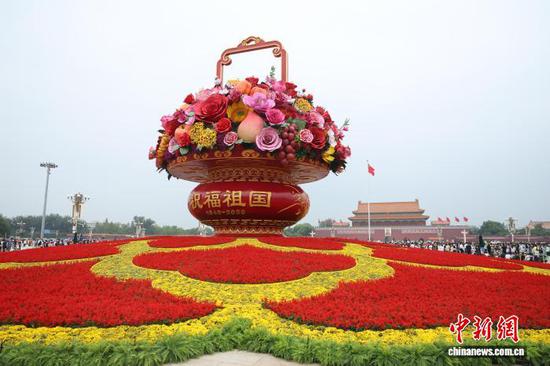
For me, China's National Day has a deeply personal meaning. I first arrived in Beijing in September 1988 as a Chinese-language student at Beijing Language and Culture University, when China was entering an important new phase of reform and opening-up. Nearly four decades later, I have had the privilege of witnessing China's transformation as a student, interpreter, military professional, UN observer, traveler and lifelong promoter of Bangladesh-China relations.
The China I saw in 1988 and the China I see today are remarkably different.
From reform to Chinese modernization
Generations of Chinese leaders, officials, scientists, entrepreneurs, PLA personnel and ordinary citizens carried the country through successive stages of development.
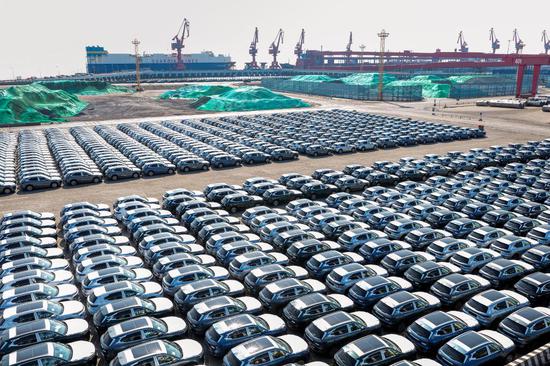
The result is visible everywhere. China's high-speed railway network has become the world's largest; its manufacturing, ports, digital economy, renewable energy, electric vehicles, telecommunications and artificial intelligence have achieved global scale. Official figures show that China's GDP grew by 5% in 2025, while its goods trade reached a record level. Its wind and solar capacity has also expanded enormously as China pursues a greener development model.
Yet statistics alone cannot explain China's transformation. I have travelled through many parts of the country—from Beijing, Shanghai and Shenzhen to Guangzhou, Kunming, Xi'an, Chongqing, Harbin, Hainan and Guizhou, as well as commercial centers such as Yiwu and Wenzhou. I have seen the transformation of cities and infrastructure and, more importantly, spoken with ordinary Chinese people whose hard work, discipline and aspirations are fundamental to China's success.
In 1988, Shenzhen was only beginning its extraordinary rise. Today it is one of the world's leading technology and business centers. Shanghai has evolved into a global financial and commercial hub. China's development has therefore been not merely an urban transformation but a nationwide process.
A rise observed from close quarters
My understanding of China was also shaped by encounters beyond the classroom. As an interpreter, I had opportunities to work with and interpret for senior Chinese leaders.
Those experiences gave me an appreciation of the importance China places on discipline, long-term planning, national development and institutional continuity.
My professional experience also took me into international peacekeeping. While serving as a UN military observer and team leader, I worked closely with Chinese military observers and police personnel. These experiences reinforced my respect for the professionalism and discipline of Chinese personnel serving internationally.
China's international role today extends well beyond its economy. It is a major contributor to UN peacekeeping, an important participant in multilateral institutions and a leading advocate of greater connectivity and development cooperation.
China's rise should also be understood in the context of its emphasis on peaceful development and diplomacy. Hong Kong and Macao returned to China in 1997 and 1999 respectively under the "one country, two systems" framework. The Taiwan question remains unresolved, with Beijing continuing to state that peaceful reunification is its preferred approach.
Education, language and people-to-people bridges
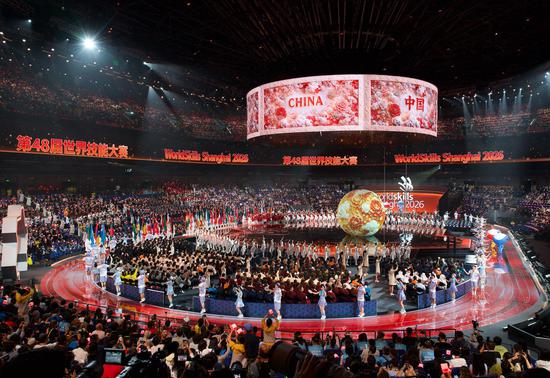
China's global influence is also increasingly educational and cultural. Students from countries around the world study in Chinese universities, while Chinese-language programs have expanded internationally. The Chinese Bridge program alone has involved young people from more than 160 countries.
For Bangladesh, this is particularly significant. Chinese should increasingly be viewed not simply as a foreign language, but as a practical skill connected with employment, business, technology, education and diplomacy.
Since retiring from the Bangladesh Army in 2008, I have devoted much of my life to Chinese-language education and the promotion of Bangladesh-China relations. I have personally taught thousands of learners and have witnessed how Chinese-language ability can change educational and professional opportunities.
A relationship entering a new era
Bangladesh and China established diplomatic relations in 1975. President Ziaur Rahman played an important role in developing the relationship, and successive Bangladeshi governments contributed to its expansion.
Today, the relationship between Bangladesh and China has entered a new phase.
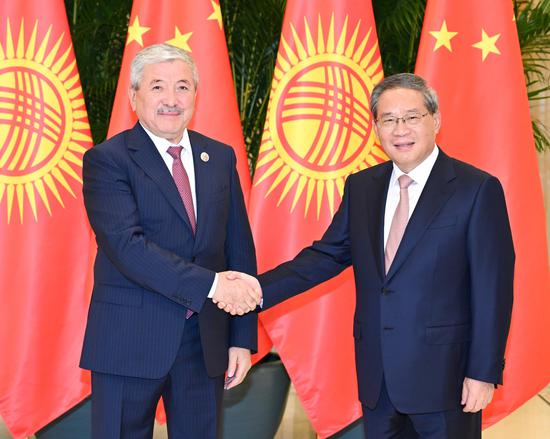
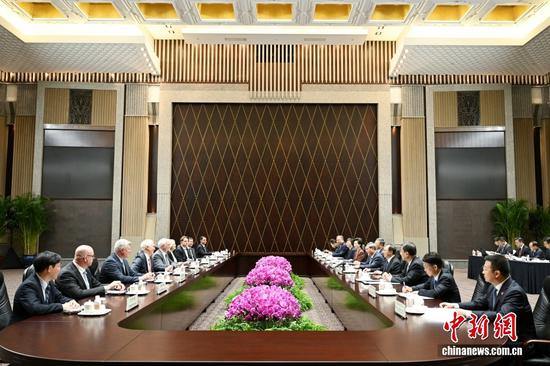
Bangladesh Prime Minister Tarique Rahman paid an official visit to China from June 24 to 26 this year. The two sides announced the decision to build a China-Bangladesh community with a shared future in the new era. Their Joint Communiqué identified cooperation in connectivity, trade, investment, industrial and supply chains, green development, digital technology, artificial intelligence, agriculture, health, education, vocational training and defense. It also highlighted cooperation concerning the Chinese Economic and Industrial Zone in Chattogram, Mongla Port and the Teesta River Comprehensive Management and Restoration Project.
This is a historic opportunity. But a community with a shared future must ultimately be measured by what ordinary people experience.
Making “win-win” visible to ordinary people
For Bangladesh, win-win cooperation should mean more opportunities for our people to study, work, travel, trade, receive medical treatment, acquire skills and participate in technology-driven development.
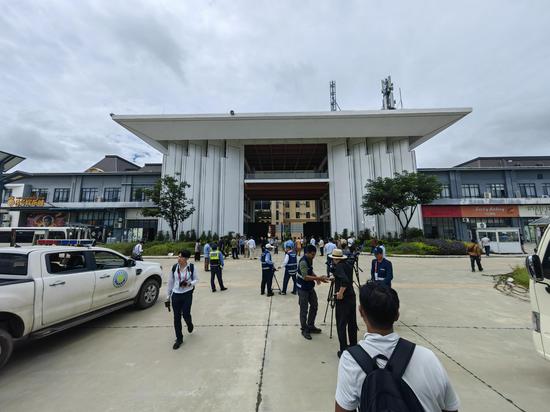
I believe the next stage should therefore prioritize practical connectivity: more direct air routes, improved maritime links and serious exploration of regional land connectivity linking Bangladesh with southwestern China through Myanmar when conditions permit.
Bangladesh also needs stronger cooperation in high-speed rail, health, agriculture, renewable energy, artificial intelligence, digitalization, sports, education and technology transfer. Chinese support in training Bangladeshi teachers to teach Chinese in schools and colleges could create a new generation of linguistic and professional bridges.
I would also propose a major China-Bangladesh Vocational and Language Training Centre, with residential facilities, to prepare Bangladeshi youth for employment in Chinese enterprises in Bangladesh and overseas.
Another idea deserves serious consideration: a jointly supported China-Bangladesh Research and Development Centre (CBRD) bringing together governments, universities, think tanks, businesses and technical experts. It could focus on water management, connectivity, trade, technology, agriculture, health, education, AI, climate change and regional cooperation.
From witnessing China's rise to sharing its future
China's transformation has taught me that national development is not achieved overnight. It requires vision, continuity, discipline, education, infrastructure, innovation, hard work and a long-term commitment to the welfare of the people.
I saw China at the beginning of a major transformation in 1988. Today, as China celebrates 77 years of the People's Republic, I see a country that has surprised the world through the scale and speed of its development.
Bangladesh now has an opportunity to write its own chapter in this changing Asian story.
The phrase “community with a shared future” should therefore become more than diplomatic language. It should mean roads and railways that connect people, classrooms that create opportunities, hospitals that save lives, technology that raises productivity, businesses that create employment, and exchanges that allow ordinary Bangladeshis and Chinese citizens to know one another better.
China's National Day is a celebration of China's journey. For Bangladesh, it can also be an occasion to celebrate friendship, trust and the possibility of a shared future.
From witnessing China's rise to building that future together—that should be the next chapter of Bangladesh-China relations.
The author, Lt. Col. (Retd.) Md. Shahadat Hossain, is adjunct professor of the Institute of Professional Language (IPL) under the Bangladesh Maritime University, and founder, general secretary, and senior research fellow of the We Speak Chinese Club Bangladesh Limited (WSCCBL). The views do not necessarily reflect those of ECNS.




























 京公网安备 11010202009201号