


By An Yingzhao & Han Yu
(CNS) -- The Islam-Confucianism Civilisational Dialogue 2026 was held in Beijing on Thursday. This year's dialogue, themed "The Idea of Global Civilisation: Islamic and Confucian Perspectives", was jointly hosted by the International Confucian Association (ICA) and the International Islamic University Malaysia (IIUM).
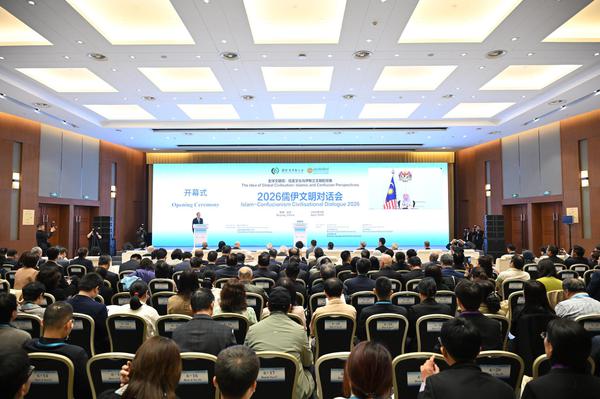
On the eve of the dialogue, Osman Bakar, rector of the International Islamic University Malaysia, said in an exclusive interview with China News Service's "W.E. Talk" that dialogue between Confucian and Islamic civilisations could help shed light on the roots of the current conflict in the Middle East and offer answers on how to address it in hopes of restoring peace to the region.
Here are the excerpts of the interview:
CNS: The Islam-Confucianism Civilisational Dialogue advocates for mutual learning among civilisations, and the theme of your speech seems to explore the "common ethical foundation" of Islamic and Confucian civilisations. In the context of the current Middle East situation, which poses severe challenges and profoundly impacts the image of Islamic civilisation, what are the core ethical principles within the concept of Islam-Confucianism Civilisational Dialogue that can best provide hope for resolving conflicts and rebuilding peace?
Osman Bakar: The current Middle East conflict – involving the United States, Israel, Iran, and the Gulf Cooperation (GCC) regional grouping – erupted due to the violation of several ethical principles that have been accepted by the United Nations as an indispensable basis for our peaceful international order. The unprovoked military attack on Iran jointly launched by the United States and Israel is a gross violation of international law. The violation is to be treated more seriously under international laws when the attack is known to take place during negotiations in progress between the United States and Iran mediated by the Sultanate of Oman. Iran responded militarily to the armed attack by the United States and Israel on its understanding that it is within its right to self-defence.
But given the volatility of the political situation in the Middle East with its conflicting regional security narratives that are only made more complex by the presence of external regional players with the irrespective political agendas, a flare up of the newly erupting America-Israel-Iran War was widely expected by political observers to be imminent. To our horror, the expectation turned into a disastrous reality with all its consequences. The GCC was dragged into the war when Iran bombed the American military bases stationed in its member countries, which the latter regarded as being used as launching pad against itself.
This escalation of the conflict brought into focus an intra-Islamic dimension of the war, namely a violent conflict between Iran and GCC, which are both Muslim-majority countries. Without doubt, this intra-Islamic conflict damaged the good name and integrity of Islam as a religion and as a civilisation. It needs to be resolved, the sooner the better.
From the point of view of the present Middle East conflict, the Islamic-Confucianism Civilisation Dialogue offers insight into the cause of the conflict as well as answers to how to respond to the conflict with the view of restoring peace in the region. The immediate cause of the current conflict is the unprovoked America-Israel bombing of Iran, which clearly violated the ethical principles of peaceful coexistence between nations. It was ethically correct for China and Malaysia to openly denounce the America-Israeli military aggression against Iran because such violation of international law is against the very ethical foundation of the world's peaceful order on which national sovereignty is guaranteed. But it was also ethically correct for China and Malaysia not to take sides in the war for such a position would leave some room for them to play a mediation role in the conflict. In fact, both China and Malaysia are now playing some mediation roles in the conflict.
What is important in the long run is the civilisational role that China and Malaysia, backed by the Islam-Confucianism Civilisational Dialogue platform, could play in strengthening the ethical foundation of the global order of peaceful coexistence through dialogue among cultures and civilisations. This platform can enhance dialogue between civilisations as the best means to resolve conflicts and attain world peace.
CNS: Malaysia is regarded as a successful practical example of the "convergence of Islam and Confucianism". In your view, what is the most crucial social consensus or practical wisdom from this experience that is worth promoting to other regions with tense civilisation relations such as in the Middle East?
Osman Bakar: Malaysia is a multiethnic and multi-religious country. All the major religions of the world are present in the country. Muslims constitute the majority population, but non-Muslim minorities exist in significant numbers. In my view, Malaysia has been blessed with a practically working management policy on ethnic and religious pluralism since independence that can be a model for other pluralistic countries.
There is a social consensus on the pillars of nation building (Rukun Negara) which affirm the preservation of the country's cultural traditions while pursuing modernity, especially scientific and technological progress. Religious freedom is enshrined in the national Constitution. The country adopts a civilisational approach to nation-building through dialogues – political, economic, and religious. Malaysia was also successful in containing extremisms of all sorts, including religious extremism. Under the leadership of Dato Seri Anwar Ibrahim as Prime Minister, with his enlightened policy better known as Malaysia Madani, an inclusive policy of civilisational building, Malaysia is entering a newera of social cohesion and interreligious harmony. In short, Malaysia's good track record in managing ethnic and religious is worthy of being promoted to other regions in the world.
CNS: Faced with the severely challenging situation in the Middle East, there is an urgent need both within and outside Islamic civilisation to rebuild an ethical foundation for peace. What intellectual resources for resolving conflicts and constructing lasting peace can be distilled from the principles shared in the "convergence of Islam and Confucianism" such as the "Middle Way", "Benevolence and Forgiveness", and "Emphasis on Righteousness"?
Osman Bakar: In my view, the shared intellectual resources that are needed for resolving conflicts and constructing lasting peace in the world may be found in Confucian and Islamic humanism. It is remarkable to see how the two forms of humanism are found to be sharing the fundamental idea of human flourishing that emphasises a common humanity, human goodness, interdependence, the virtues of compassion, communal harmony, ethical living, and dialogical habits. These concepts are essential to the pursuit of truth, justice, peace, and shared prosperity, which are antidotes to hatred and arrogance that are known to generate conflicts and wars.
Both Confucian and Islamic traditions emphasise individual ethics rooted in the human heart as the indispensable basis for familial, social, and global ethics. The ethical transformation is to be realised through education, both formal and non-formal, and at all levels. Confucian and Islamic teachings together are known to shape the thinking of two-fifths of humanity. Just imagine what kind of global transformation in ethical terms would materialise if the Confucian "Middle Way" or "Golden Mean" (zhonyong) and the Islamic middle nation "wasatiyyah" are put into practice by its believers!
CNS: In the face of global changes, how can China and Malaysia transcend general exchanges and translate the Islamic-Confucian ethical consensus into specific cooperative projects in education, youth, communities, and other levels, thereby infusing the "Global Civilisation Initiative" with practicable Eastern approaches?
Osman Bakar: As I have just emphasised, the most effective means of ensuring ethical transformation in the lives of individuals, institutions, nations, and the global community would be through education. Accordingly, educational institutions are called upon to design and implement ethical education programs based on the universal human values such as espoused in Confucian and Islamic humanism.
In my view, given the broad convergence between the two traditions on ethical wisdom, China and Malaysia together can play a leading role in empowering UNESCO's role in ethical education, especially among youths. The present youth generation urgently needs an enlightened guidance in global citizenship for the 21st century.
Profile:
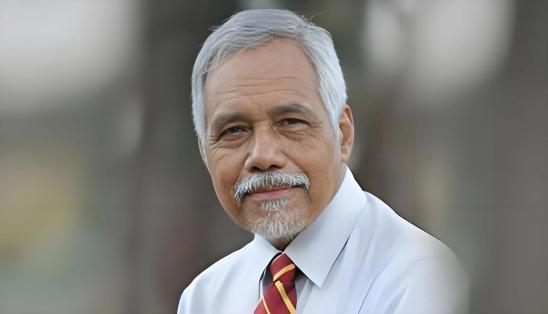
Osman Bakar, a doctorate in Islamic philosophy from Temple University, Philadelphia (USA) is currently Holder of Al-Ghazali Chair of Epistemology and Civilisational Studies and Renewal at the International Institute of Islamic Thought and Civilisation (ISTAC), International Islamic University Malaysia (IIUM). He is also Emeritus Professor in Philosophy of Science at University of Malaya. He was formerly Distinguished Professor and Director of Sultan Omar ‘Ali Saifuddien Centre for Islamic Studies (SOASCIS), Universiti Brunei Darussalam. He was also formerly Malaysia Chair of Islam in Southeast Asia at the Prince Talal al-Waleed Center for Muslim-Christian Understanding, Georgetown University, Washington DC, and Deputy Vice Chancellor (Academic and Research) at University of Malaya.
Dr. Osman Bakar is author and editor of 40 books and more than 300 articles on various aspects of Islamic thought and civilisation, particularly Islamic science and philosophy in which he is a leading authority. He has been named among the 500 most influential Muslims in the world since 2009. He was made a Dato’ in 1994 by HRH Sultan of Pahang and a Datuk by HM the King of Malaysia in 2000.




























 京公网安备 11010202009201号