


By Han Yu
(CNS) -- Geopolitical conflict is reshaping the international economy in more direct ways. In late March, continued fighting in the Middle East disrupted the Strait of Hormuz, a critical corridor that carries about 20 percent of global oil and gas shipments, while Brent crude prices rose to their highest level since July 2022. The episode once again exposed the vulnerability of energy, shipping, and financial markets. Against this backdrop, China-Brazil economic and trade ties have continued to expand. Data from China's General Administration of Customs show that bilateral merchandise trade reached about US$188 billion in 2025, extending the relationship's high-level trajectory.
It is in this context that W.E. Talk interviewed Professor Célio Hiratuka of the University of Campinas in Brazil. A long-time researcher of international economics, trade and investment, and China-Brazil relations, Hiratuka argues that the relationship between China and Brazil is evolving from a primarily trade-based connection into a broader and more complex strategic partnership. In a world where interdependence is increasingly being weaponized and global value chains are being reorganized along geopolitical lines, he says, such stable and pragmatic cooperation is significant not only for the economic resilience of the two countries, but also as a practical reference for the Global South in seeking greater strategic autonomy amid instability.
The following is an edited transcript of the interview:
CNS: This year, continued international turbulence-including political changes in Venezuela and the conflict involving the United States, Israel, and Iran-has affected energy prices, shipping, supply chains, and financial markets. From the perspective of international economics, how do you assess the main impacts of this round of geopolitical instability on the global economy? Does it suggest that the world economy is entering a new phase marked by greater volatility and uncertainty?
Célio Hiratuka: Current geopolitical instability in Venezuela and the Middle East is affecting the global economy through three main channels.
The first is energy markets. Oil prices have become more volatile, fueling inflationary pressures and complicating energy transition efforts.
The second is supply chains. Conflicts disrupt shipping routes, raise transportation and trade costs, and accelerate the fragmentation of world trade and global value chains.
The third is financial markets. Capital tends to flow toward safe-haven assets such as the U.S. dollar, increasing volatility for emerging economies.
These developments suggest that the world economy is indeed entering a new phase of greater volatility. The post-Cold War assumption of relative stability is no longer valid. Interdependence is increasingly being weaponized, and global value chains are being restructured along geopolitical lines, creating more lasting uncertainty rather than merely temporary shocks.
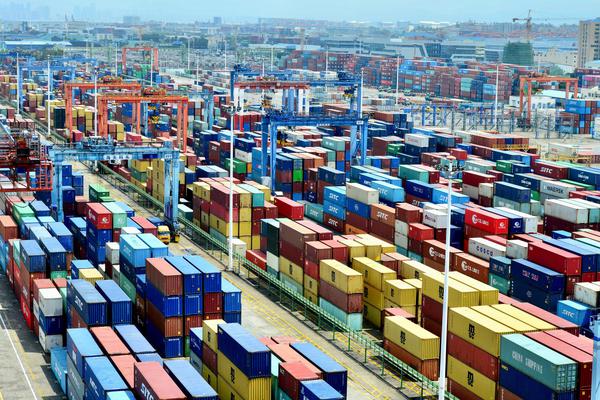
CNS: Against this backdrop, how would you characterize the current overall state of China-Brazil economic and trade relations? In terms of trade scale, investment flows, industrial structure, and major sectors of cooperation, what are the most notable features of the relationship today?
Célio Hiratuka: The current state of China-Brazil economic and trade relations is best characterized as one that has evolved from a primarily trade-focused dynamic into a broader and more complex strategic partnership.
Although diplomatic relations were established in 1974, it was only from the 2000s onward that the relationship deepened significantly. Since 2010, it has expanded to include not only trade, but also substantial investment flows, infrastructure projects, and financial cooperation.
In terms of trade scale, China is now Brazil's largest trading partner. On the investment side, Chinese foreign direct investment in Brazil has grown significantly, and the sectoral profile of these investments is also changing. Beyond traditional sectors, Chinese capital is increasingly flowing into automotive and green mobility, renewable energy equipment, and agricultural machinery.
CNS: In your view, what are the most important opportunities in China-Brazil economic and trade cooperation at present? In which areas are these opportunities most promising?
Célio Hiratuka: One of the most promising opportunities lies in industrial revitalization.
As Chinese investment shifts toward sectors such as automotive and green mobility, renewable energy equipment, and agricultural machinery, Brazil has an opportunity to align these inflows with national priorities such as the Nova Indústria Brasil and Mover programs. By doing so, Brazil can foster local content, stimulate research and development, and encourage technology transfer. This would help reverse the trend of deindustrialization and regressive specialization that has characterized the trade relationship.
Another major opportunity lies in the energy transition. With China emerging as a key player in renewable energy technologies and equipment, Brazil can position itself as a strategic partner in the global shift toward green energy. This includes not only attracting investment in solar and wind power, but also developing local supply chains and technological capabilities in areas such as electric mobility and bioenergy.
In agriculture, there is also significant potential to move beyond the current model of large-scale monoculture exports, which has often led to land concentration and environmental pressure. My presentation at the forum points to new, more inclusive models of cooperation, such as adapting machinery for family farming and promoting digital inclusion through connectivity and artificial intelligence. These approaches would enable smaller farmers and traditional communities to benefit more fully from the agricultural boom that has largely been driven by Chinese demand.

CNS: At a time when external risks are rising and international markets are becoming more unstable, how should China and Brazil further strengthen and safeguard their stable economic and trade relationship? In your opinion, what more can both sides do in terms of policy coordination, investment facilitation, and long-term cooperation mechanisms?
Célio Hiratuka: Regular high-level dialogue mechanisms-beyond trade negotiations alone-could help coordinate macroeconomic policies, address asymmetries, and anticipate risks before they escalate. Given the external volatility described earlier, such coordination is essential to avoid spillover effects from global shocks disproportionately affecting one side.
In terms of long-term cooperation mechanisms, both countries need to move beyond a purely trade-based relationship toward deeper institutional and technological partnerships. This could include joint research and development programs in areas such as artificial intelligence, biotechnology, and renewable energy.
Finally, the further deepening of institutional, academic, and cultural ties offers an important opportunity to build a more balanced and strategic partnership.
CNS: From Brazil's perspective, is the role of the Chinese market and Chinese investment in Brazil's development evolving? In areas such as industrial upgrading, export resilience, infrastructure development, and green transition, where do you see the greatest potential for future China-Brazil cooperation?
Célio Hiratuka: From Brazil's perspective, the role of the Chinese market and Chinese investment is indeed evolving. This evolution reflects both the maturation of the bilateral relationship and Brazil's growing awareness of the need to move beyond a commodity-exporting model.
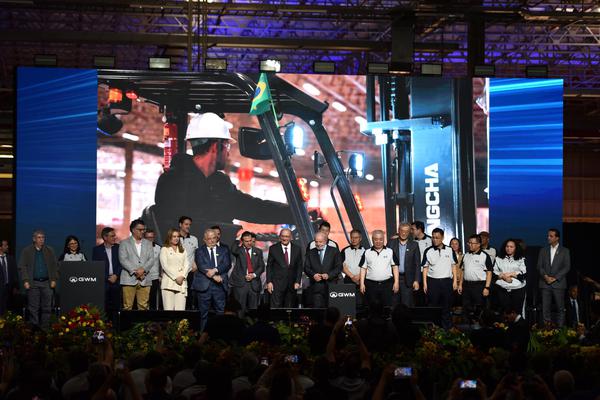
In terms of industrial upgrading, the greatest potential lies in Brazil's ability to attract Chinese investment that aligns with its national industrial priorities. Chinese investment is already shifting toward sectors such as automotive and green mobility, renewable energy equipment, and agricultural machinery. If Brazil can channel these investments through policy frameworks such as Nova Indústria Brasil and Mover, it can promote local content, research and development, and technology transfer.
This would mark a significant departure from the earlier phase of the relationship, when Chinese capital was concentrated primarily in infrastructure and resource extraction. The real potential now is for China to become not just a buyer of Brazilian commodities, but also a partner in rebuilding Brazil's technological and productive capacity.
CNS: At a time when the world is experiencing deeper fragmentation and restructuring, what broader significance does a stable, pragmatic, and sustainable China-Brazil economic relationship have for today's international environment? Can such cooperation also offer useful lessons for Global South cooperation more broadly?
Célio Hiratuka: The China-Brazil partnership can serve as a geopolitical anchor in a fragmented world, showing that economic pragmatism can, at times, transcend ideological shifts.
At the international level, this relationship can help strengthen multipolarity and promote a more balanced form of global governance through mechanisms such as BRICS, thereby challenging more traditional hegemonic structures.
For the Global South, the primary lesson is one of strategic autonomy: the ability to leverage foreign investment in technology and green energy to industrialize domestic economies, move beyond dependence on raw material exports, and pursue sustainable development and political sovereignty amid intensifying great-power rivalry.
Profile:
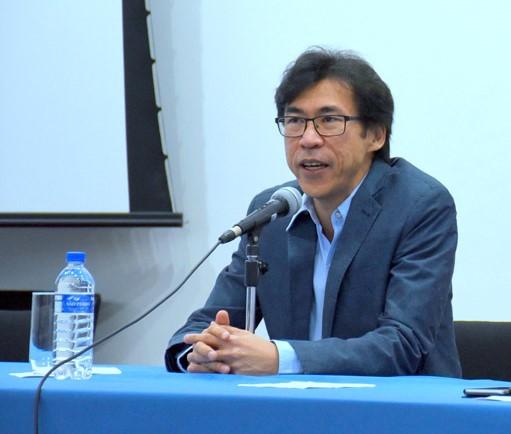
Célio Hiratuka is the Director of the Institute of Economics, University of Campinas, Coordinator of the Brazil China Study Group at UNICAMP.
He was the coordinator of the Center for Industrial Economics and Technology (NEIT) at UNICAMP (2009 to 2011), Deputy Executive Secretary of the Brazilian National Association of Graduate Studies in Economics (ANPEC, 2012-2013), General Coordinator of Graduate Studies at the Institute of Economics (IE) -UNICAMP (2016-2019), Coordinator of the Brazilian Network for China Studies (RBChina, 2018-2019), Associate Director of the IE-UNICAMP (2019-2023) and Director of the IE-UNICAMP (2024-2027).
His teaching and research themes are International Economy, Economic Development, International Trade and Investment, Transnational Corporations, Brazilian Industrial and Technological Development, and Brazil-China Economic Relations. In recent years, he has dedicated to the study of economic relations between Brazil and China, with several publications on the subject in book chapters and international and Brazilian journals.





















 京公网安备 11010202009201号