



By Zhang Aolin, Guan Na
(ECNS) -- Japan's House of Representatives election results announced on Feb. 9 delivered victory for the ruling bloc. The Liberal Democratic Party (LDP) secured 316 seats, surpassing the two-thirds threshold on its own, while the ruling coalition with Nippon Ishin no Kai expanded the ruling majority to 352 seats. Incumbent Prime Minister Sanae Takaichi is widely expected to secure re-election as prime minister when the parliament convenes on Feb. 18.
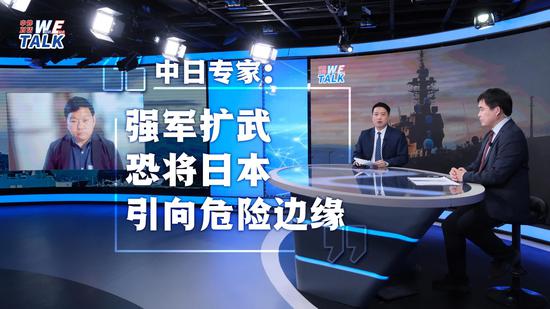
Focusing on the post-election trend toward political rightward shift in Japanese politics, China News Network's "W.E. Talk" program invited Chen Yang, a young scholar of Japanese affairs and visiting research fellow at Liaoning University's Institute of Japan Studies, and Shiro Hanatani, a local city councilor from Japan, for an in-depth discussion.
Chen pointed out that Takaichi will leverage her parliamentary advantage to comprehensively revise the "Three Security Documents," shifting Japan's defense policy from "exclusive defense" to "proactive defense," aiming to establish a political legacy bearing her personal imprint.
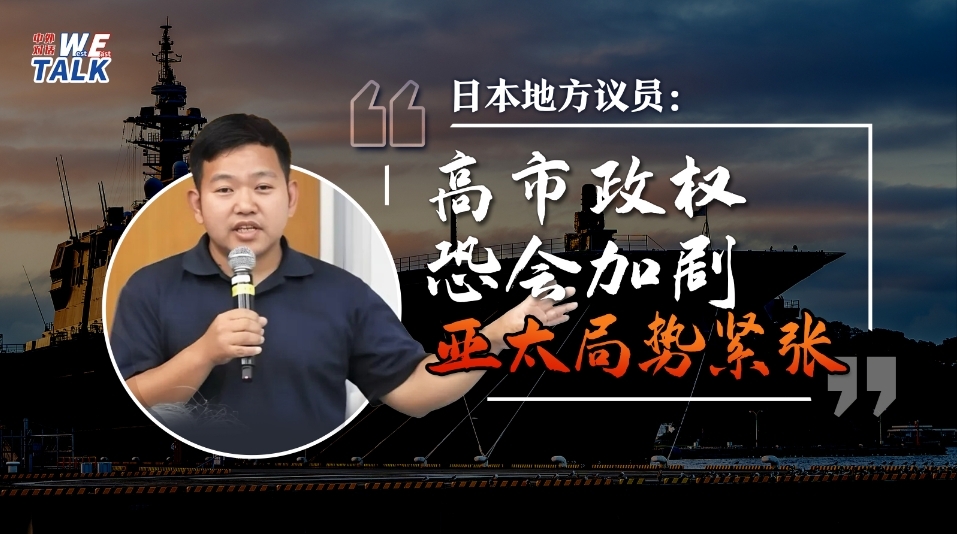
Meanwhile, Hanatani warned that militarization and constitutional revision efforts are heightening regional tensions; if the Takaichi administration continues misjudging historical perception and China's policy, it risks steering Japan into perilous territory.
Security policy and regional concerns
Since assuming office, Takaichi has pushed forward aggressive military expansion measures. She proposed accelerating the revision process of the "Three Security Documents," and openly sought to enshrine the Self-Defense Forces in the Constitution.
Chen stated that following the House of Representatives election, with minimal obstruction expected from opposition parties in the Diet, it is "entirely possible" that the Takaichi administration will complete the revision of the "Three Security Documents" within 2026.
He further pointed out that Takaichi's intense focus on revising the "Three Security Documents" stems from the fact that these documents essentially outline the overall direction of Japan's medium- to long-term foreign, defense, and security policies. Takaichi aims to cement a political legacy deeply marked by her personal ideology.
Chen believes Takaichi will accelerate increasing defense spending as a share of Japan's GDP and intensify militarization of the southwestern islands. Moreover, Japan will hasten its transition from "exclusive defense" to "proactive defense," further hollowing out the postwar peace framework.
"This military buildup has raised high alert among neighboring countries, especially against the backdrop of longstanding historical revisionism and glorification of past aggression within Japanese political circles. Such militarization easily triggers fears that Japan may revert to its militarist past," Chen noted.
Hanatani remarked, "The city where I live is very close to Okinawa's southwestern islands undergoing intensified militarization. This trend toward militarization actually began more than a decade ago."
Discussing the impact of the Takaichi administration's military expansion, Hanatani stated, "This has created immense tension in the Asian region."
Expressing concern over Takaichi's continued leadership, Hanatani added that after her electoral victory, her policies will likely take on an even "more hawkish tone," which "could further intensify feelings of insecurity."
"Sword of Damocles" hangs high; Takaichi faces formidable challenges
Chen believes that the ruling coalition's two-thirds majority not only consolidates Takaichi's position as prime minister but also strengthens her dominance within her own party, thereby diminishing the influence of moderate and cautious factions.
On the policy front, expansion of defense budgets, deepening of security legislation, and constitutional revision will all gain greater momentum. Japan's political rightward shift will thus move from a "trend-based drift" into a phase of "institutional entrenchment."
Hanatani noted that since the beginning of 2026, U.S. military actions such as the attack on Venezuela have intensified global instability. "How Japan should manage its relationship with its so-called ally, the United States, should have been a critical issue for discussion in this House of Representatives election—but unfortunately received little attention."
Hanatani added that Japan now holds a crucial position in the international order. If the Takaichi administration aggressively adjusts its security policies, Japan itself could end up in an extremely dangerous situation.
"Although Sanae Takaichi currently commands a 'parliamentary juggernaut' unprecedented in Japanese political history, she still faces numerous challenges," commented The Wall Street Journal.
Chen emphasized that Takaichi confronts severe domestic and foreign policy challenges.
Japan is grappling with persistently rising prices and continuous yen depreciation, Chen said. Coupled with a prolonged lack of new economic growth drivers and external pressure from U.S. tariff policies, these intertwined risks hang like a "Sword of Damocles" over the Takaichi administration and the ruling party, he added.
On the diplomatic front, Chen noted, "Ensuring overall stability in the Japan-U.S. alliance presents a major challenge for Takaichi."
Beyond uncertainties surrounding the Japan-U.S. tariff agreement, Chen Yang highlighted that the United States has consistently pressured Japan in recent years to shoulder a greater share of security and defense costs. "Persuading the public to accept increased defense spending amid fiscal constraints, in order to sustain the Japan-U.S. alliance, will be a huge test," he said.
Foreign media cited analysts as noting that Takaichi must deliver tangible governance results to voters. Should her administration underperform, public patience will quickly run out.
Japan must reflect and clarify "No War Between China and Japan"
Recently, Takaichi has made blatantly provocative remarks regarding Taiwan question, suggesting the possibility of military intervention in the Taiwan Strait. Despite China's stern representations and strong protests, Takaichi remains obstinate and refuses to retract her statements. Against this backdrop, both experts shared their perspectives on the future trajectory of China-Japan relations.
Chen stated, "Takaichi will now have to consider how to repair bilateral relations with China. In fact, China's stance on developing China-Japan relations has always been consistent and clear: Takaichi must retract her erroneous Taiwan-related remarks. Therefore, whether she can genuinely reflect on this issue after the House of Representatives election deserves close attention."
In Chen's view, only by faithfully honoring previous Japanese governments' political commitments on sensitive issues such as history and Taiwan—and by concretely implementing the political consensus that China and Japan are "partners, not threats"—can Takaichi put China-Japan relations back on track.
Hanatani describes China-Japan relations as "the most important issue" for the current Japanese government.
He called for reflection on the lessons of history and reaffirmation of foundational bilateral documents, including the Japan-China Joint Communiqué.
'Japan and China shall never again go to war," he said, underscoring the importance of preserving peace in Asia through dialogue and mutual restraint.
"At this significant milestone of the 80th anniversary of the end of World War II, Japan should reflect on the lessons of war and, drawing on decades of shared development experience with China, contribute new wisdom to Asian peace," Chen said.
Recently, Chinese Foreign Ministry spokesperson Lin Jian reiterated that China's policy toward Japan remains stable and consistent. "We urge Japan's ruling authorities to face, rather than ignore, the concerns of the international community; to pursue a path of peaceful development, not repeat the mistakes of militarism; and to abide by the four political documents between China and Japan, rather than betray trust and break promises. Should Japan's far-right forces misjudge the situation and act recklessly, they will inevitably face resistance from the Japanese people and firm countermeasures from the international community," Lin said. China's policy toward Japan will not change due to any single Japanese election, he added. "We once again urge the Japanese side to retract Takaichi's erroneous Taiwan-related remarks and demonstrate through concrete actions its basic sincerity in safeguarding the political foundation of China-Japan relations."

































 京公网安备 11010202009201号