



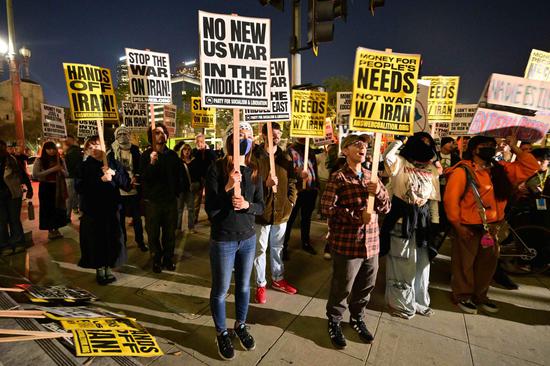
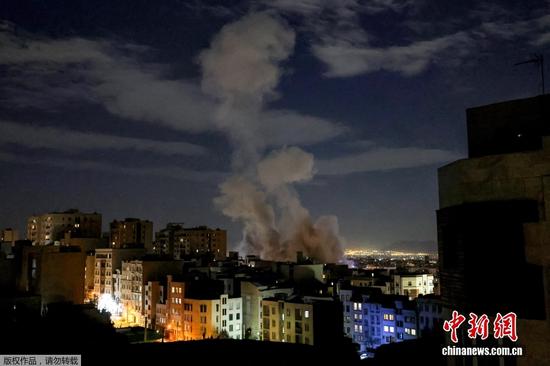
When US and Chinese representatives sat down in Paris for the new round of economic and trade consultations, the meeting was originally conceived as a routine checkpoint – a moment to consolidate the communication channels established over the past year and lay groundwork for future engagement. But the world had other plans. With the US Supreme Court striking down the Trump administration's sweeping tariffs imposed under the International Emergency Economic Powers Act (IEEPA) as unconstitutional, and American and Israeli forces launching devastating strikes against Iran, what was thought to be a routine session was thrust into one of the most consequential moments in recent diplomatic history. Against this backdrop, the Paris talks deserve to be read not merely as another round of trade talks, but as a signal of where US-China economic relations are headed.
A different kind of meeting
To appreciate what made Paris distinctive, it helps to recall what came before. The previous consultations were conducted in the long shadow of escalating tariff threats, with Washington wielding its trade arsenal as both sword and shield. That dynamic has now fundamentally shifted. The Supreme Court's invalidation of the IEEPA tariffs removed the most powerful and flexible instrument from the US toolkit. American delegations arrived in Paris without their most familiar weapon, replaced instead by a patchwork of Sections 301 and 232 investigations and a newly announced Section 122 tariff set to expire in 150 days. The result is a more legally durable but strategically less nimble set of tools – and both sides know it.
This shift matters enormously for the texture of the trade talks. In earlier rounds, the ever-present threat of tariff escalation cast a coercive shadow over every exchange. In Paris, the conversation was more symmetrical. Both delegations had reasons to seek stability, and both spoke the language of mutual benefit with unusual consistency. That, in itself, marks a departure.
Convergence on stability, divergence on substance
The most significant outcome of the Paris talks was not any single deliverable, but rather a shared commitment to maintaining stable bilateral tariff levels and avoiding the tit-for-tat escalation that had defined much of the past several years. Both sides agreed in principle to extend existing tariff and non-tariff moratoriums, and jointly affirmed that a stable economic relationship serves the interests of both countries and the world.
Equally notable was the agreement to explore the establishment of formal bilateral working mechanisms – a proposed Trade Committee and Investment Committee – designed to institutionalize the consultations and give them structural permanence. This is a meaningful step forward. Previous rounds produced agreements, but largely lacked the institutional scaffolding to ensure implementation. The Paris framework, if realized, would transform these consultations from episodic diplomatic encounters into a durable architecture for managing one of the world's most consequential economic relationships. The two sides also reviewed the implementation of the consensus reached in prior rounds and gave an overall positive assessment – a sign that the accumulated work of the five previous rounds is bearing fruit.
On specific deliverables, the picture is encouraging in some areas and constrained in others. China's commitment to sustained agricultural purchases – including a previously agreed target of 25 million tonnes of American soybeans in the next three years – remains on track. Expanded procurement of Boeing aircraft and American energy products was discussed as a natural extension of existing demand, rather than forced concessions. On rare earth minerals, both sides agreed to continue implementing the consensus reached at the Busan summit, a quiet but consequential signal that supply chain cooperation remains viable even amid broader tensions.
The energy dimension: complexity over clarity
The Iran conflict introduced an unexpected variable. Disruptions to Gulf energy flows and anxieties over the Strait of Hormuz elevated energy security to a central topic – one that had not been prominently featured in prior rounds. Yet the outcome here was more nuanced than a simple deal. American domestic energy prices have risen sharply since the outbreak of hostilities, complicating Washington's ability to push aggressively for Chinese energy purchases that might further tighten US supply. The absence of sufficient infrastructure for large-scale Chinese imports of American energy added a further practical constraint. The result was a frank acknowledgment of shared interests without premature commitment – and a foundation for future cooperation as circumstances evolve.
Structural tensions, managed carefully
No honest accounting of the Paris talks can omit their frictions. Beijing lodged formal and serious objections to Washington's initiation of two new Section 301 investigations – one targeting alleged overcapacity, another focused on forced labor – characterizing them as unilateral actions incompatible with a stable bilateral relationship. China's international trade representative Li Chenggang made clear that China will closely follow the developments of these investigations and take timely measures to safeguard its legitimate rights and interests. These are not empty words. The rare earth export restrictions China has already implemented serve as a reminder that Beijing retains meaningful leverage of its own.
And yet, what is striking is not the existence of these tensions, but the manner in which both sides chose to handle them – through structured dialogue, formal representation, and a shared vocabulary of "frank, candid, and constructive" engagement. The willingness to name disagreements without allowing them to derail the broader process is itself a form of diplomatic maturity that has not always characterized this relationship.
Looking ahead
The Paris consultations will likely be remembered as the moment when US-China economic diplomacy shifted from crisis management to institutional construction. The proposed bilateral working mechanisms, if established and properly resourced, could prove transformative – providing a forum for continuous engagement that reduces the risk of misunderstanding and creates pathways for incremental progress even when the political climate is difficult.
The deeper challenges have not disappeared. High-technology export controls, investment screening, and the core geopolitical disagreements that underlie economic friction remain unresolved. But Paris demonstrated that both governments understand the cost of instability and are willing to invest in the architecture of management. In a world of cascading crises, that is no small achievement – and it points toward a bilateral economic relationship that, whatever its tensions, is learning to sustain itself.
























 京公网安备 11010202009201号