


China's river city is transforming itself from a transit hub into a cultural destination through poetry, heritage and the landscapes of the Yangtze.
When the Yangtze River reaches Wuhan, Hubei province, it slows down.
For thousands of kilometers upstream, China's longest river cuts through mountains and gorges. But in Wuhan, in the flat heartland of Central China, the Yangtze broadens into a calmer expanse. Tortoise Hill and Snake Hill rise on opposite banks like half-open gates, framing a stretch of water before the river continues east toward the sea.
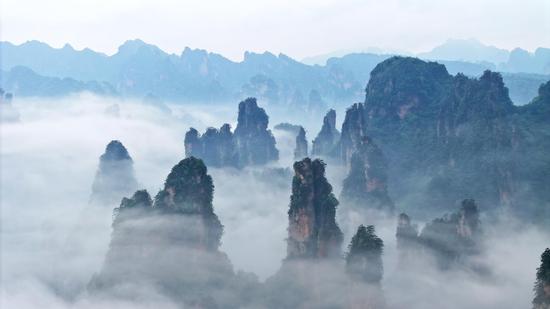
Mist lingers above the water in late spring. Across the river, skyscrapers emerge and disappear behind shifting veils of vapor. More than 1,200 years ago, Tang Dynasty (618-907) poet Cui Hao stood on this same stretch of riverbank and wrote the lines that would become inseparable from Wuhan's identity: "Where lies my homeland at sunset? Mist upon the river brings deep sorrow."
The poem survived. And so did the view.
Bridges now span the river, and towers rise where fishing boats once gathered. Yet Wuhan, long known as the "thoroughfare of nine provinces" because nearly every major route in Central China seemed to pass through it, is undergoing a quieter transformation.
For generations, travelers once made transient calls here on their way to somewhere else. Now the city wants them to stay.



























 京公网安备 11010202009201号