



(ECNS) -- Over the past year, side-by-side comparisons of everyday expenses in China and the United States have gone viral on various social media platforms, triggering widespread debate about cost-of-living pressures on ordinary households.
In one post which went viral on X, albeit with unverified statistics, it mentioned that a single set meal at just a mid-range restaurant in China would typically cost between 15 and 50 yuan ($2.1–$7.1), while the same meal in the United States would range anywhere from 87 to 262 yuan ($12.4–$37.4), an incredible cost of 5.8 times more than in China. In addition, monthly rent for a one-bedroom apartment outside a city center in China generally falls between 1,000 and 4,000 yuan, yet ranges from 7,085 to 22,948 yuan in U.S. cities. Public transport shows the same stark contrast with metro fares typically costing just 2–5 yuan per trip in China, versus 9–29 yuan in the United States.
Of course, income levels partly offset these differences, although not entirely. The U.S. Census Bureau data show that the inflation-adjusted median household income in the United States stood at 83,730 U.S. dollars in 2024 (equivalent to about 585,289 yuan). In the same year, data from China's National Bureau of Statistics indicate that the median per capita disposable income nationwide was 34,707 yuan.
Despite differences in statistical methodologies between China and the United States, and the fact that the figures are compiled on a household and per-capita basis respectively, a rough calculation based on the average household size of 2.62 persons reported in China's seventh national census shows that U.S. household annual income is far higher than that of China. Yet for many essential expenses, price increases have outpaced income multiples, reinforcing a perception widely shared online: that higher pay does not always translate into greater financial security.
Against this backdrop, a term "kill line", which was actually initially drawn from video games, has now entered everyday speech to describe a household's "financial health status," referring to the tipping point that would cause problems for homeowners such as medical bills, job loss or housing costs can trigger a rapid and potentially irreversible slide into poverty or homelessness.
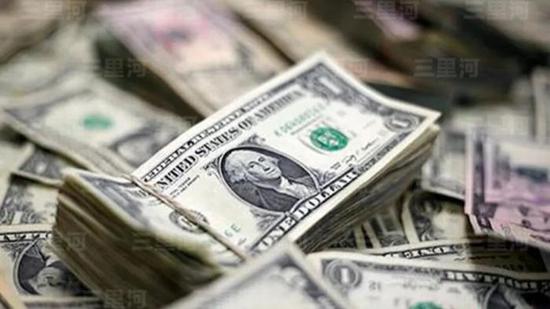
Data from multiple surveys suggests this anxiety is not out of nowhere either. According to a 2025 poll by U.S. consumer finance company Bankrate, that covers over 1,000 American adults, 59% said they could not cover a $1,000 emergency expense with savings. The figure highlights the fragility beneath headline income levels in the world's largest economy.
Practically though, even households earning more than $10,000 a month in the United States often report persistent stress over rent, healthcare, and childcare. In China, while incomes still have room to rise, many families manage to maintain a relatively stable daily life. Yet, these "bill comparisons," in fact point to the deeper problem on where these vast differences actually arise from.
Two models, two cost structures
At a recent forum in Beijing, Yan Yilong, the assistant dean of Institute for Contemporary China Studies at Tsinghua University, presented comparative data with an analysis explaining the answer to this problem.
On a wider scale, the gap between the two economies remains significant. In 2023, Yan's data indicates that China's total stock market capitalization stood at approximately $13.1 trillion, compared with $46.2 trillion in the United States, making China's market roughly a quarter the size of America's.
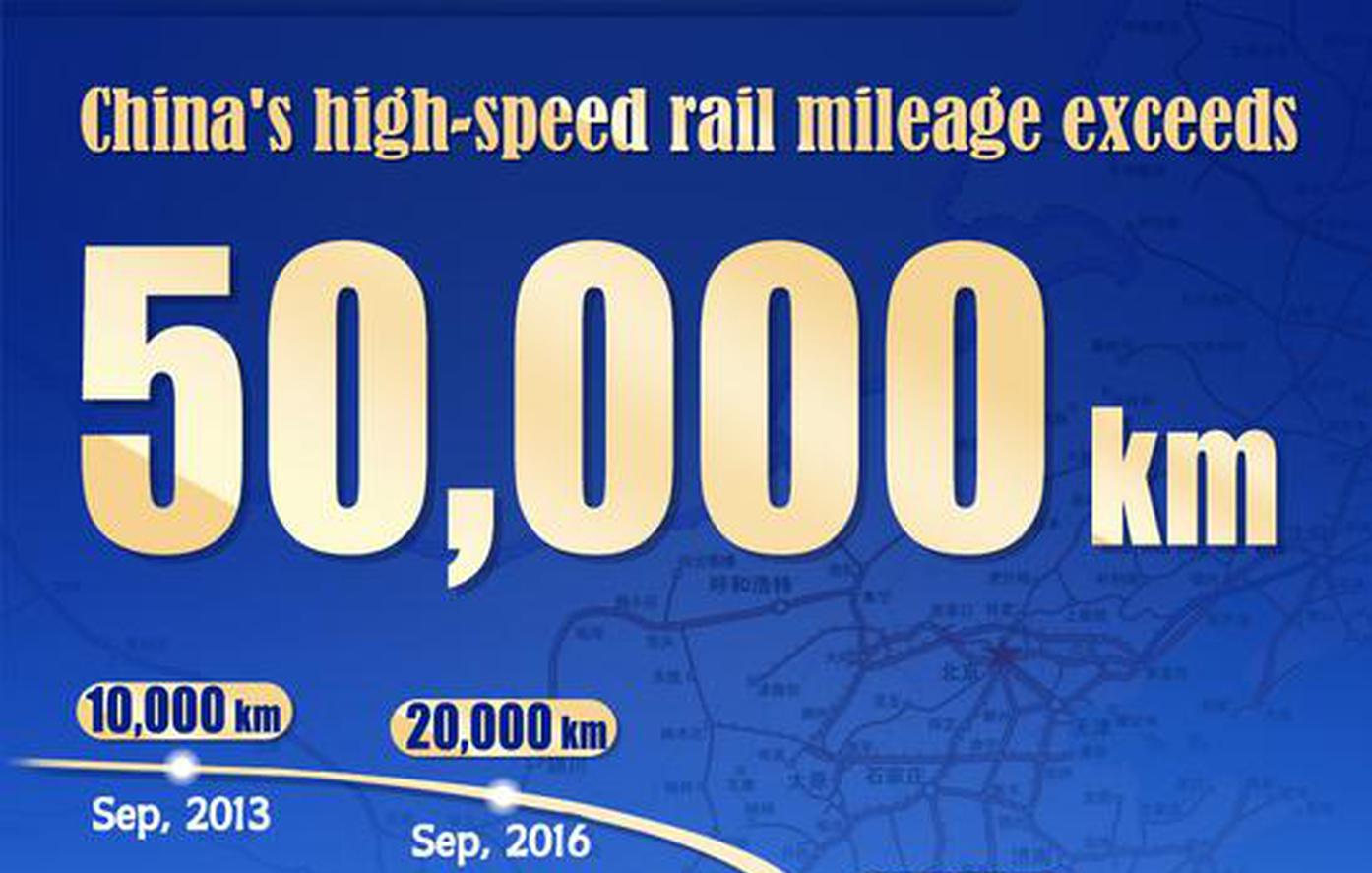
Yet for infrastructure, the contrast is extremely noticeable with data from the International Union of Railways (UIC) showing that by 2023, China's high-speed rail network reached around 45,000 kilometers, while the United States only had around 735 kilometers worth of rail, a difference of more than 60 times.
So, this is not simply a question of which country is the "stronger" one but reflects divergent development priorities: one model emphasizes large-scale public infrastructure and broadly accessible services, while the other relies more heavily on market mechanisms and private household spending.
The consequences are evidently felt more in people's daily lives.
Stability at the bottom line
One revealing indicator is food insecurity, a metric closely tied to basic living stability. According to China's Statistics Bureau and data from the U.S. Department of Agriculture (USDA) for the same year, approximately 4.8 million people in China were classified as ‘food insecure', accounting for 0.34% of the population. In the United States, the number reached 44 million, or 13.5% of the population.
Food insecurity does not necessarily imply hunger; rather, it refers to the inability to secure sufficient and safe food on a stable, long-term basis. The indicator is widely used to assess vulnerability at the lower end of society.
The contrast helps explain why, in a high-income country, millions of households remain anxious about basic expenses, while in a developing economy with lower average incomes, the "safety floor" of daily life can be more secure.
Similar patterns emerge in transport, one of a major cost centers for households. China's urban rail and national railway density are substantially higher than those of the United States. In 2023, China provided roughly 0.82 kilometers of metro rail per 10,000 people, compared with 0.21 kilometers in the U.S. The gap is even wider in high-speed rail: 0.34 kilometers per 10,000 people in China, versus just 0.01 kilometers in the United States. This extensive public infrastructure helps keep commuting and basic mobility costs relatively predictable.
Besides, as U.S. healthcare and education are highly market-driven, medical resource consumption per capita is higher than China, and the share borne directly by individuals is larger. When income is interrupted, households' ability to absorb shocks is correspondingly weaker.
More than an income comparison
This is why seemingly mundane online comparisons of grocery bills, rent, and subway fares have resonated so strongly. They are not simply arguments about who earns more, but about a more fundamental concern: whether daily life is stable, and whether risks are manageable.
Statistics may appear impersonal, yet they help illuminate a widely shared lived reality. Measuring development is not only about economic scale or aggregate wealth, but about whether ordinary people can sustain a decent standard of living at an affordable and predictable cost.
Viewed this way, the divergence between China and the United States extends far beyond headline income figures. It is embedded in the structure of everyday life itself.


































 京公网安备 11010202009201号