


By Gong Weiwei
(ECNS) -- U.S. Secretary of State Marco Rubio announced on Tuesday that the combat operation against Iran has ended. Earlier, the U.S. government said Washington would deal with Iran first and then Cuba. Recently, the U.S. has intensified sanctions on Cuba.
In response, Cuban President Miguel Díaz-Canel said that Cubans would never let themselves be intimidated even though U.S. threats against Cuba have escalated to an "unprecedented" point.
Now that the U.S. has stepped back from the Iran conflict, will Washington shift its focus back to Latin America and target Cuba next? How will Cuba and other Latin American countries respond? The images of Venezuelan President Nicolas Maduro being forcibly controlled by the U.S. remain vivid, while conflicts continue in the Middle East. Against this backdrop, how might the global situation evolve under continued U.S. intervention?
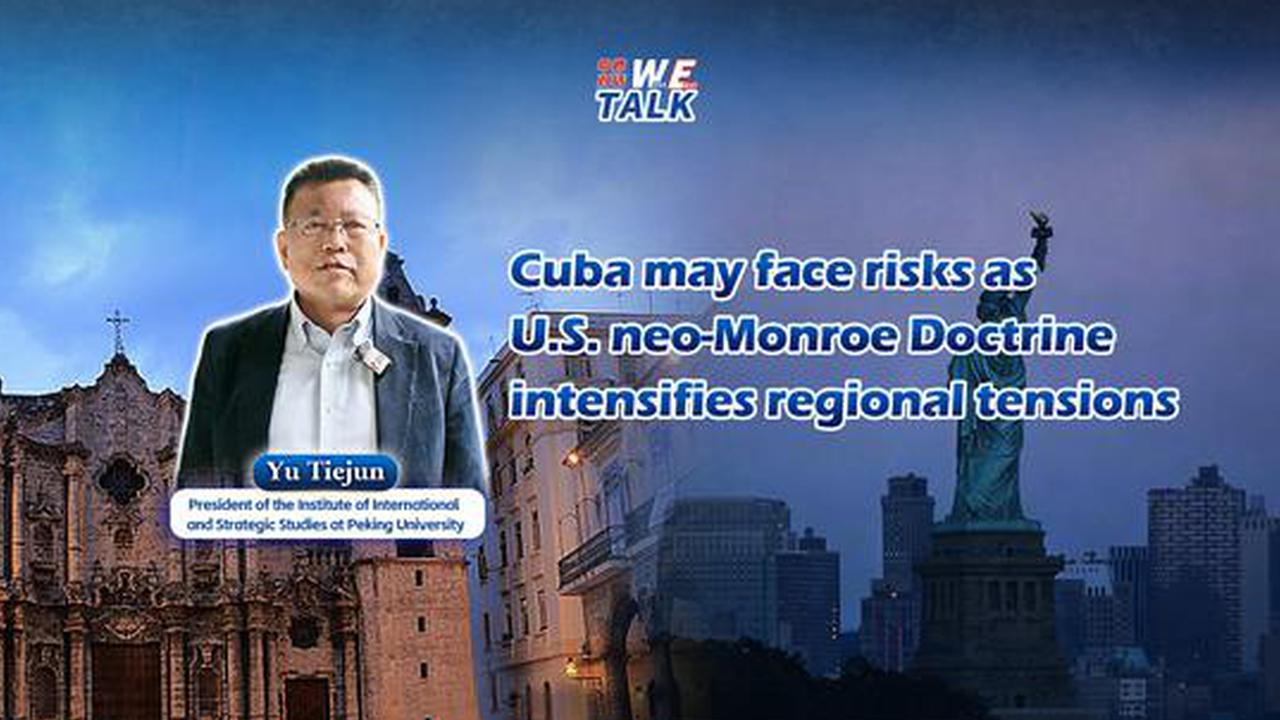
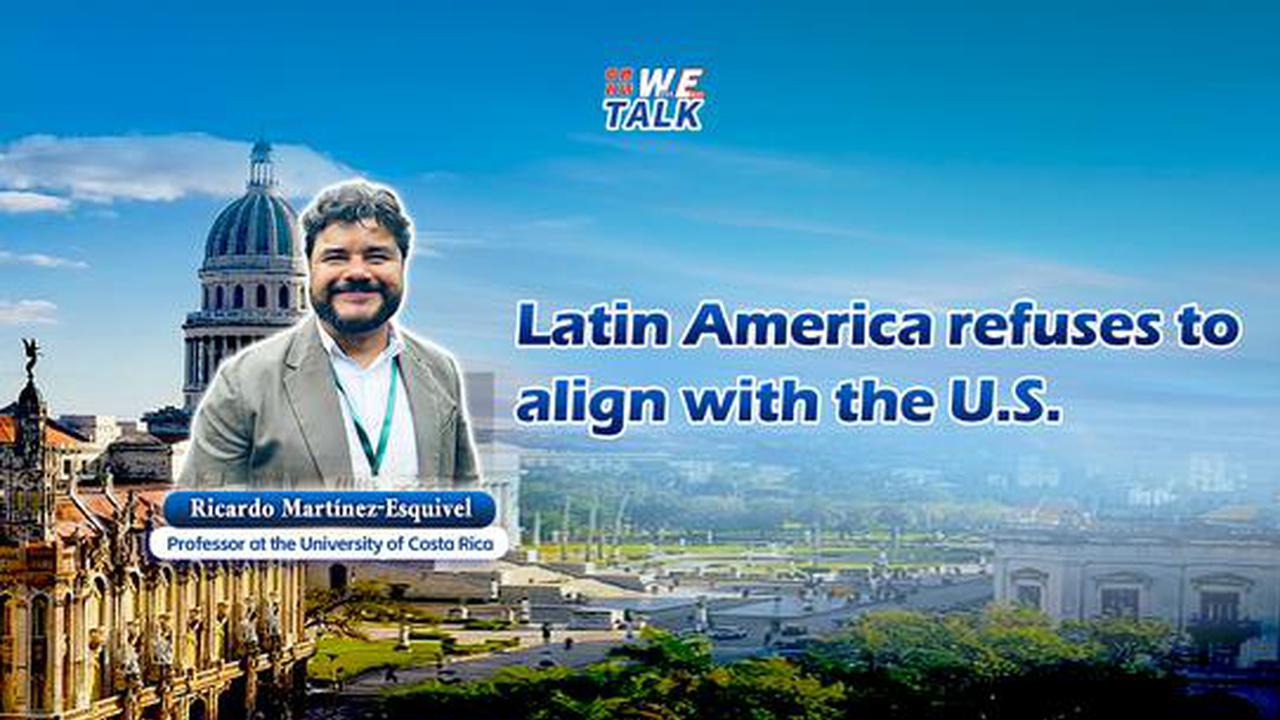
In the latest episode of W.E. Talk program, Yu Tiejun, president of the Institute of International and Strategic Studies at Peking University, and Ricardo Martínez-Esquivel, a professor at the University of Costa Rica, shared their views from different perspectives.
Martínez-Esquivel expressed concern that U.S.-Israeli military actions against Iran could spill over into Latin America, potentially forcing countries in the region into the difficult position of having to choose sides of being with the U.S. But, many Latin American countries are seeking to maintain independent foreign policies and avoid being drawn into bloc confrontation.
War spillover effects shake global stability
Since February 28, U.S. and Israeli military operations against Iran have caused significant casualties and sending shockwaves through the global energy and economic systems, triggering fluctuations in shipping and oil prices. But have the U.S. and Israel achieved their objectives?
Yu pointed out that U.S. objectives have appeared to shift repeatedly from eliminating Iran’s nuclear capabilities to pursuing regime change without a clear or coherent strategic logic.
Meanwhile, cultural heritage sites across Iran and the broader Middle East have been damaged by the war, and infrastructure has been destroyed. The conflict is producing deeply troubling consequences. If the situation continues to worsen, it will claim more lives and inflict irreversible damage on human civilization.
Speaking on this point, Esquivel said that the Golestan Palace, located in central Tehran, was severely damaged in U.S.-Israeli airstrikes, which not only erased the historical legacy of generations who lived there, but also destroyed their local culture and even undermined their sense of identity.
Esquivel expressed deep concern over the situation in the Middle East. In his view, the war has caused massive casualties, and more alarmingly, some violations of international law are gradually becoming normalized.
Latin America’s dilemma under “Neo-Monroe Doctrine”
Adjustments in U.S. foreign policy are intensifying instability in the international order. “We are now in the era of ‘Trump 2.0,’” Yu said. Under the influence of the so-called “Neo-Monroe Doctrine,” the U.S. continues to treat Latin America as its backyard.
Yu cited a well-known saying: “Poor South America, so far from God and so close to the U.S.” to illustrate that the U.S. government clearly expects Latin American countries to follow his lead. Once the conflict in Iran temporarily eases, the region could face even greater external pressure and uncertainty.
At the beginning of 2026, the U.S. took military action to exert cross-border control over Venezuelan President Nicolás Maduro, delivering a strong psychological shock to Latin American countries.
As a Latin American scholar, Esquivel voiced concern over the region’s predicament. He said that with Trump back in office, U.S. policy toward Latin America has become more aggressive, pushing the region into a “pick a side” dilemma: Be with the U.S. government or be against it. Latin American countries that choose to side with the U.S. would then have to avoid cooperation with other major powers, he said.
Latin America refuses to “pick sides,” calls for dialogue
Many Latin American countries are seeking to maintain independent foreign policies and avoid being drawn into bloc confrontation. Esquivel pointed out that countries including Brazil, Uruguay, and Colombia prefer to strike a balance among multiple partners and continue cooperation with them, although such efforts face external interference.
Yu emphasized that the actions such as withdrawing from international organizations, undermining multilateral mechanisms, and abusing long-arm jurisdiction are manifestation of unilateralism.
Esquivel said he hopes the U.S. leaders will soon realize that “the world is not the way he imagines it.” He emphasized that the future international order should not be dominated by a single country but should move toward a more multipolarworld.
Regardless of its size, every country should have a voice in international affairs and defend its identity and culture through dialogue and communication, contributing to a more balanced and pluralistic global order, said Esquivel.


















 京公网安备 11010202009201号