


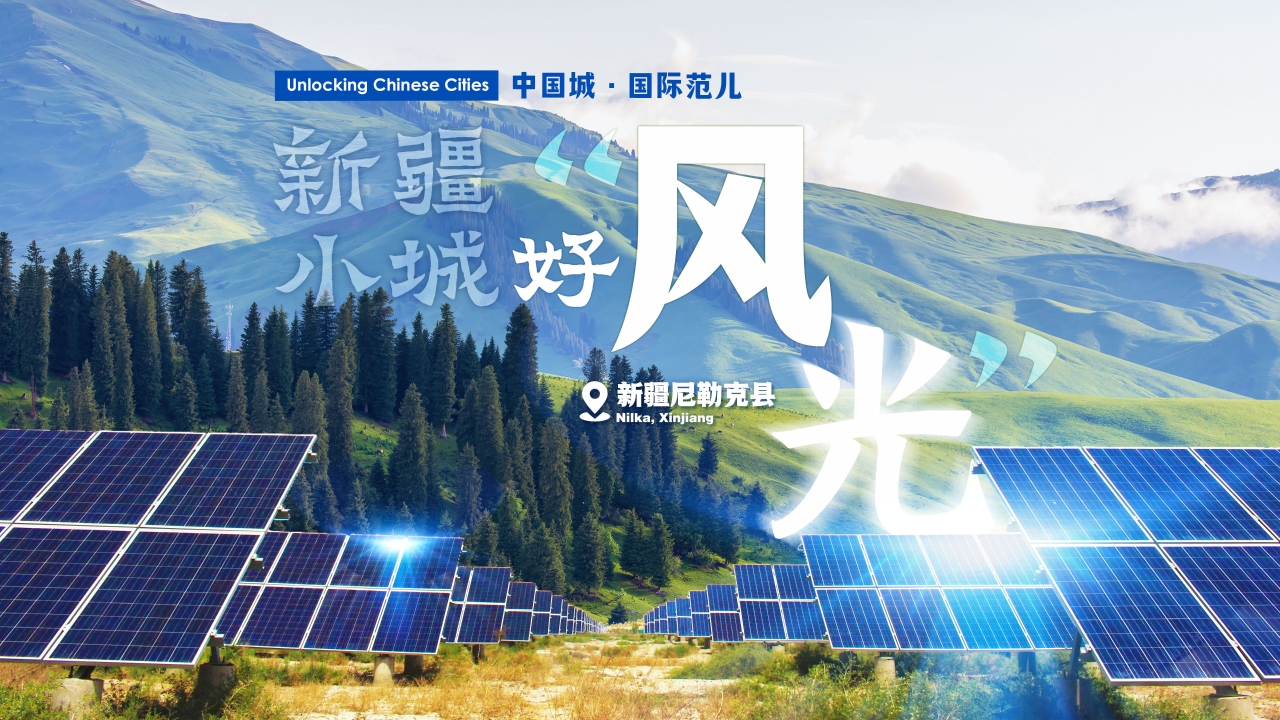
Rows of solar panels stretch across what were once abandoned tidal flats in Dongshan county, Zhangzhou, Fujian province. Steel pillars driven into the seabed hold the panels above the waterline, allowing aquaculture activities to continue below while clean electricity is being generated above — a visible example of how coastal provinces maximize limited marine space.
The 180,000-kilowatt solar farm, built on more than 200 hectares of mudflats, is the country's first offshore solar project in a high-wind-speed zone, operated by China Three Gorges Corporation. The project exemplifies how offshore wind and coastal solar are reshaping the province's energy landscape.
Dongshan is part of a larger national effort. China has to date approved more than 200 offshore wind projects, pushing cumulative grid-connected capacity past 47 million kW — around half of the global total and the world's top ranking for five consecutive years, according to the Ministry of Natural Resources.
"Fujian has some of China's best conditions for offshore renewable energy — strong, consistent winds averaging more than 9 meters per second, long coastlines with suitable tidal flats, and deep waters just offshore," said Chen Qingsen, deputy general manager of the Fujian Three Gorges Offshore Wind Power International Industrial Park Operations Co.
Chen said solar and wind power are complementary — solar generation peaks during daylight hours while wind often strengthens at night, creating a more stable collective output. He noted that one full rotation of a 16-megawatt offshore wind turbine generates about 34 kilowatt-hours of electricity, enough to power an average Chinese household for more than a week.
"From 2019, when the first domestically produced 6.7-megawatt offshore wind turbine was unveiled here, to 2024, when the world's largest 26-megawatt offshore wind turbine rolled off the production line, we have launched turbines of 8, 10,13, 16, 18, 20 and 26 megawatts, continuously breaking global records while achieving 100 percent domestic production of key components," Chen said, adding that these turbines are accelerating their entry into overseas markets.
Prior to 2017, China's largest domestic turbine was limited to 5 MW, with critical components reliant on overseas suppliers. The 67-hectare park, established in 2016, broke that pattern as China's first industrial cluster covering the full offshore wind power chain.
Yue Qi, director of the institute for marine resources protection and utilization of the National Ocean Technology Center, emphasized that offshore renewable energy is a strategic priority for China's energy transition.
The outline of the 15th Five-Year Plan (2026-30) sets a target of 100 million kW of offshore wind capacity by 2030.
"The target reflects the central government's commitment to scaling up clean energy while developing the marine sector as a new engine of economic growth," Yue said.
Developing offshore wind along China's eastern seaboard also carries a logistical advantage over transmitting power from the west. "Short transmission distances and proximity to consumption centers mean we can avoid the massive losses and infrastructure costs of long-distance west-to-east power transfer," Yue noted.
As nearshore waters grow increasingly crowded, the industry is pushing farther out. China's site-selection standards have evolved from the early "double-10" principle — at least 10 meters deep and 10 kilometers offshore — to the current "single-30"standard of at least 30 meters deep or 30 km from shore.
In 2023, the Ministry of Natural Resources introduced policies for the three-dimensional, layered use of marine space. Around 4,000 such multiuse projects now operate nationwide, according to Yue.
Looking ahead, China is exploring a new frontier of undersea data centers directly powered by offshore wind to support artificial intelligence and 5G infrastructure.

































 京公网安备 11010202009201号