



(ECNS) -- The phrase "Love Yourself First" has recently gone viral online in China. Hailed as one of the "warmest buzzwords of the year," it captures a lifestyle attitude embraced by today's young people: valuing self-care and personal enjoyment.
The mindset has also given rise to a surge in emotion-driven consumption, a trend that is rapidly evolving from a passing consumer fad into a powerful engine of market growth.

According to the 2025 Z Generation Emotion Consumption Report released by the Shanghai Youngsters Research Center and other institutions, 56.3 percent of respondents said they choose "happy consumption," spending money for emotional value or personal interests. This figure marks an increase of 16.2 percentage points compared with 2024.
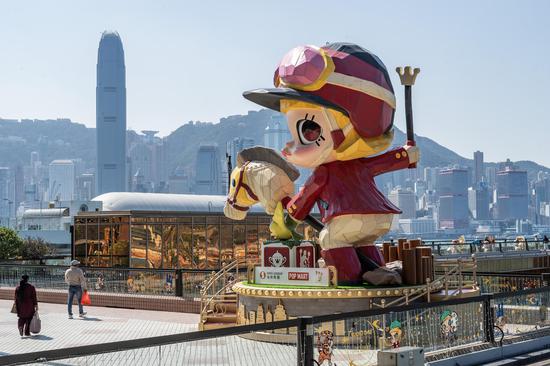
Across China, young consumers are willing to queue for hours to buy Labubu collectibles or trendy Chinese gold jewelry; concert tickets for top pop stars sell out within seconds. In historic cities such as Xi'an and Luoyang, streams of young people dressed in traditional Chinese Hanfu attire fill ancient streets and alleys, posing for photos and sharing the experience online.
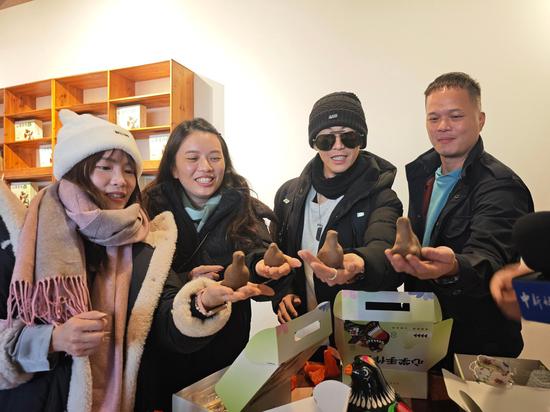
Behind this enthusiasm for spending on seemingly non-essential products and experiences lie genuine and emotional needs. Spending dozens of yuan on a blind box delivers the thrill of surprise and anticipation at the moment of unboxing; paying several hundred yuan for a concert buys hours of emotional immersion. These affordable, instantly gratifying "small happinesses" have become effective ways for young people to regulate their emotions and reward themselves.
At the same time, the social dimension of consumption has been amplified as never before. Identical designer toys displayed on a café table serve as subtle signals to spark conversations and identify like-minded peers. A particular outfit or aesthetic functions as an identity passport, granting entry into a community and a sense of belonging. Purchasing itself has increasingly evolved into a form of "social currency" in the pursuit of group recognition.
Capital markets are also beginning to recognize and price emotional value. A report by iiMedia Research shows that China's emotion economy reached a market size of 2.3 trillion yuan (140 billion) in 2024 and is expected to surpass 4.5 trillion yuan by 2029.
As "self-pleasing" emotions coalesce into a billion-dollor consumption blue ocean, their significance extends beyond commerce, injecting fresh vitality into economic development.
On the one hand, this trend is giving rise to new professions and business models, creating jobs while elevating creativity and design into core drivers of higher value-added products. On the other hand, it generates strong spillover effects: a hit concert can ignite a city's cultural tourism consumption, while a famous character can energize an entire downstream derivatives industry chain.
More importantly, the trend is helping build a more sustainable consumption pattern. While buying a blind box or attending a performance may not involve large single expenditures, the high frequency and broad participation make such spending an important pillar for stimulating consumption vitality.
This burgeoning wave of self-pleasing consumption is not only reshaping markets, but also offering a vivid answer from a generation to a deeper question: what truly constitutes a good life.
(By Gong Weiwei)























 京公网安备 11010202009201号