STRONGER WILDLIFE PROTECTION
Given a long history of pet-keeping culture, in recent years China has risen as the world's third-biggest pet-related consumption market (live animal trade excluded) after the United States and Japan.
By 2016, among 1.3 billion Chinese, one out of every thirteen owned a pet. The Chinese pet market is expected to surpass 300 billion yuan (44.67 billion U.S. dollars) by 2023, according to a report by Shenzhen-based Qianzhan Industry Research Institute.
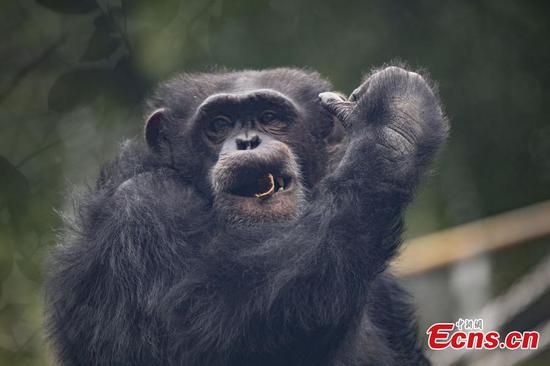
Apart from mainstream choices of cats and dogs, turtles, rodents and other waterborne creatures represented 6.38 percent, 5.06 percent and 3.02 percent respectively, with a 2.2 percent "others" that included other reptiles (snakes, crocodiles, lizards), arthropods (spiders, scorpions) and even stranger pet choices such as primates, according to a survey by Beijing-based Linkip Technology.
Fueled by the rapid popularization of social media and live streaming platforms, the minority has seen continuous growth.
"We call on the public not to capture, purchase or keep wildlife as pets, and not spread videos regarding sales or entertainment of exotic pets, in hopes of reducing the market demand through stronger public education and guidance," said Guo Jinghui of WAP.
In China, more efforts need to be made to change the role played by key platforms of the wildlife trade, which includes e-commerce platforms, social media, airlines and logistics service providers, she pointed out.
Chinese Customs have played a major part in cracking down on the exotic pet trade, with help from the maritime police and public security forces.
In January, 27 live spiders and five boxes of spider eggs were confiscated by the customs in Luohu, between Shenzhen and Hong Kong, while last October, a gang suspected of smuggling 14,000 endangered parrots was busted by joint forces in Xiamen.
For the IT sector, in March 2018, a dozen Chinese companies including Baidu, Alibaba, Tencent, and their international counterparts such as Google, eBay and Microsoft announced in San Francisco the establishment of a "Global Coalition to End Wildlife Trafficking Online," committing to an 80 percent decrease of wildlife trade on each of their platforms.
Alibaba, who operates several major e-commerce platforms, told Xinhua that, apart from including over 3,000 species of wild flora and fauna in the forbidden list on its platforms, it has supported a volunteer team of 2,000 people to conduct manual inspections of the merchandise online.
As the Chinese public becomes more aware of the illegal online trade, many people have joined in and volunteered to supervise and report suspicious cases to relevant public departments.
"The best way to love and protect wild animals is to let them be in nature, where they belong," said Sun. "We should not imprison them as pets or hurt them in the name of love."