


By Han Yu, Cao Xufan and Naziyeerke Bahetinuer
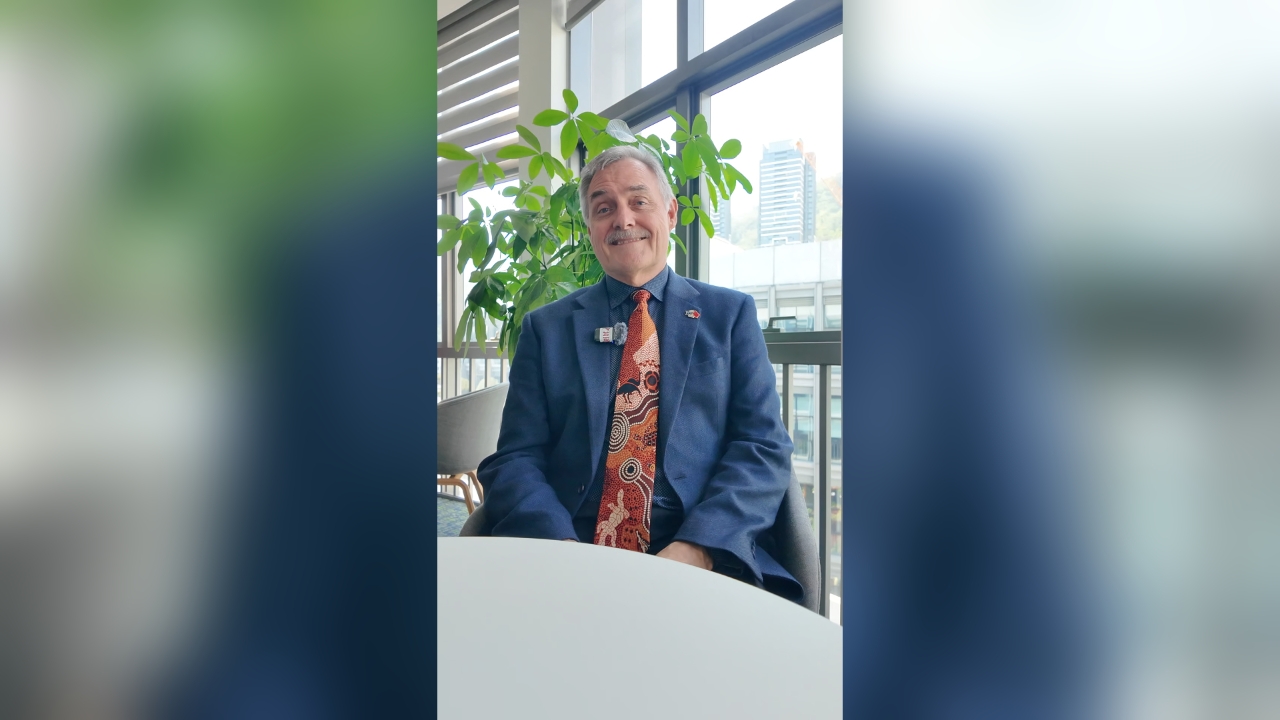
(CNS) -- "Europe will miss an opportunity if it does not use the potential for mutually advantageous economic cooperation with China," former UNESCO Director-General Irina Bokova told China News Service's W.E. Talk when discussing China-EU relations.
Bokova, a recipient of the Lifetime Honorary Award at the second Orchid Awards, recently returned to China. She spoke about China-EU economic, trade and technological cooperation, ways to deepen understanding across cultures, and memories of her first visit to Shenzhen some 15 years ago.
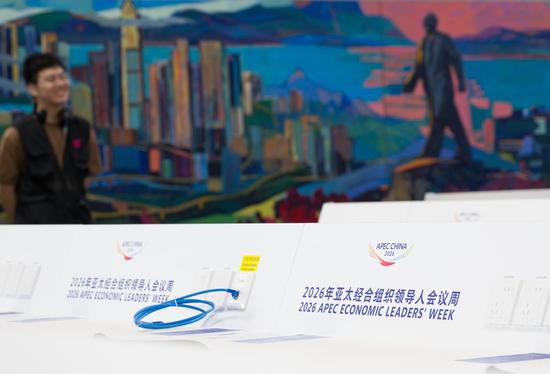
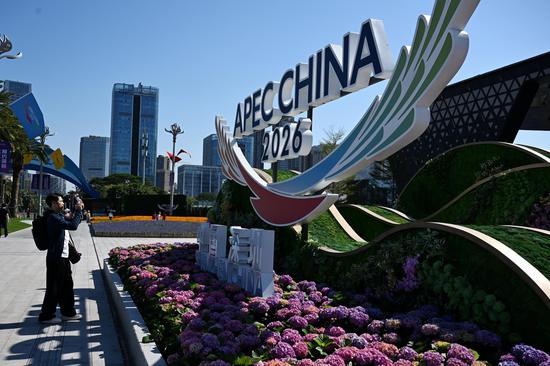
She also expressed hope that the Asia-Pacific Economic Cooperation (APEC) Economic Leaders' Meeting, to be held in Shenzhen later this month, would "serve as a bridge" to help ease mistrust and find solutions to pressing problems.
Competition Should Not Turn into Confrontation
Asked about China-EU economic and trade frictions, Bokova said that amid geopolitical shifts, China's rise was not always understood in a non-confrontational way. Competition among countries would always exist, she noted, and the key was how to manage it.
"The most important thing, in my mind, is not to transform this into a confrontation."
She identified several areas for closer China-EU cooperation: joint scientific projects, exploring mutual transfers of technology, and technological innovation.
"China has a lot to offer Europe," she said. In her view, China's vast market and emerging technologies could also benefit Europe.
Bokova emphasized the need for closer cooperation amid major geopolitical shifts.
"China and Europe should aspire to become partners and not deepen the divisions that these geopolitical shifts are bringing to the world," she said.
She noted some positive signs in the relationship, while acknowledging that competition made further cooperation difficult. Negotiations would not always be easy, she said, but both sides should seek partnership, work through their differences, and avoid further divisions.
In October, the second meeting of the China-EU Trade and Investment Consultations and the 17th EU-China Joint Steering Committee Meeting on Science and Technology Cooperation were held in succession, covering trade and economic frictions, scientific and technological innovation, and cooperation mechanisms.
Communication Does Not Automatically Bring Understanding
"We communicate with each other almost every single minute, but it doesn't mean that we have become more tolerant or more knowledgeable," Bokova said. More frequent communication, she noted, did not necessarily lead to greater mutual understanding.
"Communication does not automatically bring the results that we want."
She stressed the importance of education for cultural competence. Exchanges among museums, joint research by historians and scientists, exchanges of university students and professors, and visits to cultural sites in different countries could all help deepen understanding.
Bokova voiced strong support for China's visa-free policy for visitors from many European countries. She also mentioned China's initiatives to encourage visits by young people from abroad, support joint scientific projects, and attract international talent.
Involved with many universities herself, she said she had seen how important such exchanges were. People at different levels of society also needed to get to know one another to overcome possible prejudices and mistrust.
"It is not just governments that have to play a role," she said.
On China's international communication efforts, Bokova acknowledged renewed efforts in recent years while noting that they had not always achieved the desired results.
"Presenting Chinese culture and China's success to the world is a challenge, but it is a huge opportunity," she said.
She recalled visiting Chinese exhibitions marking the 60th anniversary of diplomatic relations between China and France, noting the considerable impact they had made.
"I think that people have to come and see with their own eyes," she stressed.
By visiting China themselves, foreign visitors could see the country's development firsthand and gain a deeper understanding of Chinese traditions. Personal experience, in her view, could help people form their own understanding of China rather than rely solely on what some media present.
Global Attention Turns to Shenzhen
On her first visit to Shenzhen about 15 years ago, a bustling public reading space left a lasting impression on Bokova. People sat reading on the floor and in adjoining areas, while other spaces were set aside for children. She said she still had photographs from that visit.
"Shenzhen is a green city. Shenzhen is a learning city," she said.
In her view, the city's development since China's reform and opening-up has brought together universities, technology, culture and finance, reflecting an emphasis on learning, science and technology, and inclusive development.
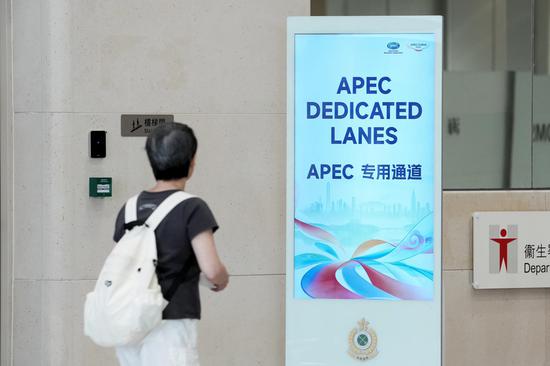
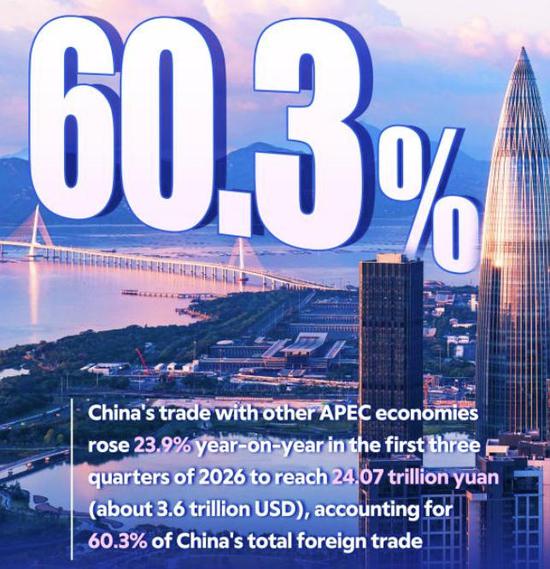
The 33rd APEC Economic Leaders' Meeting will be held in Shenzhen on Nov. 18 and 19.
Bokova noted that the Asia-Pacific region was growing economically, with many countries embracing technological development. The United States and Russia were also important players in the region. Amid complex regional challenges, countries needed more opportunities for dialogue and cooperation.
She said the world faced multiple challenges, with progress toward the United Nations Sustainable Development Goals falling short, alongside climate change and geopolitical shifts. Against this backdrop, she emphasized China's role as an important supporter of the United Nations and multilateralism.
"There is definitely a need for more dialogue," Bokova said.
"I hope that this meeting here will serve as a bridge," she added, expressing hope that the APEC meeting in Shenzhen could help ease mistrust and find solutions to pressing problems.
"I think that today, the attention of many people around the world is very much focused on Shenzhen," Bokova said.
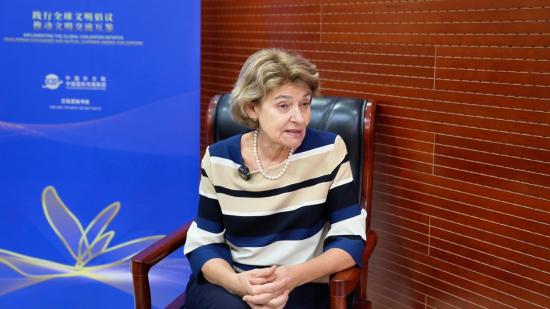
About Irina Bokova
Irina Bokova is former Director-General of the United Nations Educational, Scientific and Cultural Organization (UNESCO) and Senior Advisor to the Board of Directors of the Europe-Asia Center.
She served as UNESCO Director-General from 2009 to 2017. During her tenure, she helped facilitate the inclusion of 11 Chinese cities in the UNESCO Creative Cities Network and nine major Chinese cultural heritage sites on the UNESCO World Heritage List. She also played a key role in establishing the UNESCO Prize for Girls' and Women's Education in cooperation with China.
In 2016, Bokova was named to Forbes' list of the World's 100 Most Powerful Women. In 2020, she was elected an International Honorary Member of the American Academy of Arts and Sciences. In 2025, she received the Lifetime Honorary Award at the second Orchid Awards and the 2025 Chinese Government Friendship Award.

















 京公网安备 11010202009201号