


By Wu Xinru
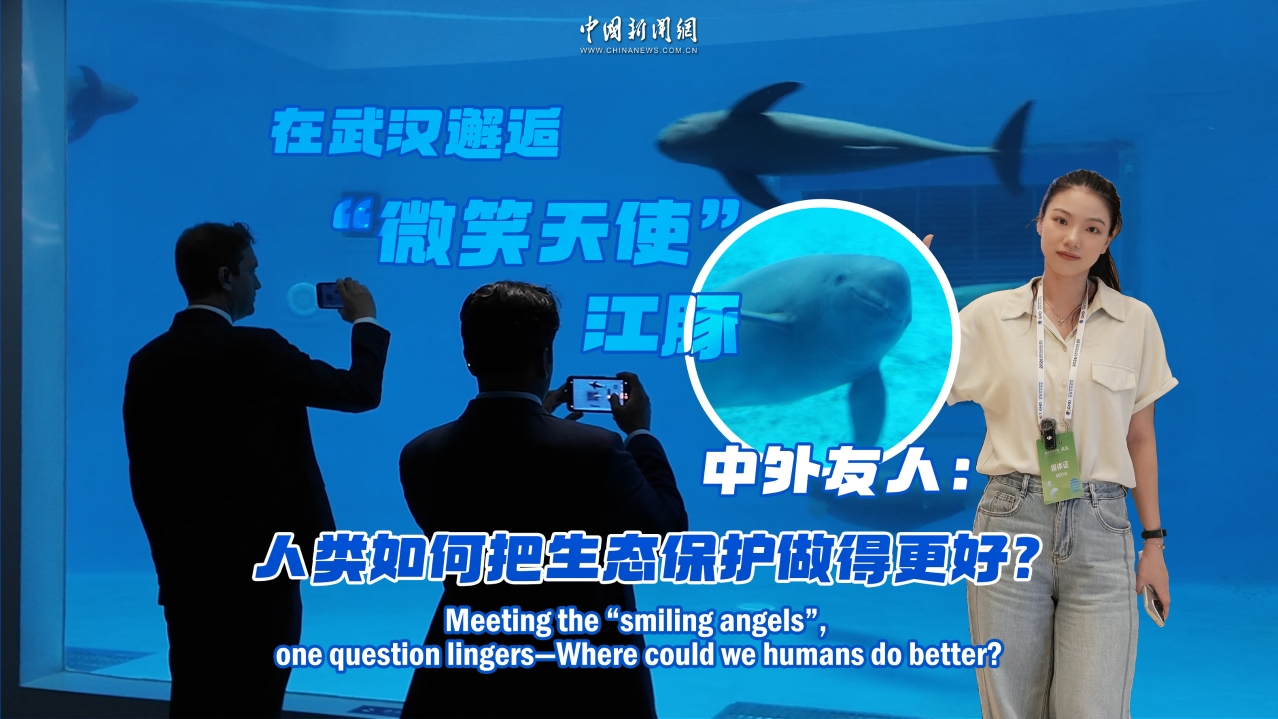
(ECNS) -- "They seemed to be smiling at me and saying hello," Sandesh Sadalg, Council Representative of Tacoma City in the U.S., was quite excited after watching finless porpoises up close at the Yangtze Cetacean Breeding and Research Center.
Sadalg was among a group of delegates at the 2026 World Mayors Dialogue · Wuhan event, which offers international guests a closer look at the Chinese city's efforts to protect the Yangtze River ecosystem.
At the Yangtze Cetacean Breeding and Research Center, delegates came face to face with the river's iconic "smiling angels" and saw firsthand how Wuhan is working to protect the species and restore its aquatic environment.
For Sandesh Sadalge, the encounter was both memorable and moving. He was struck by the time and effort Wuhan has devoted to their protection. Tacoma, too, places a strong emphasis on protecting its aquatic ecosystems, he noted, adding that the two cities share a similar environmental philosophy and can serve as like-minded partners in ecological conservation.
For Soumaly Thammavong, member of the Standing Party Committee of Vientiane and Party Secretary of Chanthabouly District, Laos, the visit highlighted the ecological connections between the Yangtze and the Mekong.
The two river systems share many similarities in terms of ecological conservation, she said, expressing hope that wildlife protection could become a bridge connecting countries and cultures. China’s Wuhan is working to protect the Yangtze finless porpoise, while Laos is committed to protecting Asian elephants. She even imagined a future in which the finless porpoises of Wuhan could "visit" Laos.
Uğur Büyükçulcu, Vice Mayor of Isparta, Turkey, said that his city and Wuhan share similar climatic conditions and that Wuhan’s experience in ecological conservation had given him new ideas. He also expressed his appreciation to the volunteers who have dedicated themselves to protecting the finless porpoises, calling for countries around the world to work together to safeguard the planet they share.
At the center of Wuhan's long-running efforts to protect the species is Hao Yujiang, Director of the Yangtze Cetacean Breeding and Research Center, Institute of Hydrobiology, CAS, who has spent years studying and working to conserve the finless porpoise.
Asked what he would say to the animals, Hao offered a simple thought: Humans and finless porpoises are both "neighbors" along the Yangtze and should live alongside one another in harmony.
And if he could ask a finless porpoise just one question?
"What do you think we humans still need to do better?" He asked.
From protecting a single species to safeguarding an entire river basin, cities in China and abroad are finding common ground through wildlife conservation. The exchange in Wuhan offered a glimpse of how ecological cooperation can transcend borders—and how the story of the Yangtze is increasingly becoming a shared story of humanity and nature learning to live in harmony.
































 京公网安备 11010202009201号