



Subsidized training programs to help create 12m urban jobs annually
China is embarking on an ambitious workforce overhaul, ramping up training programs to turn the challenge of mass automation into an opportunity for economic renewal.
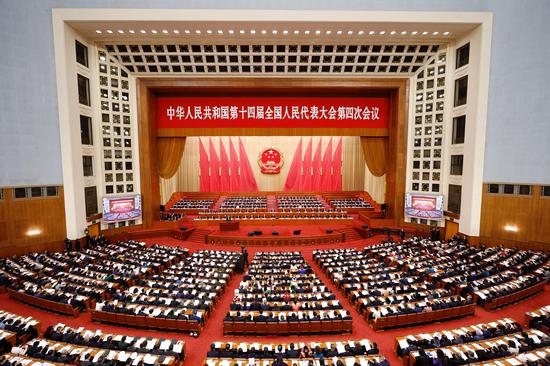
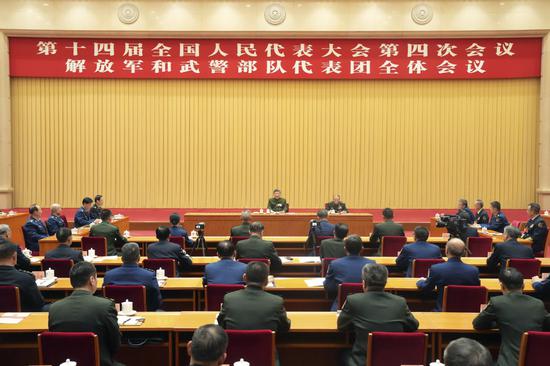
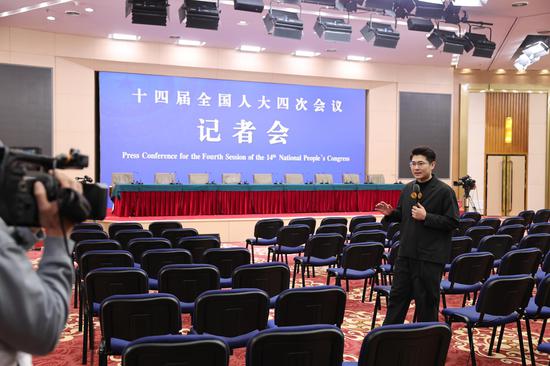
This year's draft Government Work Report — submitted to the National People's Congress for deliberation on March 5 — places employment stability at the top of its agenda.

The report pledges greater support to stabilize employment, business operations, markets and expectations.
It sets an annual target of creating more than 12 million new urban jobs, a goal made more pressing by ongoing trade frictions and concerns that fast-evolving artificial intelligence assistants and embodied robots are displacing workers in both offices and factories.
It also aims to keep the surveyed urban unemployment rate at around 5.5 percent.
Achieving these targets requires authorities to firmly adhere to an "employment first" policy and strengthen support for job stability, the report said.
Official statistics show that a record 12.7 million university graduates will enter the job market in 2026. To absorb new entrants — estimated at 12 million after accounting for those leaving the workforce — the economy needs to grow by approximately 4.5 percent to 5 percent, the growth target set for this year.
To address these challenges, authorities plan to roll out more than 10 million subsidized training opportunities this year. The Ministry of Finance also announced that the combined spending on livelihood issues — including education, social security and employment — will exceed 12.4 trillion yuan ($1.8 trillion).
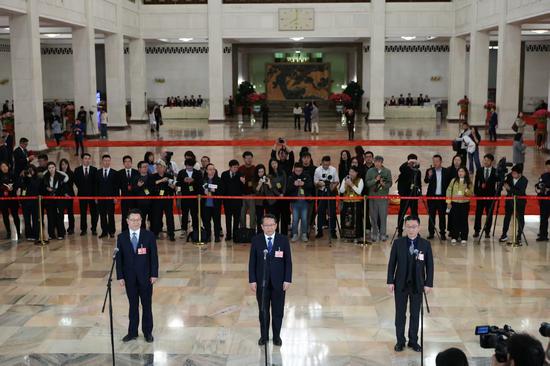
NPC deputies gathered in Beijing for their annual session said intensified training programs can buy the workforce crucial time to adapt to the rise of AI and automation.
"We are at a transition point," said Liu Feixiang, an NPC deputy and director of the future industry research center of Hunan University.
He said that in the factories of the future, robots will handle simple, repetitive tasks, urging employees to shift toward creative and innovative work or to manage and maintain the robots.
He noted that embodied robots are already replacing blue-collar workers, while AI assistants are beginning to take over tasks in finance, legal work and marketing. To prevent mass unemployment, Liu said authorities and employers must actively explore new business lines and upskill the workforce to make the economic "cake" bigger.
"Young people must actively embrace AI," Liu said. "Those who refuse it will not have a future."
This focus on adaptation is central to a new policy buzzword: investment in human capital.
First introduced last year and reemphasized in this year's draft Government Work Report, the concept marks a shift from pouring funds into infrastructure — or investment in physical assets — to building human capital.
For vulnerable groups, the principle is particularly important. Paralympic gold medalist Wen Xiaoyan, now an NPC deputy focusing on disability issues, said employment for China's 85 million disabled people is about more than a paycheck.
"Mastering a skill not only brings a stable income but allows disabled people to truly establish themselves in society," Wen said.
She is pushing for disability skills training to be fully integrated into the national public employment service system to make training more accessible.
The transition is already underway in industries such as construction, which is rapidly digitizing. Zou Bin, a national lawmaker who rose from a teenage bricklayer to an industry model worker, said he has witnessed the changes firsthand.
"Over the past five years, the most tangible change is that many of my fellow workers have gradually upgraded their skills," Zou said.
He cited a welder who retrained to become an expert in prefabricated construction and a pipe fitter who now holds multiple patents.
But Zou warned that the shift from physical labor to "intelligent construction" cannot be left to individuals. The biggest bottleneck, he said, is the lack of a systematic support system.
He has proposed a national action plan to help migrant workers transition into skilled technician roles for the smart construction era. The plan would define new job categories, issue national skill standards and create a training network combining corporate bases, vocational colleges and online platforms.
Wang Jiapeng, another NPC deputy and disability advocate, highlighted the role of education in this transition. He is calling for a specific law on special education to ensure people with disabilities have the foundational skills needed to compete.
"Employment begins with being able to leave your home and arming your brain," Wang said.



































 京公网安备 11010202009201号