




Foreign tourists board the K7041 “Northeast Folk Customs” themed train at Harbin Railway Station in Harbin, Heilongjiang Province, on Jan. 19, 2026, heading to Mohe, known as “China’s North Pole,” to experience the region’s ice and snow attractions. (Photo: China News Service/ Xu Shuai)
(ECNS) — As inbound tourism continues to recover, visiting China during the Spring Festival holiday has drawn growing interest from international travelers seeking seasonal cultural experiences.
According to the National Immigration Administration, daily cross-border passenger flows during the Spring Festival holiday are expected to exceed 2.05 million nationwide, a year-on-year increase of 14.1%. Recent data show that foreign tourists' flight bookings for Chinese New Year in the past two weeks surged more than fourfold compared with last year.
Seasonal attractions draw visitors
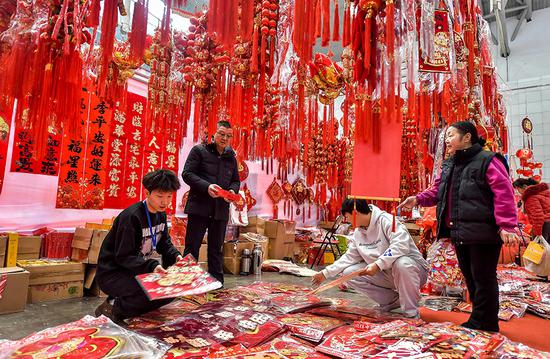
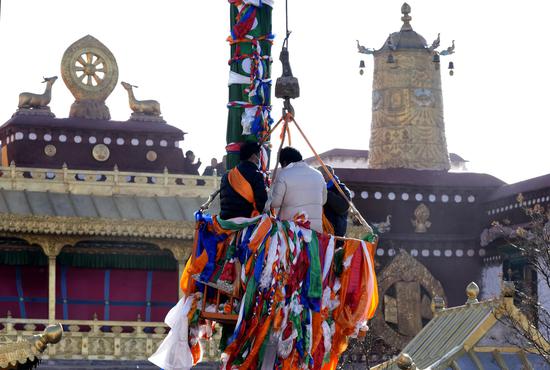
Winter sports, traditional customs and regional food culture remain key draws for overseas travelers. Popular activities include ice and snow tourism, participation in intangible cultural heritage events, and holiday-themed shopping.
Tourism trends are divided into two main streams: winter sports in northern provinces and warm-weather retreats in the south. Bookings have risen for Heilongjiang, Xinjiang and Qinghai, as well as for Yunnan and Hainan.
In Heilongjiang, border inspection authorities reported that in January 2026, the province processed a total of 244,000 inbound and outbound passengers, up 29.7% year-on-year. During Spring Festival, total passenger traffic is expected to reach about 45,000.
Hainan, hosting its first Spring Festival after launching an island-wide independent customs operation, is also seeing a strong rebound. Authorities forecast that inbound and outbound passenger volume at Haikou Phoenix, Meilan, and Boao airports would reach 80,000 during the holiday period, a year-on-year increase of over 24%.
Policy measures support travel
As of 2025, the number of countries eligible for unilateral visa-free access has risen to 48, while mutual visa exemption agreements cover 29 countries. The 240-hour transit visa-free policy now applies to 55 countries and 65 ports of entry, making last-minute weekend trips to China more feasible.
In addition, tax refund services, wider acceptance of international payment methods, and digital service upgrades have made spending in China smoother and more convenient for foreign visitors.
Local governments have launched seasonal programs to highlight regional offerings. Beijing has introduced themed routes featuring historical sites and cultural venues, while Shanghai is hosting cultural and commercial events during the holiday period, including international cruise arrivals. In Heilongjiang, winter festivals combine traditional customs with tourism activities, and southern destinations such as Hainan and Xiamen are promoting leisure-oriented travel experiences.
(By Evelyn)



























 京公网安备 11010202009201号