



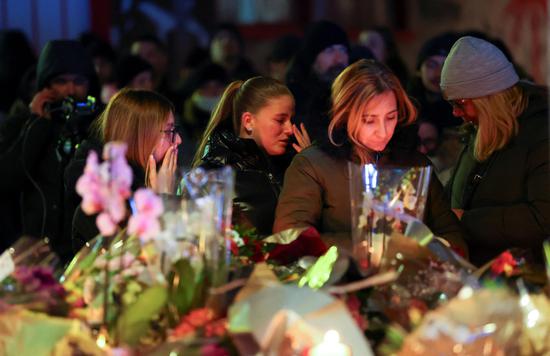
(ECNS) – Protests across the U.S. have escalated following the fatal shooting of a woman by a U.S. Immigration and Customs Enforcement (ICE) agent during a large-scale immigration enforcement operation in Minneapolis, Minnesota.
The Department of Homeland Security claimed that the woman allegedly attempted to ram officers with her vehicle. But the explanation has done little to contain the fallout. The shooting has sparked angry street protests, drawn severe condemnation from the city's mayor, and caused a sharp escalation in tensions between federal authorities and local government.

ICE back in the spotlight — are American cities becoming "combat zones"?
The Trump administration has made aggressive use of ICE as part of its push to crack down on undocumented immigration. Over the years, the agency has repeatedly been accused of heavy-handed tactics, excessive use of force and a lack of accountability. These scandals have drawn intense criticism, with many liberal voters commenting that ICE has become a symbol of a militarized approach.
What has made this incident particularly shocking is that it involved an ICE agent killing a white resident in a white community, whereas the agents have typically targeted undocumented migrants and disproportionately affected people of color.
Accounts of the incident have fueled claims that the agent involved displayed deep hostility towards members of the public and a lack of professional restraint expected of law enforcement officers.
The problem goes deeper than any single case. ICE, critics argue, does not function like a conventional policing agency, and suffers from structural flaws in recruitment and training.
According to these critics, the agency failed to attract experienced police officers, and turned to individuals who may have been rejected by local police forces or the military.
Many recruits receive training that resembles that of paramilitary units, and are equipped with high-powered weapons once used by U.S. forces in Iraq and Afghanistan.
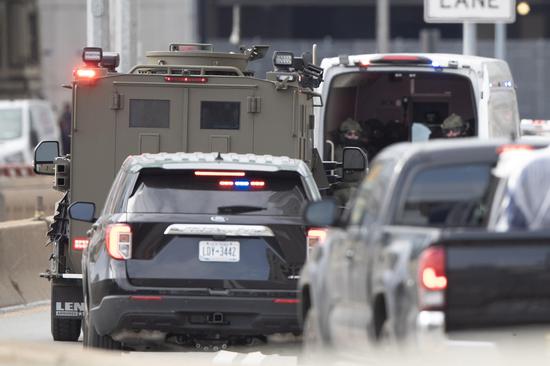
These agents patrol American cities as if they were conflict zones, setting up checkpoints and conducting operations that make Minneapolis resemble Baghdad or Kabul.
ICE officers have also been criticized for carrying out arrests while masked, failing to identify themselves, and using tactics that some residents compare to kidnappings.

In the aftermath of the shooting, online debate in the U.S. quickly hardened into a familiar pattern of partisan confrontation.
Conservative commentators aligned with the Trump administration accused the victim of "deliberately attacking" ICE officers, branding her a "terrorist" and suggesting the shooting was justified.
Liberal bloggers, however, denounced the ICE agent as "inhumane and reckless", arguing that ICE itself had become a form of domestic extremism. Some went further, publicly sharing the officer's personal information.
Amid the partisan disputes, a deeper question lingers: who, if anyone, is still focused on the human tragedy at the center of the storm — and on how such violence might be prevented in the future?
Unresolved tensions may trigger something far worse
Tensions between ICE agents and the public show little sign of easing. Rather than seeking to defuse the situation, the Trump administration has doubled down, with the president and senior officials openly rallying behind ICE after the shooting. That stance has further angered critics and hardened divisions.
For decades, some Americans have argued that the Second Amendment exists to allow citizens to resist tyranny. Yet, historically, even during periods of intense political unrest, armed attacks on federal law enforcement have been rare. Mass movements have erupted, but guns have seldom been used as tools of political protest.
That pattern, however, appears to be changing.
On July 4, 2025, several anti-ICE activists outside an ICE detention center in Texas set off fireworks to lure officers outside. A confrontation followed, during which gunfire was exchanged, targeting police and detention center personnel.
Just over two months later, on September 24, 2025, a 29-year-old man opened fire at an ICE facility in Dallas, killing one person. According to the FBI, a bullet found near the shooter was engraved with the words "anti-ICE".
Some analysts argued that if political polarization continues to deepen and grievances become irreconcilable, it will not be only ICE officers at risk. In an environment of escalating hostility, widespread firearms and collapsing trust in institutions, ordinary Americans may increasingly find themselves caught in the crossfire.
If the current trajectory continues, the question may no longer be whether the next crisis will erupt — but how big it will be, and who will be victims when it does.

































 京公网安备 11010202009201号