


By Ding Si
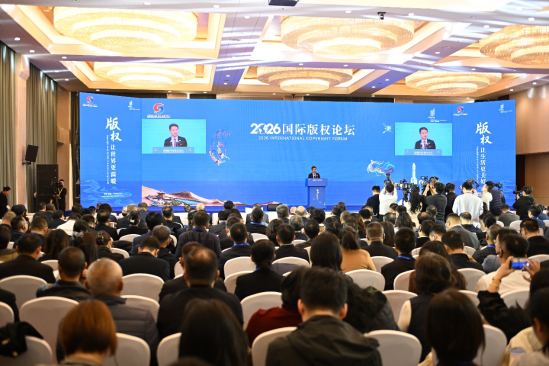
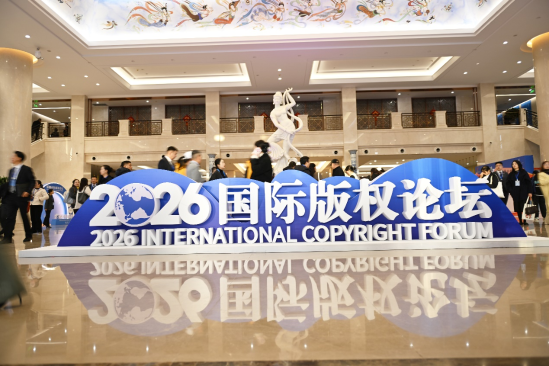
(CNS) --The 2026 International Copyright Forum, jointly organized by the National Copyright Administration of China and the World Intellectual Property Organization (WIPO), was held in Dunhuang, northwest China's Gansu Province, from Monday to Wednesday.
Under the theme “Copyright and Creative Industries in the Digital and AI Age — Protecting Cultural Heritage, Empowering Innovation and Creativity”,the forum brought together participants to discuss the opportunities and challenges that artificial intelligence presents for copyright, the protection and revitalization of cultural heritage, and the development of the creative economy.
For centuries, Dunhuang was one of the great meeting points of the Silk Road. Different peoples, cultures and ideas came together here, giving rise to extraordinary forms of artistic and cultural expression. Today, digital technologies and artificial intelligence are once again transforming the way culture is preserved, created and shared.
What can Dunhuang’s millennia-old legacy teach us about creativity in the digital and AI age? And how can intellectual property continue to support cultural exchange and human creativity?
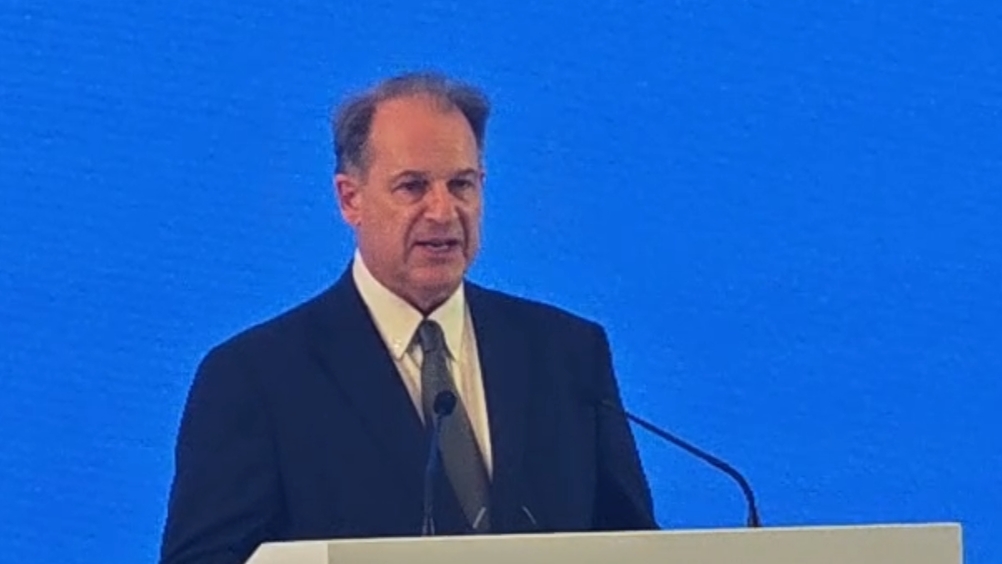
Daren Tang, director general of WIPO, recently sat down with China News Service’s "East Meets West" for an exclusive interview in Dunhuang to discuss cultural heritage, technological change and the future of human creativity.
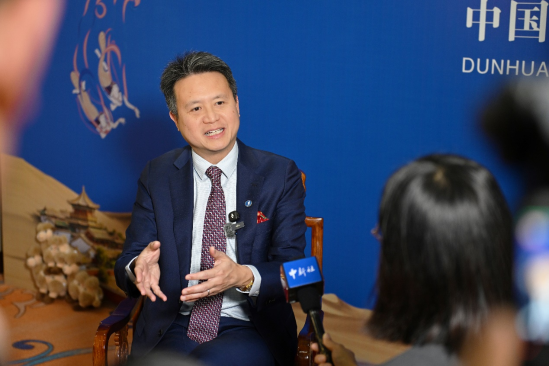
CNS: For centuries, different cultures met, interacted and came together in Dunhuang, giving rise to unique forms of artistic expression. In the digital and AI age, what can Dunhuang’s legacy of cultural exchange and creativity teach us about copyright and the development of the creative industries?
Daren Tang: Dunhuang is a fitting place to discuss copyright, creativity and culture.
For centuries, this city was one of the great meeting points of the Silk Road. People came here from China, Central Asia, Persia, Europe and beyond, bringing not just goods, but also their stories, knowledge, beliefs and ways of seeing the world.
Trade created those connections, but the consequences went far beyond commerce. Through connection, exchange and engagement between peoples, new ideas were forged, different perspectives were combined and a unique culture was born.
There is an important lesson in this for us today. Cultures need exchange and engagement to remain alive and vibrant. Copyright can help each culture preserve its identity while giving it the confidence to exchange with other cultures.
This is even more important in the age of digital technology and artificial intelligence. Creators need to know that their works can be protected, that they can license their creations, receive a fair return and continue to make a living from their creativity.
By supporting creators, intellectual property also helps culture to endure, evolve and remain vibrant.
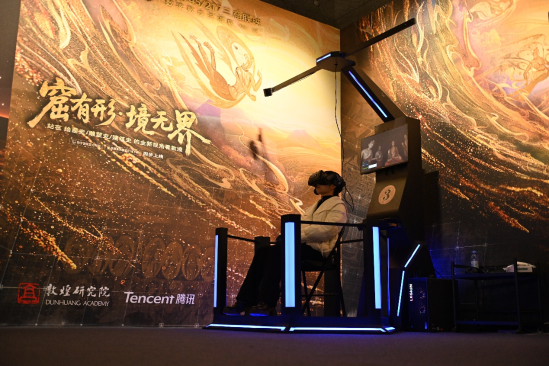
CNS: In recent years, the Dunhuang Academy has used digital technologies to bring this ancient cultural heritage to audiences around the world. As traditional culture moves into the digital space and becomes part of the material used to train AI, how can we balance wider access and creative use with respect for rights and interests?
Daren Tang: Digital Dunhuang is an excellent example of how technology can help bring culture and heritage to the world.
Not everyone can come to Dunhuang and see the caves and murals for themselves. But digital technology gives many more people, wherever they may be, the opportunity to experience and learn about Dunhuang. This is a very good example of technology serving culture and heritage.
In China, we are also seeing examples of traditional culture reaching international audiences through new media. A game such as Black Myth: Wukong introduces audiences around the world to Chinese literature, history, culture and historical sites through video games.
Digital technology at its best can be a bridge: a new way of connecting people and bringing Chinese culture and stories to global audiences.
Technology should empower culture, heritage and human creators, keeping them at the center of the intellectual property system.
CNS: Dunhuang’s art itself grew out of cultural exchange, interaction and constant reinvention. Today, AI is transforming the way content is created, while China’s online literature, games, film, television and animation are reaching more international audiences. How do you see the challenges AI presents for copyright, and China’s role in the global creative economy?
Daren Tang: Artificial intelligence is changing the way we create, distribute and consume content.
It is more than just another technology. Like electricity or the printing press, it has the potential to fundamentally change the way we live, work and create.
And the questions it raises for copyright are very real. If an AI company uses the works of writers, artists and other creators to train its models, should those creators be compensated? If AI is used to generate music, images or other creative content, who should own the rights, and who should benefit economically?
These are difficult questions, and we need to find the right balance between supporting technological innovation and protecting the interests of creators.
We should not look at AI only as a challenge, but also as an opportunity to empower and support a new generation of creators. There is one fundamental principle that should remain clear: human creators must remain at the heart of the copyright and intellectual property system.
Technology should not replace people or push them to the margins. It should empower, assist and support human creativity. We also need to make sure that AI does not create a single monoculture.
The aim is for diverse civilizations and cultures to continue flourishing in the age of AI. Training AI on material from across the world can help it draw on that diversity when creating new forms of art, rather than on a single cultural source.
China offers an interesting example of how the creative economy, cultural heritage and the digital economy can come together.
We just saw a presentation explaining how digital platforms are creating new films, music and stories to promote Chinese culture in other parts of the world.
This is also part of a much broader global trend. In Poland, for example, The Witcher draws on stories from medieval Poland. In Saudi Arabia, an animation studio has also created a game to promote Saudi culture to the rest of the world.
What we are seeing is a new convergence of the creative economy, cultural heritage and digital technology. This is creating new experiences for audiences, but it is also creating jobs, livelihoods and economic opportunities. I believe this will be an important part of the next chapter of the global creative economy.
CNS: The ancient Silk Road crossed mountains and deserts and helped connect civilizations across East and West. Today, digital networks allow culture and creativity to travel around the world almost instantaneously. If we think of these networks as a new “Digital Silk Road,” what should the intellectual property system seek above all to protect?
Daren Tang: Creativity and expression are a fundamental part of humanity. From ancient cave art to stone tools and instruments made from bones, human beings have been creating for tens of thousands of years, and perhaps much longer.
The role of copyright is to support that human spirit of creativity and expression. Even in the age of AI and digital technologies, the copyright system must continue to support it. Otherwise, we risk losing something very precious and fundamental to humanity.
Technologies come and go. Even AI, a technology that may come along only once every few hundred years, is still a technology. The human spirit has been with us for hundreds of thousands of years. It is something more fundamental and enduring.
The role of the intellectual property system is therefore not to push away these technologies, but to make sure they serve the human spirit of creativity, expression and connection.
Biography
Daren Tang,World Intellectual Property Organization Director General. He is a national of Singapore, began his first six-year mandate as Director General of the World Intellectual Property Organization (WIPO) on October 1, 2020 and was reappointed on April 21, 2026 for a second term that will run from October 1, 2026 through September 30, 2032.
His last appointment before joining WIPO was Chief Executive of the Intellectual Property Office of Singapore (IPOS) where he transformed IPOS from a traditional IP registry into an innovation agency, enhancing Singapore's IP ecosystem and strengthening international collaborations.






















 京公网安备 11010202009201号