


(W.E. Talk) Harold Weldon: Why does the Long March still resonate with the world today?
By Bo Wenwen, Jia Jingfeng, Zhang Ziyang, Zhang Weiran and An Yingzhao
"The Long March is not only a Chinese story. It is also a universal story about how people persevere, cooperate and grow through adversity," Australian sinologist Harold Weldon said in a recent interview with China News Service's "W.E. Talk".
Inspired by Red Star Over China, Weldon first retraced sections of the route taken by the Chinese Red Army during the Long March in 1985. He returned to the route in 2011 and participated in the publication of illustrated books including China: The Long March and China: The New Long March.
For more than four decades, Harold Weldon, Vice President of the Weldon International Group, has sought to introduce China to Western audiences through publishing, documentaries and cross-cultural projects.
In his view, the story of the Long March continues to resonate beyond China because it transcends ideology and geopolitics and speaks to the shared human capacity to confront hardship with resilience, solidarity and hope.

Here are excerpts from the interview:
CNS: What led you to retrace the route of the Long March?
Harold Weldon: My father first encountered Edgar Snow's Red Star Over China when he was at school in the early 1950s. Our family operated a privately owned publishing group, and around 1984 we were developing the concept for a book about China.
At that time, the Western world knew very little about China. Many people saw only rice paddies and rural scenes-a very small part of the country. My father suggested that the Long March, which was such an extraordinary story, could provide the narrative for a journey through China. By following its route, we could show Western readers the real China through the story of the Long March.
I also first learned about the Long March at school, when we studied Red Star Over China. Later, I came to understand that Edgar Snow's wife, Helen Snow, also played an instrumental role. She conducted important interviews and travelled to the revolutionary base areas. Years later, I visited the Snows' former residence in Beijing.
My father and I were both deeply inspired by Red Star Over China and the vivid way in which it brought the Long March to international readers.
CNS: What motivated you to tell the story of the Long March to an international audience?
Harold Weldon: The Long March is one of the greatest examples of human endurance and perseverance in world history. It is a remarkable historical story in its own right, but it also gave us an opportunity to place that history alongside the China of the 1980s.
In the illustrated book we produced, roughly half was devoted to the historical narrative. For the other half, photographers from around the world were assigned to different sections of the Long March route.

Readers could learn what had happened there historically while also seeing what those places and their people looked like in a modern context. The book therefore told several stories at once: a universal story of endurance and achievement, a story about China's development, and a story about the lives of ordinary Chinese people.
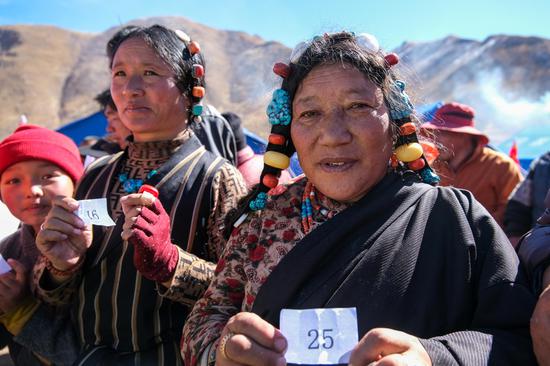
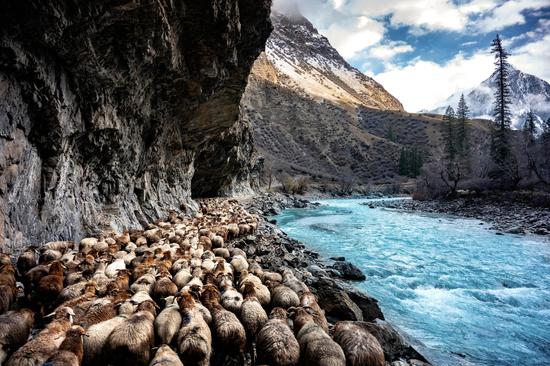
We encountered people from different ethnic groups and saw the extraordinary diversity of China's landscape-from mountains and forests to deserts and raging rivers.
All of this went far beyond what many Western readers at the time knew or imagined about China.
CNS: How did retracing the Long March shape your understanding of China?
Harold Weldon: The Long March taught me something deeper than simply triumphing over adversity. It taught me that it is through adversity that we can become better people.
We often think that success means defeating a hardship or emerging victorious from a struggle. But what the Red Army experienced-and we experienced only a tiny fraction of it-teaches another lesson: people must work together, share a common purpose, refuse to give up and make sure that the person beside them is all right.
A journey like that cannot be completed as an individual pursuit without concern for others. It taught me resilience, solidarity and the importance of looking after one another.

The journey also introduced me to a China beyond politics and major cities. In the countryside, we met villagers who possessed very little but welcomed us into their homes and offered us the best food they had.
I once admired a picture hanging on the wall of a village home, and the family immediately wanted to give it to me. At first, I did not know how to respond. I later understood that this generosity reflected a traditional Chinese culture of giving and hospitality.
Today, the internet gives us access to an enormous amount of information. Yet our understanding can still be narrow. A firsthand visit makes an enormous difference. I sincerely hope that more Australians will have the opportunity to visit China and see the country for themselves.
CNS: You've visited China many times. What changes have you witnessed, and what has felt different at different stages?
Harold Weldon: I think the major change is the overall alleviation of poverty, the lifting of the Chinese people out of poverty and out of a lower standard of living. I have seen it with my own eyes, with my feet walking. It's been incredible.
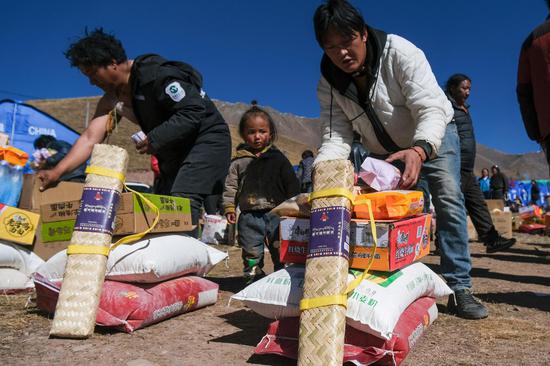
The best example was Hongyuan, up in the grasslands. In 1985, it was very remote. There were cabbages and watermelons-a watermelon in the summer, a cabbage in the winter. Then, when we went back in 2011, there was every variety of fruit and vegetable that had come, probably from Guangdong or somewhere, because the roads had improved, and rail and trade had improved.
Now, this time, in Hongyuan in 2026, there's a convenience store with everything you would find in Beijing or Shanghai-all of the small toys and all of the conveniences-because the road system is so brilliant.
While still retaining the traditional life, I think it's really important for China to embrace the new but hold on to those traditions. Because once those traditions are lost, everything becomes the same. Somewhere like Hongyuan, there is still the local culture, and the local cowboys with the yaks, herding the yaks.
But still, everyone has a right to have a better life. So that's a summary of the alleviation of poverty, and the infrastructure all runs behind that. The quality of life has improved, especially through infrastructure, with a good balance of traditional life and modern life.
CNS: Having revisited places along the Long March route several times, what changes have impressed you most?
Harold Weldon: What has impressed me most is China's achievement in reducing poverty. People have emerged from poverty, and their living standards have continued to improve. These are changes I have witnessed firsthand on my journeys, and they have been remarkable.
Hongyuan in Sichuan is a clear example. When I first visited in 1985, it was still quite remote, and the selection of fruit and vegetables was very limited. When we returned in 2011, we found a wide variety of fresh produce. Behind this change were better roads and improvements in rail transport and trade.
Returning to Hongyuan this year, I found the local convenience stores stocked with a much wider range of goods. From small toys to everyday essentials, things you could buy in Beijing or Shanghai were available there too. A well-developed road network has made daily life more convenient. At the same time, the area has retained its traditional culture and pastoral way of life, maintaining a good balance between tradition and modern life.
CNS: This year marks the 90th anniversary of the victory of the Long March. Why does its story continue to resonate around the world?
Weldon: I believe many countries have experienced their own "Long March moments."
In Australia, one example is the ANZAC spirit associated with the Gallipoli campaign. In purely military terms, the campaign was a defeat. Yet Australians continue to commemorate the courage of the soldiers, their refusal to give up in extremely difficult circumstances and their commitment to looking after their mates.
That spirit has something in common with the spirit of the Long March.
There is another parallel in American history: the Continental Army's winter encampment at Valley Forge during the American Revolutionary War. George Washington's army endured bitter cold, hunger, disease and repeated setbacks. It came close to disintegration.
If that winter had destroyed Washington's army, the course of American history might have been entirely different.
There are many such historical parallels. What people everywhere can understand is a story of surviving against overwhelming odds. It is the story of people continuing when success appears impossible.
Different interpretations of the Long March may emerge over time, but the historical fact remains: people endured an extraordinary ordeal, and what they accomplished shaped China's future.
Even 90 years later, I still find the Long March inspiring. The resilience, unity and hope it represents are not confined to one country. They are part of humanity's shared spiritual heritage. In that sense, every country has its own Long March.
CNS: You have spent many years working in cross-cultural communication. At what level do Chinese and Australian people connect most strongly?
Weldon: What resonates most strongly is usually something personal and connected to everyday life.
An Australian family wants life to be better for its children. A Chinese family wants exactly the same thing. There is no geopolitics in that. It is a shared human aspiration.
I was involved in a photographic project called A Day in the Life of China. Nearly 100 photographers from around the world were sent to different locations across China to document a single day.
The book began at midnight and ended at midnight. Readers could see a farmer waking in a wheat field at dawn, a street vendor working in a city or a fashion model taking part in a photo shoot in Shanghai.
When these scenes are placed together, people recognise how much they have in common, wherever they live.
News coverage often concentrates on geopolitics, conflict, fear and uncertainty. But mutual understanding and trust are built through the real lives of ordinary people. That is why community-level and family-level connections matter so much.
People-to-people exchange must also move beyond slogans. It is not simply about watching a tai chi demonstration or a dragon dance. It means people working together, sharing meals, making music, studying and creating things together. Cultural exchange becomes meaningful when people genuinely participate in one another's lives.
CNS: Apart from the Long March, what other stories about China interest you?
Weldon: I have always been interested in Chinese innovation. Some people in the West once regarded China simply as a "copycat," but I have never agreed with that view.
China has produced important inventions throughout its history. Today, it is demonstrating strong innovative capacity in areas such as electric vehicles and artificial intelligence. I would like to see more stories about that innovation reach international audiences.
At the same time, cultural projects remain my greatest interest. I am particularly interested in three kinds of cross-cultural stories. The first concerns Australians in China. One example is George Ernest Morrison, the Australian journalist known as "Morrison of Peking." The second concerns Chinese people in Australia. The history of Chinese migrants during the gold rush contains many remarkable stories. The third area is the everyday reality of Australian society. I would like Chinese audiences to see more informative and nuanced stories about how Australians actually live.
Many of these cross-cultural stories have yet to be fully told. I hope to continue serving as a bridge, helping Australians and Chinese see a more authentic, complex and human side of one another. (End)

Biography
Harold Weldon is an Australian sinologist, documentary producer, writer, presenter, and photographer with 41 years of experience in Australia-China cultural media and bilateral relations. He is a Special Advisor on China affairs, a recipient of a Peabody Award and China's National level Golden Book Award, and a former member of the Australia China Council.




























 京公网安备 11010202009201号