


(ECNS) -- In late June, Fox News viewers witnessed an unusual scene: hosts across multiple programs reading on-air apologies over unsupported claims about China made by a guest.
The apology aired on at least four Fox News and Fox Business programs, including The Big Weekend Show, Saturday in America, Mornings with Maria, and The Big Money Show. For a network that has made anti-China rhetoric a familiar part of its editorial identity, this repeated act of public correction marked a striking departure from its usual playbook.
The controversy began on May 24, when Kevin O'Leary — the investor and television personality best known for Shark Tank — appeared on Fox News to discuss his proposed data center project in Utah's Hansel Valley. The project, known as the Stratos Project, is planned as a 40,000-acre campus and has faced strong opposition from local residents and environmental groups over its enormous energy demands and potential environmental impact.
Rather than addressing those concerns directly, O'Leary attempted to shift the focus to China.
During his appearance, he made a series of explosive allegations, claiming that opponents of the project were acting as proxies for the Chinese government. He named specific organizations and individuals, then asked: "Who would want us to stop building our electrical grid? Who would want to stop us from having compute capacity to develop AI? Which adversary would want that? There's only one. It's China."
The claims soon collapsed under scrutiny. Facing public pressure and possible legal consequences, O'Leary later walked back his remarks on social media.
"Recently I appeared on various news programs and would like to clarify that I have no evidence that Alliance for a Better Utah, Elevate Strategies, Gabrielle Finlayson, Taylor Knuth or Josh Kanter are funded by China or the Chinese Communist Party," he wrote.
Fox News then issued its own on-air apology.
"Kevin O'Leary appeared as a guest on the show on May 24 and discussed the ongoing controversy surrounding his planned data center project in Utah," a host read. "He made certain claims relating to the opponents of his project. Mr. O'Leary has now corrected the record and explained he has 'no evidence' that the Alliance for a Better Utah, Josh Kanter or Taylor Knuth are funded by China or the Chinese Communist Party. Fox News Media is likewise aware of no evidence that they are funded by, or acting in the direction of, or in coordination with Chinese interests in opposing Mr. O'Leary's project. Fox News Media also apologizes for the error."
The episode raises an obvious question: what does it really reveal?
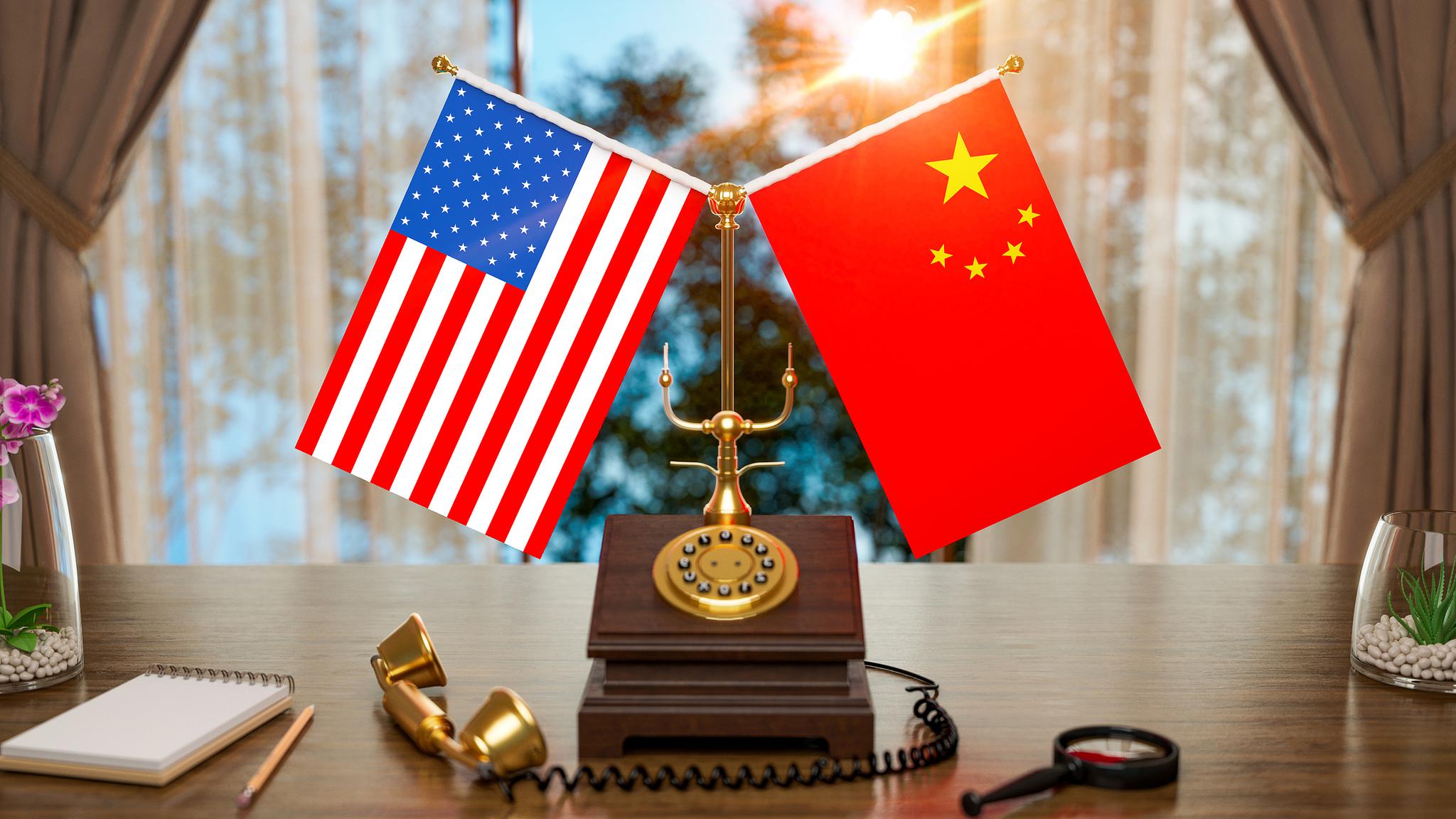
First, it casts an uncomfortable light on Fox News itself. The network has long positioned itself as a leading voice in warning about China. Yet when one of its guests made sweeping allegations on air, Fox either failed to verify them or allowed them to be amplified anyway. Neither explanation reflects well on its credibility.
More broadly, the incident points to a deeper problem in American political discourse. China has increasingly become a convenient scapegoat for a wide range of domestic problems. When manufacturing declines, blame China. When technological competition intensifies, blame China. When a local infrastructure project faces community resistance, blame China.
The reflex has become so routine that accusations are often made before evidence is produced. O'Leary's case is a vivid example. What was essentially a local dispute over land use, energy consumption and environmental impact in Utah was transformed, within seconds on live television, into a matter of national security and geopolitical confrontation.
In this sense, Fox News' apology is more than damage control over a single broadcast segment. It is a quiet admission that the "China threat" narrative — long treated as a reliable political weapon — has a serious weakness: it only works when nobody checks the facts.
When accusations are made without evidence and broadcast without verification, the ultimate casualty is not China's reputation, but the credibility of those who manufacture and amplify such claims.
What makes this incident especially noteworthy is the contrast it exposes. While some U.S. media outlets continue to recycle outdated and biased portrayals of China, ordinary Americans now have more ways than ever to access information beyond traditional media filters.
International institutions continue to recognize China as a major engine of global growth. U.S. business leaders have warned about the economic costs of "decoupling." Meanwhile, on grassroots social media platforms, Chinese and American netizens are engaging directly with one another in exchanges that often challenge the stereotypes promoted by mainstream media.
These conversations offer a more authentic and nuanced picture of China than the one-dimensional caricatures that have long dominated certain corners of Western reporting.
This shift is also reflected in public opinion. Pew Research data shows that the share of Americans with a favorable view of China has nearly doubled over the past three years. The trend suggests that more Americans are forming their own judgments based on direct observation, personal experience and alternative sources of information, rather than simply accepting the narratives pushed by certain media outlets.
Fox News has apologized. But the real significance of this episode lies not in the apology itself, but in what it reveals.
When the machinery of fearmongering is forced to stop — even briefly — under the pressure of facts and accountability, the narrative begins to collapse under its own weight.
For viewers accustomed to a steady diet of China-related alarmism, this rare moment of correction may offer a small but meaningful opening: a chance to question what they have been told, and perhaps to ask what else they may have been misled about.
The truth about China, like the truth about anywhere else, does not need to be manufactured or defended with falsehoods. It simply needs to be seen.
(By Tang Yuxian)

































 京公网安备 11010202009201号