



By Xue Lingqiao, Lin Zhuowei and Chen Tianhao
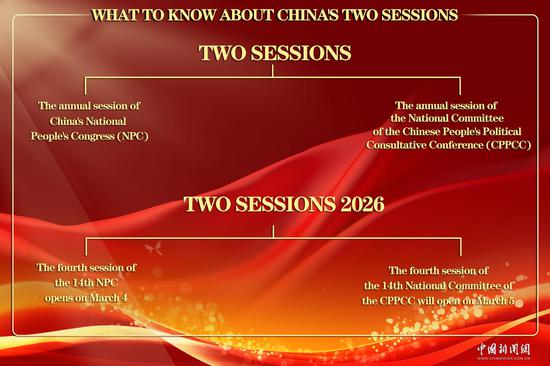
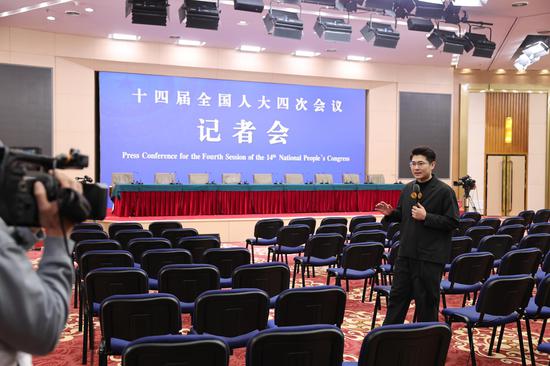
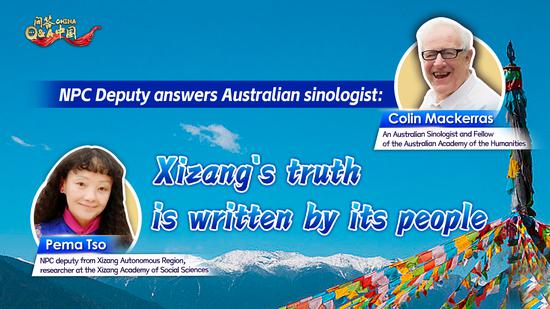
(ECNS) -- The 2026 national "two sessions" is currently underway, with the development of different ethnic groups being one of key focuses for many deputies to the National People's Congress (NPC) and members of the National Committee of the Chinese People's Political Consultative Conference (CPPCC). Meanwhile, it has also attracted the international attention. Among such observers is Colin Mackerras, an Australian sinologist and fellow of the Australian Academy of the Humanities.
Mackerras has long been interested in studies on China's Xizang and has visited Xizang and other Tibetan-inhabited regions of China for multiple times.
"I think that there's been a lot of history that shows that Xizang should be part of China," said Mackerras.
He also noted that these regions place a lot of emphasis on cultural preservation, especially the development of traditional cultural activities such as Tibetan literature and Tibetan opera.
"I've seen the opera myself on several occasions, and I really like it," Mackerras added.
In addition to endorsing the local cultural heritage protection efforts, Mackerras also commended the social and economic development achievements in Xizang, as he observed that in recent years, both the literacy rates and life expectancy of the Tibetan people have been steadily improved, along with their living standards.
"All of these are very important; they improve the livelihood of the Tibetan people, and that is a very good thing," added Mackerras.
Meanwhile, he also noted that the current international public opinion is filled with distorted and false narratives on Xizang, and that some people in Western societies harbor misconceptions regarding Tibetan culture and its ethnic development.
On the occasion of the national "two sessions", Mackerras shared his observations with Pema Tso, an NPC deputy and researcher at the Xizang Academy of Social Sciences, during the latest episode of China Q&A with China News Network.
He expressed his hope to gain a deeper understanding of China's ethnic policies and Xizang's development through her perspective, to dispel the misunderstandings and misrepresentations of Xizang in the West.
In response to Mackerras' inquiry and drawing on her long-term field research in Xizang's pastoral areas, Pema analyzed and answered this question from both the international and domestic perspectives.
From an international perspective, Pema pointed out that previous foreign academic research on Xizang has been plagued by two types of misunderstandings. One is the curiosity perspective of Western-centrism, which regards Xizang as a static while mysterious “Shambhala.” The other is a political interpretation tinged with ideological bias, viewing China through the lens of ethnic conflicts.
In response, she proposed the idea of "Thick Description " as a way to address these misunderstandings.
Citing examples from her many visits to local herders in Nagqu City of Xizang, Pema said that in advancing modernization, while retaining their traditional agricultural and pastoral lifestyles, these herders have also enjoyed the modern convenience brought by the development of the country's 5G communication system, which helps to open up new pathways to prosperity, increase family incomes and improve personal living standards.
"Therefore, pastoral areas in Xizang now present a completely different picture despite some misunderstandings from the international academic circle on the region," said Pema.
“Xizang today is completely different. We need to use the universal academic language of anthropology to compare Xizang's case in the context of globalization. This kind of horizontal comparison is one of the most recognized research paradigms within the international academia. We use facts and science to present a real, developing Xizang,” she said.
From a domestic perspective, Pema noted that over the years, the most touching change in Xizang is that the lifespan of the Tibetan people have been extended, and their life journeys have gained broader horizons. All these achievements are inseparable from the support of the country's policies, added her.
In the past, the life trajectories of people in Nagqu's pastoral areas were often delineated by seasons and the movement of livestock. Additionally, due to a lack of support of modern public health systems and proper medical intervention, infant and child mortality rates were high in high-altitude regions, and even adults were suffered from altitude-related diseases.
As time passed, however, many elderly people in their 70s in Nagqu remain healthy and vigorous, and are now actively participating in activities in local communities. Apart from that, endemic diseases such as tuberculosis, hydatid disease, and Kashin-Beck disease are being brought under historic control.
This year also marks the 32nd anniversary of China's pairing assistance program to Xizang. In Pema 's view, over the past three decades and more, an important development of the region is the transformation of local people, which cannot go without assistance in education. The measure is not only a part of the pairing assistance, but also serves as an integral component of China's ethnic policies.
According to the seventh national population census, the number of university-educated individuals per 100,000 people in Xizang increased from 5,507 in 2010 to 11,019 in 2020. This means Tibetan people's pursuit for of learning and knowledge has carried them farther than ever before.
As a beneficiary of the policy, Pema said that her own experience is a microcosm of this transformation—from a child in the pastoral area of Nagqu, to attending the middle school in North China's Tianjin, and pursuing a Ph.D. in anthropology in Norway and Australia. Looking back on her academic achievements, she said emotionally that the deepest significance of the pairing assistance program is that it has given ordinary people like her a possibility.
"When a child from the pastoral area in Xizang can speak fluent Tibetan language and can also tell stories about their hometown in international academic language, they are no longer the people only can be written about. They are the ones writing their own history. Ordinary people in Xizang are indeed masters of their own lives," Pema concluded.



























 京公网安备 11010202009201号